Customized Niigata Tours
Niigata — a snow country of breathtaking beauty in every season.
Natural landscapes, traditional culture and local cuisine,
crafted exclusively for you.
A complete Niigata travel service covering itinerary planning, accommodation, transport and dining.
Sit back and savour every moment of your trip.
Choose your own attractions, accommodation, transport and dining — no fixed group tour schedules, just the freedom to travel your way.
No need to research or book individually. We plan and reserve everything in advance so your journey is seamless and stress-free.
Our Niigata specialists design the perfect itinerary for you. Even first-time visitors can explore with confidence under our full support.
From grandparents to young children, every member of the family receives thoughtful, tailored care throughout the journey.
Niigata brings together natural wonders, rich culture and refined craftsmanship — every destination is a unique experience.
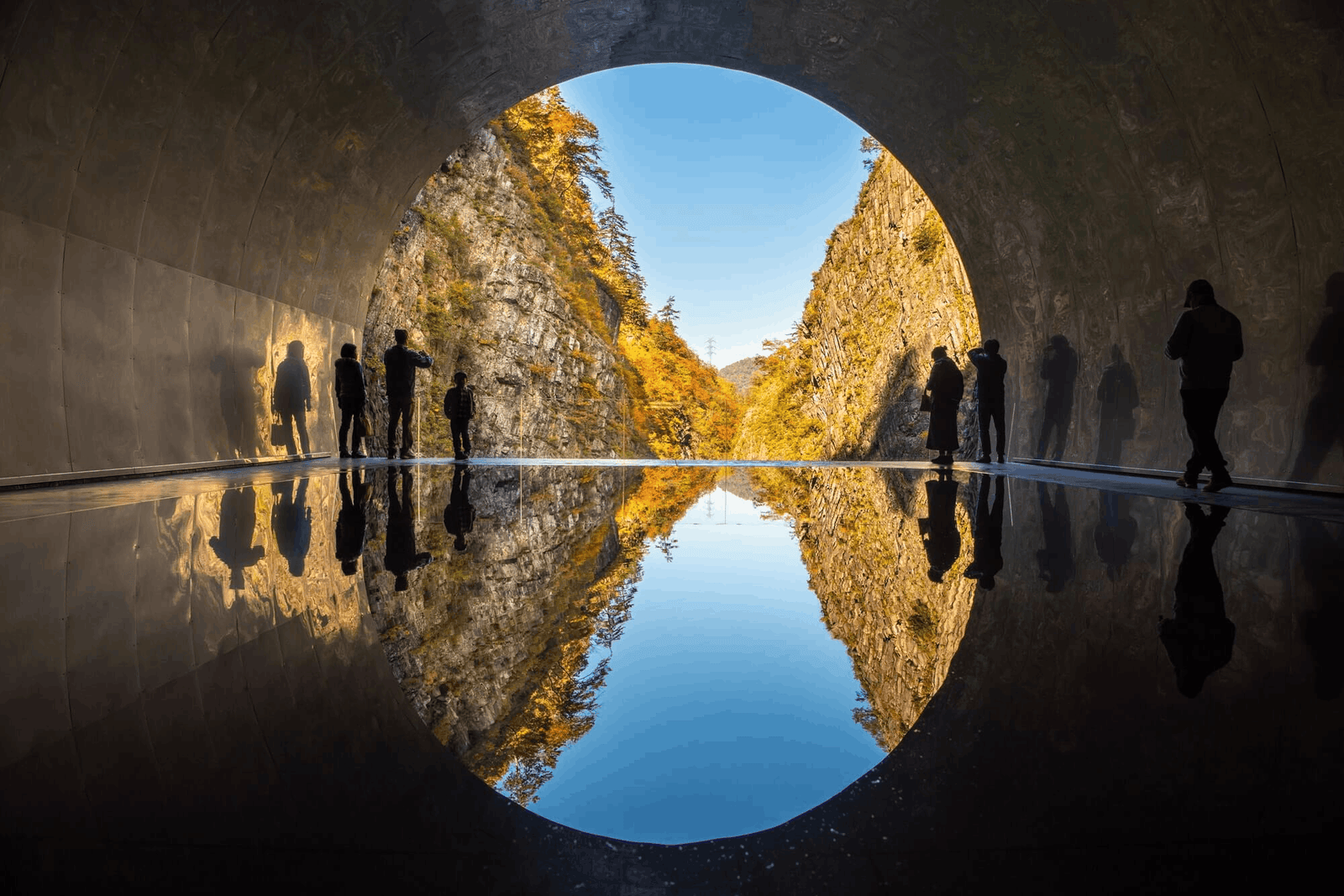
Gorge · Niigata Prefecture
One of Japan's three great gorges, designated as a National Place of Scenic Beauty and Natural Monument. Steep, towering rock walls on both sides of the river form a spectacular V-shaped canyon.
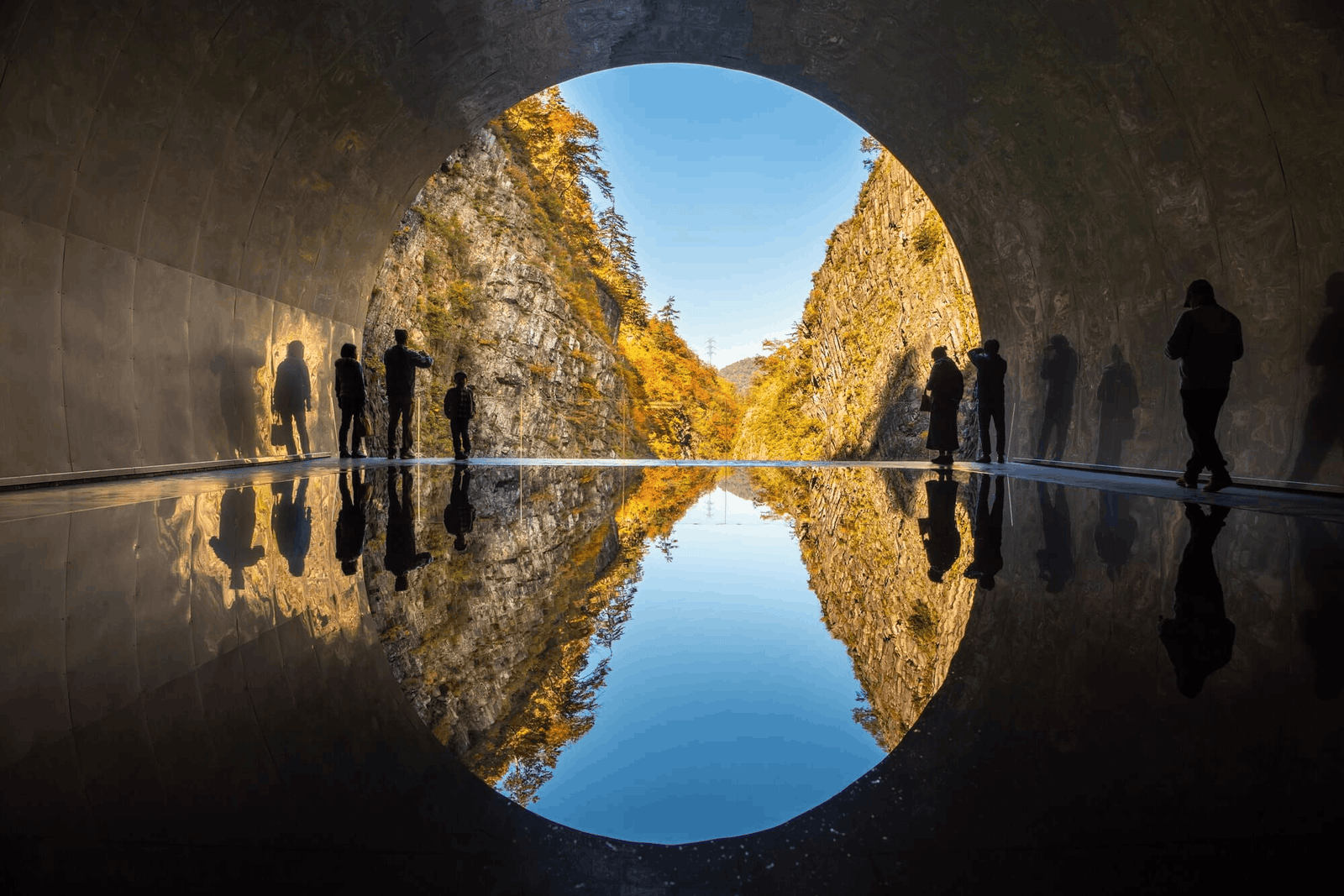
At the end of the tunnel lies the famous "Light Cave." An artist installed a water-basin reflection device at the cave entrance; walking along the shallow water at the tunnel's edge to the very end creates a "mirror of the sky" visual effect where the viewer and gorge become one.
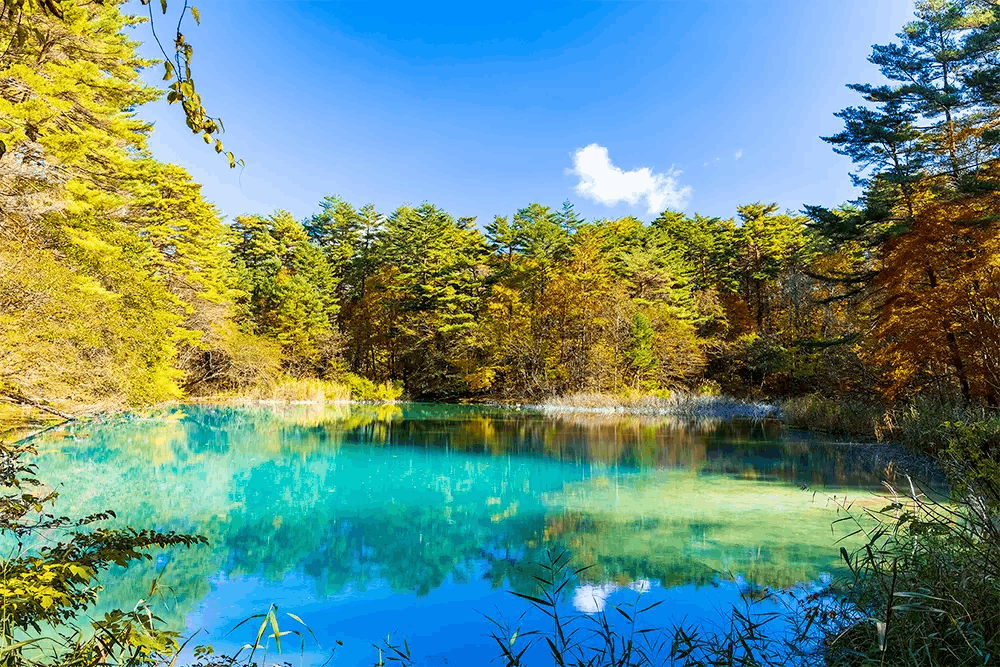
Pond Cluster · Mt. Bandai
Goshikinuma is a cluster of ponds formed by a massive eruption of Mt. Bandai. The waters change colour with the seasons, weather and viewing angle — hence the name "Five-Colour Ponds."
The largest pond, Bishamon-numa, offers rowing boat tours. Koi fish inhabit the waters, and legend has it that spotting a koi bearing a red heart-shaped pattern will bring happiness.
The "Goshikinuma Nature Trail" linking the ponds is a popular hiking route taking about one hour, flat and easy to walk, with multiple viewing platforms along the way offering views of the ponds and Mt. Bandai, one of Japan's hundred famous mountains.
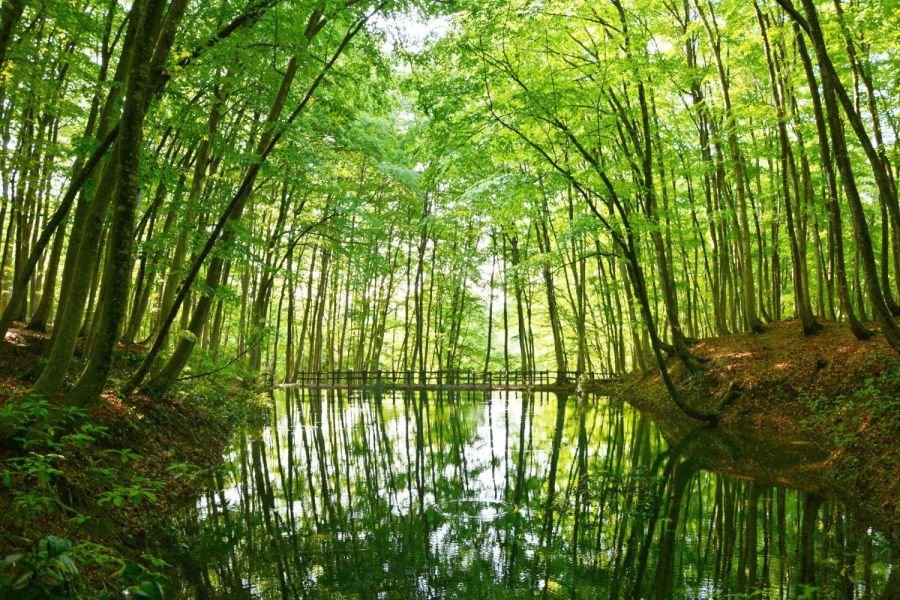
Beech Forest · Matsunoyama
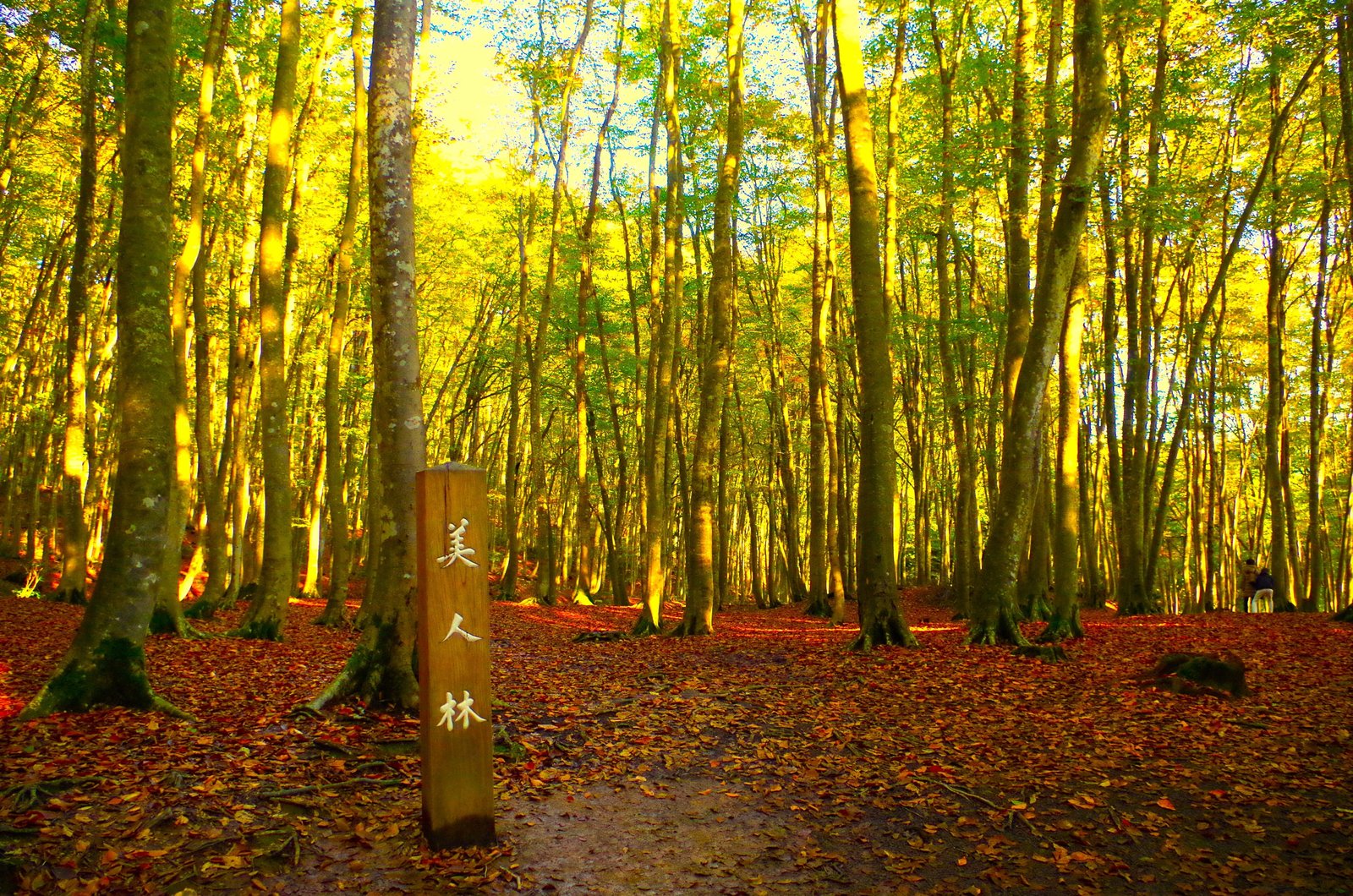
On a roughly three-hectare hillside in Matsunoyama Matsuguchi stands a beech forest of trees about one hundred years old, celebrated for its beauty and known as "Bijinbayashi" (Beauty Forest). In the late Taisho era the trees were felled for charcoal production, but the beech re-sprouted the following year and, over time, grew into today's dense woodland. The site is also a well-known habitat for wild birds.
The straight, slender beech trunks attract photographers and visitors from across Japan. In spring, new buds emerge from lingering snow; in summer, cool breezes drift through the canopy; in autumn, fallen leaves carpet the ground in orange and red; in winter, snow settles on the branches and sparkles like diamonds in the sunlight.
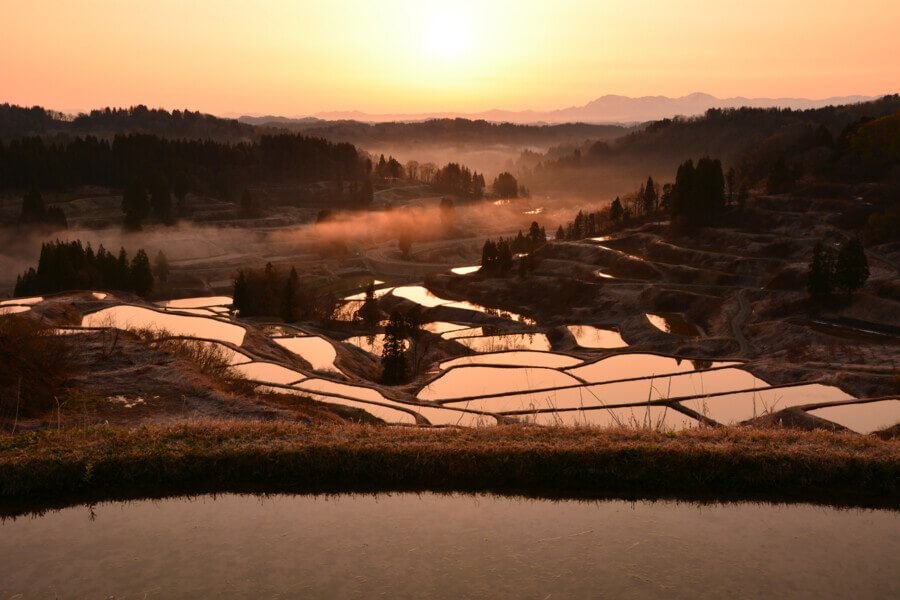
Terraced Rice Fields · Tokamachi
Hoshitoge Rice Terraces comprise more than 200 paddies of varying sizes, layered across the hillside in tiers — the most iconic terraced landscape in Tokamachi. The scenery changes with the seasons and the time of day. In particular, on early mornings when a sea of clouds rolls in and reflects in the mirror-like paddies, photographers and travellers from across Japan flock to witness the sight.
Beyond the cloud-sea spectacle, the lush green paddies of summer and the snow-blanketed fields of winter transform the terraces into a mysterious beauty. Listed in 2022 as "Tsunagu Terraced Heritage" and certified by Japan's Minister of Agriculture as an outstanding terrace site, this is an ideal place to experience Japan's traditional agricultural landscape.
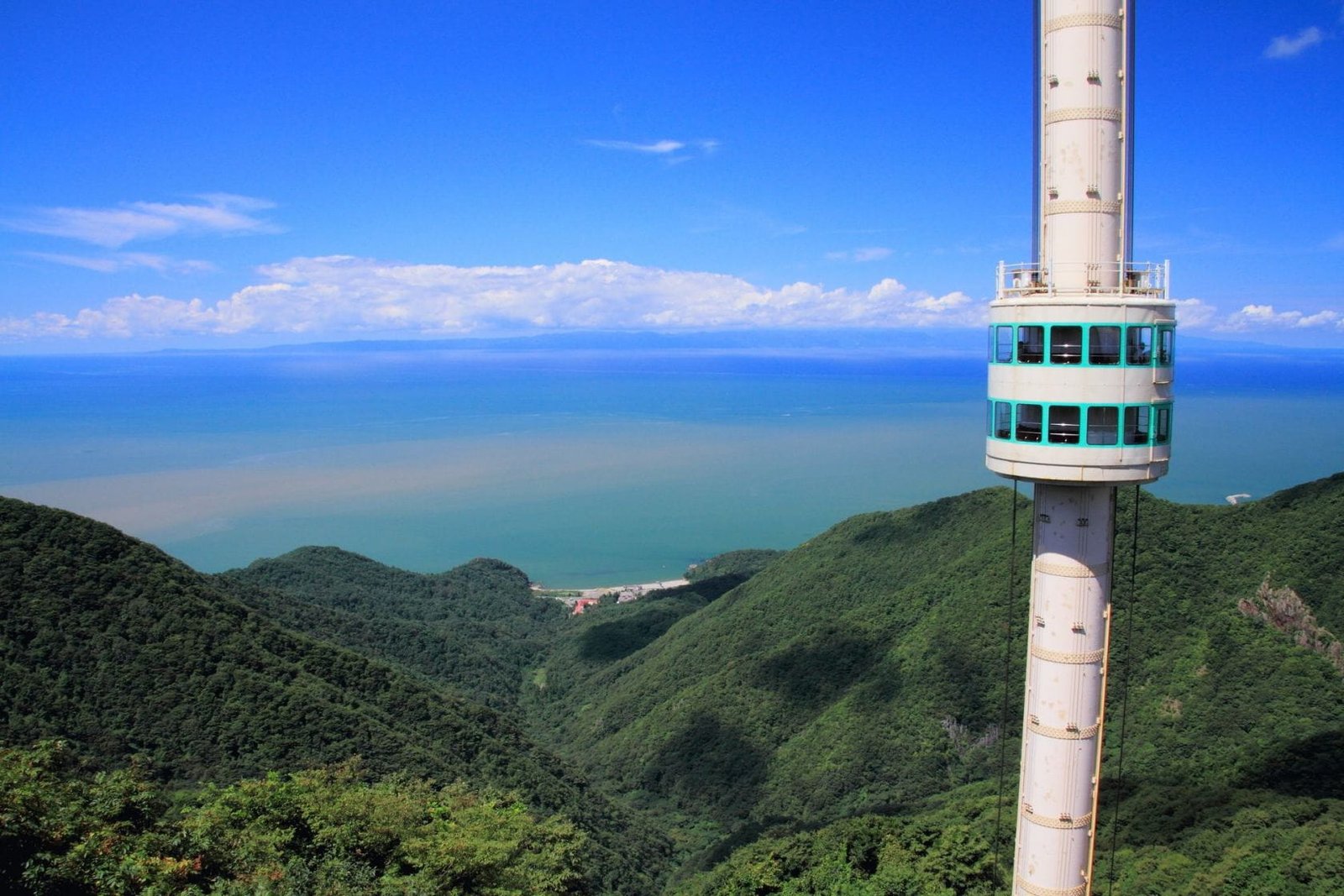
Sacred Mountain · Yahiko Village
Mt. Yahiko stands 634 metres tall — roughly the same height as the Tokyo Skytree. Near the summit is Yahiko Summit Park, which features a panoramic restaurant and a 100-metre rotating observation tower called the "Panorama Tower." From the top, sweeping views take in the Echigo Plain, the Sea of Japan and Sado Island.
Mt. Yahiko has been revered since ancient times as a sacred mountain. We invite you to come and feel its natural power and spiritual atmosphere for yourself.
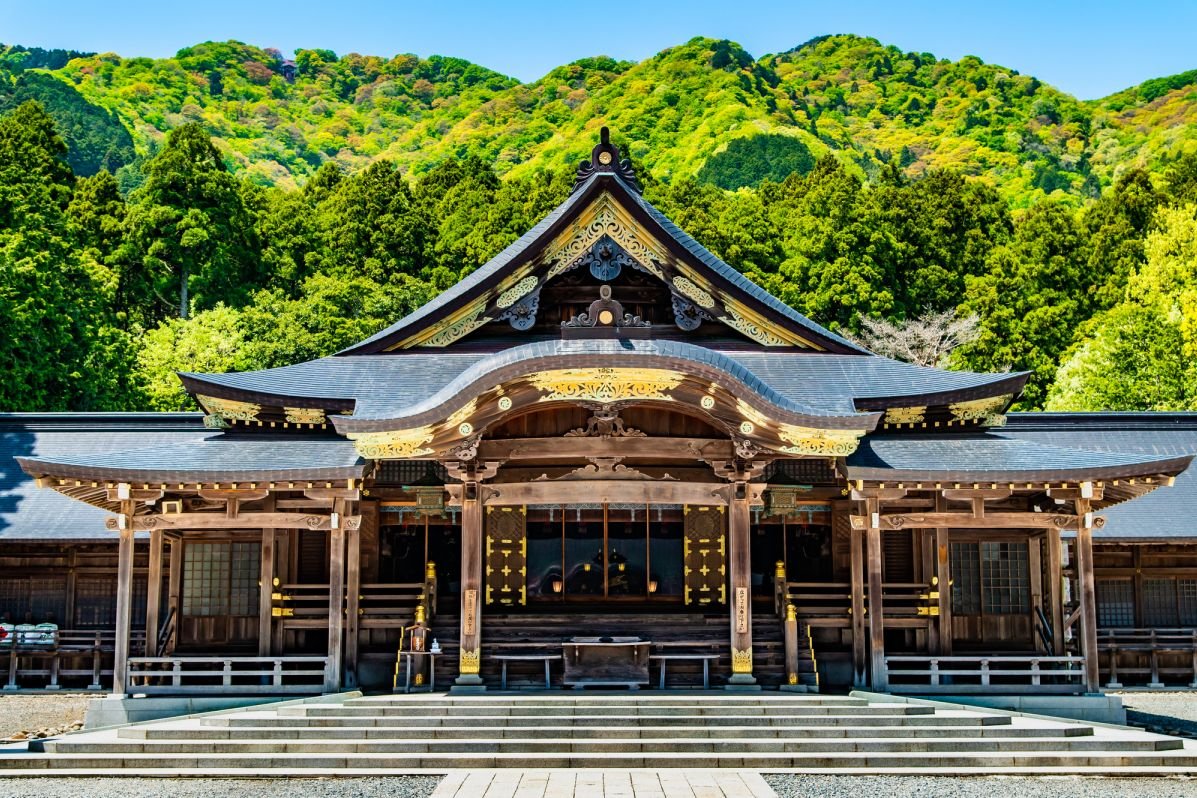
Shrine · Yahiko Village
Yahiko Shrine has a history of over 2,400 years, making it the largest shrine in Niigata and the most important in the Echigo region.
About 3 km from the shrine stands the Great Torii Gate, said to be Japan's finest cypress torii. The lush surroundings are filled with a sacred atmosphere; visitors enjoy forest bathing and autumn foliage at different times of year.
Inside the shrine, the "Light-and-Heavy Stone" can be used for divination — lift it and judge your fortunes by how heavy it feels. If it feels light, your wish will come true; if heavy, it may not. A fun ritual to try during your visit.
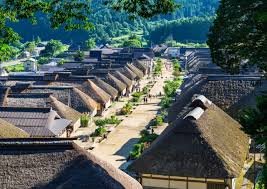
Historic Street · Minami-Aizu, Fukushima
Located in Minami-Aizu, Fukushima Prefecture, Ouchi-juku served as a post town providing lodging for travellers since the Edo period. Today it is preserved as a complete historic district and designated a "Preservation District for Groups of Important Traditional Buildings." Residents have long followed the principle of "no selling, no renting, no destroying," and more than 30 thatched-roof farmhouses retain the streetscape of the Edo era.
Visitors can enjoy local cuisine, stay in registered cultural properties, participate in traditional cultural events and seasonal festivals. Highlights along the shop-lined street include leek soba (noodles eaten with a leek instead of chopsticks), tochi mochi made from horse chestnut, and "Shingoro" rice balls grilled with sesame miso — perfect for a leisurely stroll.
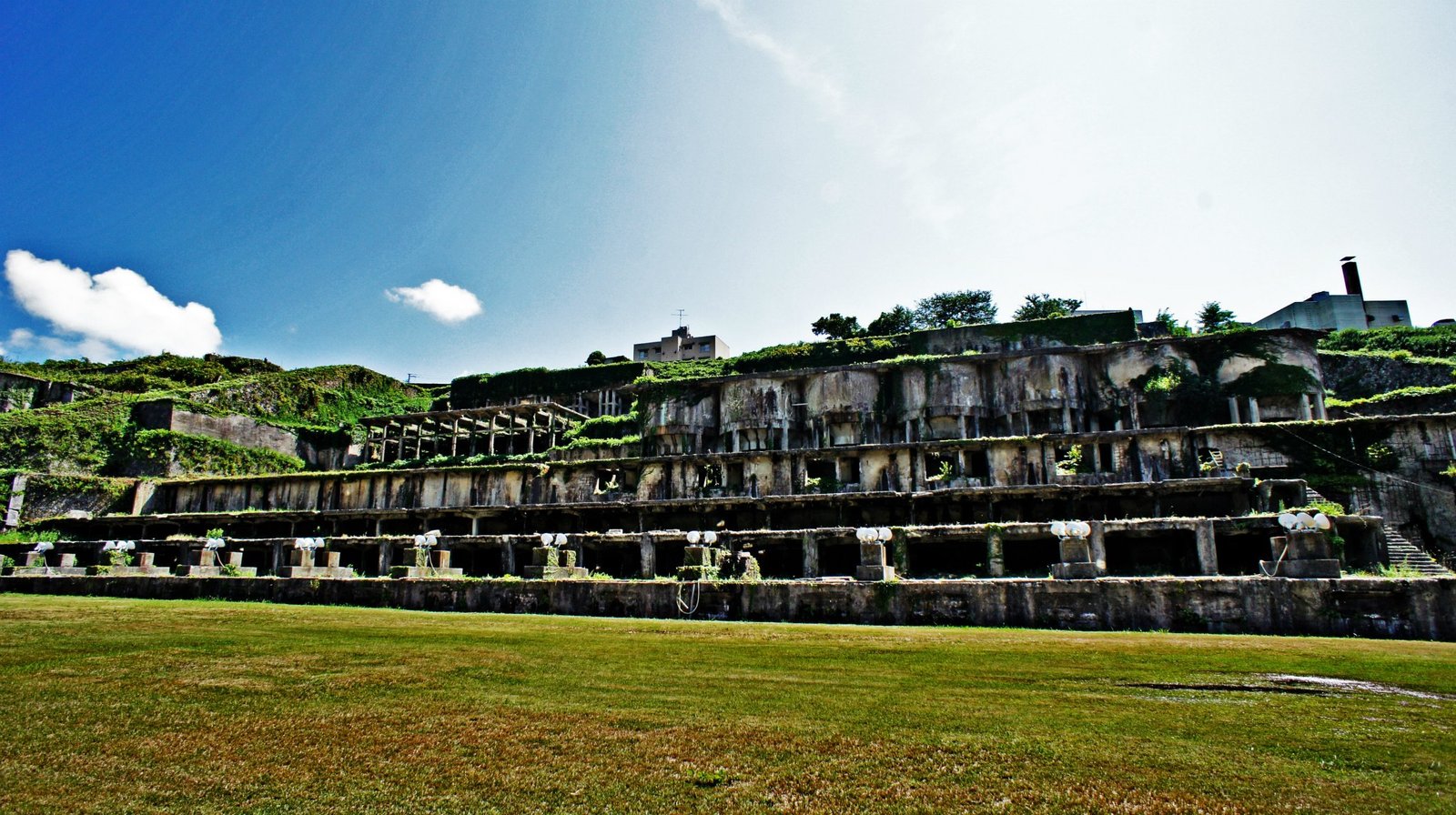
World Heritage Site · Sado
Sado Gold Mine operated from 1601 to 1989 — over 400 years — making it Japan's largest gold and silver mine. Most of the industrial heritage within the mine, including tunnels and mining facilities, has been designated as nationally important cultural properties and historical sites, and the site was inscribed on the UNESCO World Heritage List in 2024.
Among its highlights, the "Kitazawa Flotation Plant" is a must-see: its spectacular ruined landscape evokes the scenery of Hayao Miyazaki's film Castle in the Sky. It is also notable as the first place in Japan where copper-smelting technology was successfully applied to gold and silver mining.
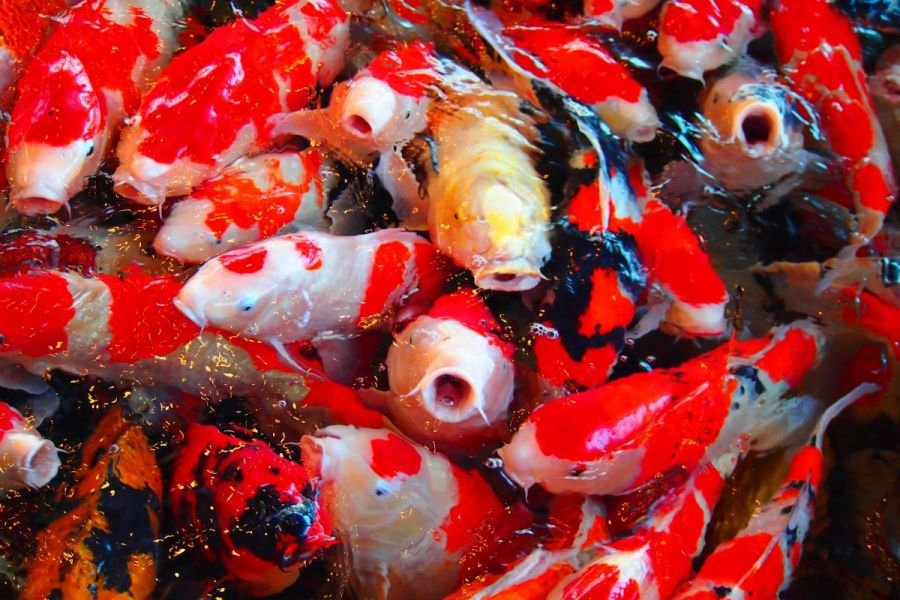
Exhibition Hall · Ojiya City
Ojiya City in Niigata Prefecture is the birthplace of nishikigoi (ornamental koi), and Nishikigoi no Sato is the world's only exhibition facility dedicated to koi. The centre not only traces the history of nishikigoi but lets visitors view hundreds of prize specimens — including Taisho Sanshoku, Kumonryu, Platinum and other rare varieties — raised in the Snow Country's pristine waters using traditional techniques.
Nishikigoi were designated as Niigata Prefecture's ornamental fish on 5 May 2017. About 200 years ago, the fish appeared through a natural mutation; through generations of dedicated research and selective breeding by the people of Ojiya, they evolved into the internationally celebrated ornamental species they are today.
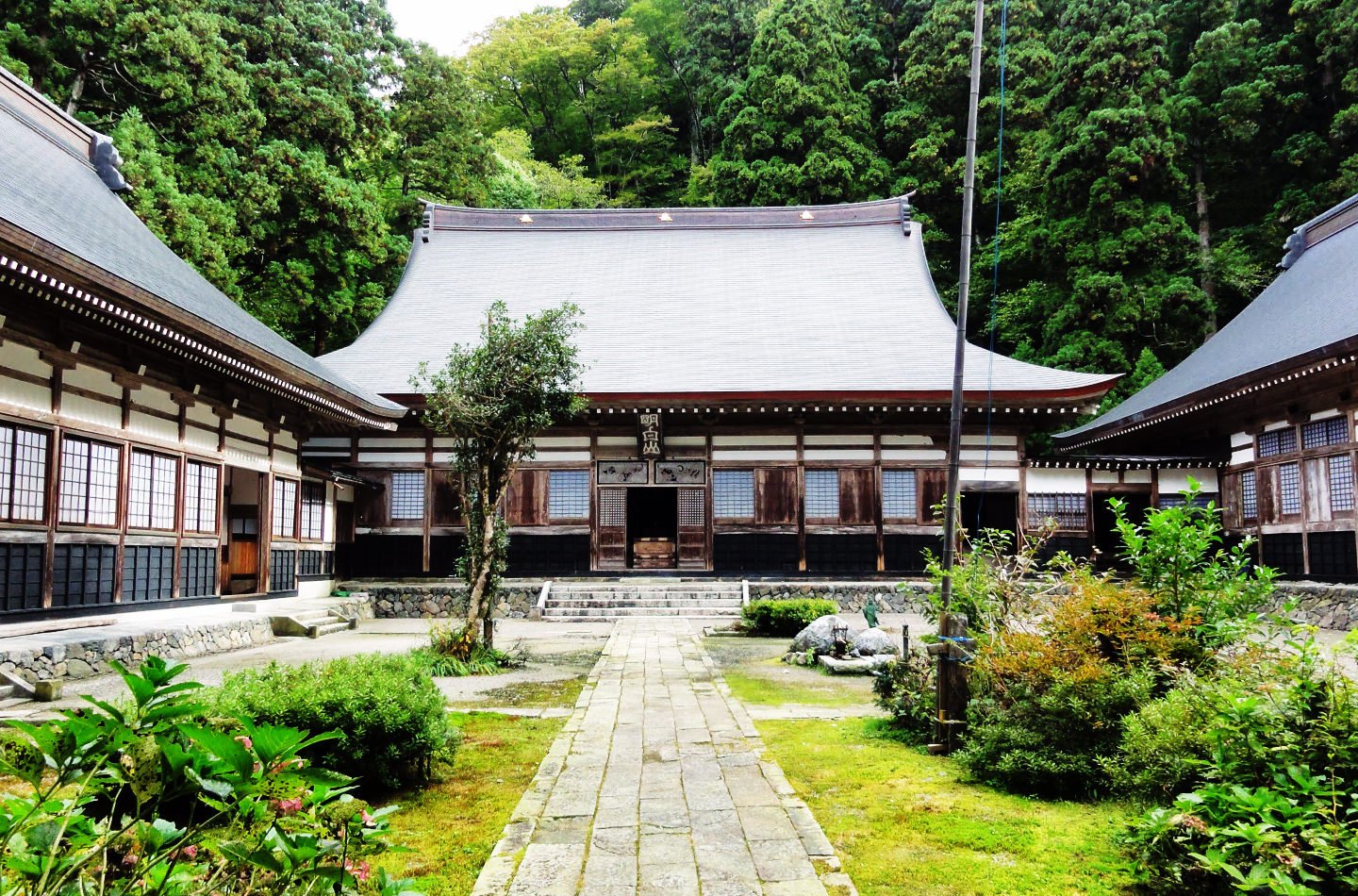
Ancient Temple · Gosen City
Jikoji Temple is one of the four great training halls of the Soto school of Zen Buddhism in Echigo, revered since ancient times as a celebrated place of worship. The approach path to the temple stretches about 500 metres, lined by more than 100 towering cedar trees, some over 300 to 500 years old with trunks up to 6–7 metres in diameter. This majestic cedar forest is designated a Prefectural Natural Monument.
Along the cedar-lined path are further remarkable sights: the "Dragon God Cedar," whose form resembles a dragon ascending to heaven; an ancient cedar said to bear the marks of a giant serpent coiling around it; and thirty-three stone Kannon figures delicately cushioned in moss — all together conveying the deep history and solemn atmosphere of Jikoji Temple.
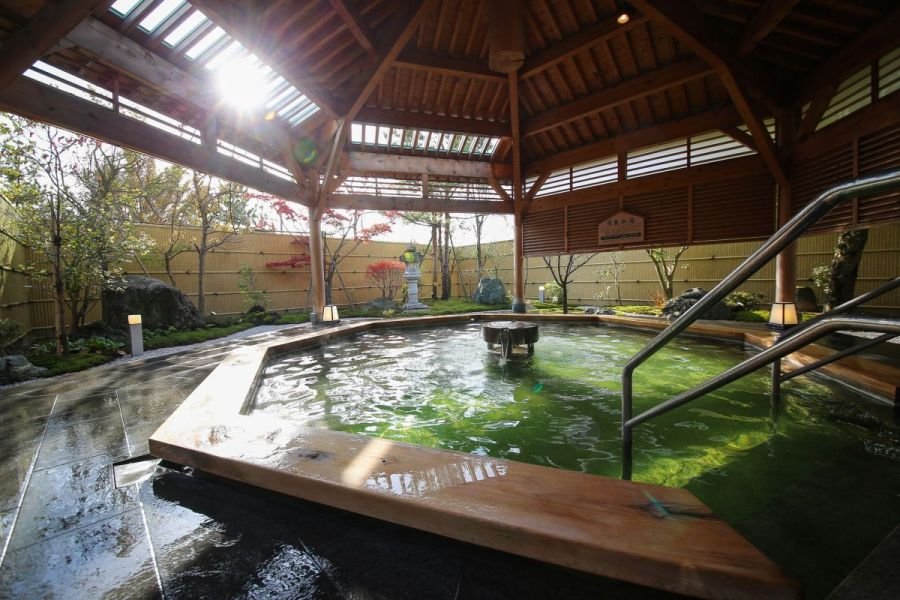
Hot Spring · Niigata City
Famous for its rare emerald-green sulphur spring, Tsukioka Onsen is celebrated as the "Beauty Spa." The mildly alkaline water is gentle on skin, leaving it moisturised and radiant after a soak — a favourite among female visitors.
The onsen street carries a faint sulphur scent; evening strolls are particularly enchanting as lanterns sway and geisha in kimono may appear. Accommodation ranges from grand ryokan to secluded guesthouses. Shops along the street offer sake tastings, handmade senbei biscuits and painting experiences, while nostalgic sweet shops remain intact. The landmark "Gensen no Mori" spot allows visitors to drink the spring water, enjoy hand-baths and hang votive wishes — a popular photo spot.
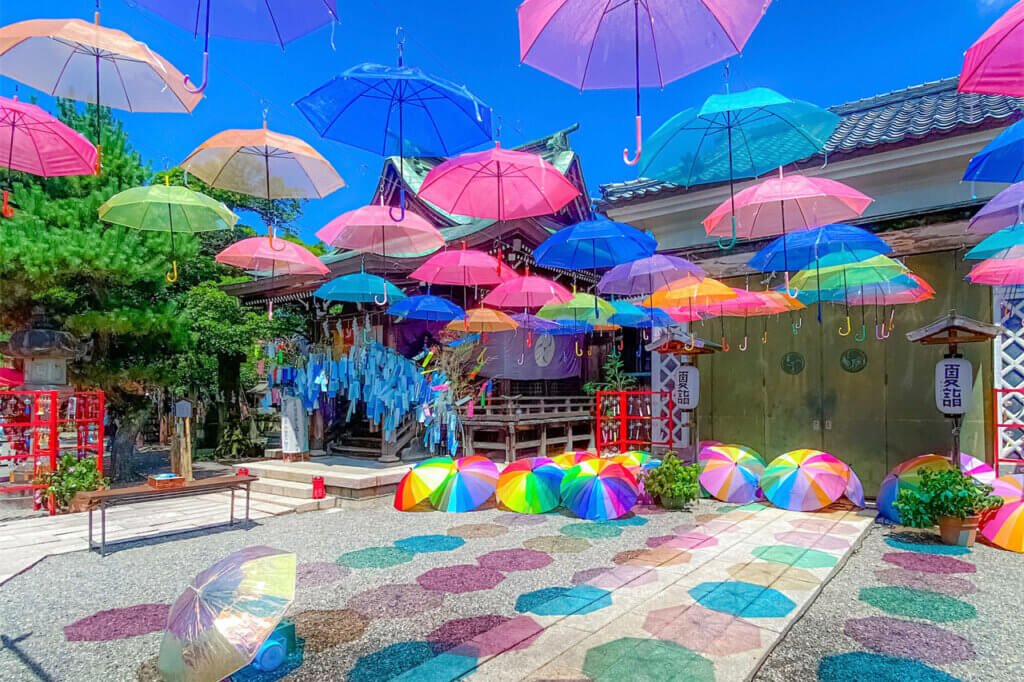
Shrine · Gosen City
Gosen Hachimangu Shrine stands on the former site of Gosen Castle and is regarded as the chief guardian shrine of the area. The main hall enshrines more than forty deities, and the grounds contain several distinctive sub-shrines, including Aosa Shrine (praying for the healing of disease), Tenmangu (dedicated to the deity of learning and the arts), and Hattori Shrine (protecting the textile industry).
The annual "Tanabata Wind-Chime Festival · Milky Way Pilgrimage" is one of the largest festivals in Niigata Prefecture. Around 5,000 crystal glass wind-chimes — including the Gosen Hachimangu wind-chimes — donated from all 47 prefectures of Japan and from around the world are displayed. The event also features an "Umbrella Sky" installation, letting visitors enjoy a dreamily colourful spectacle.
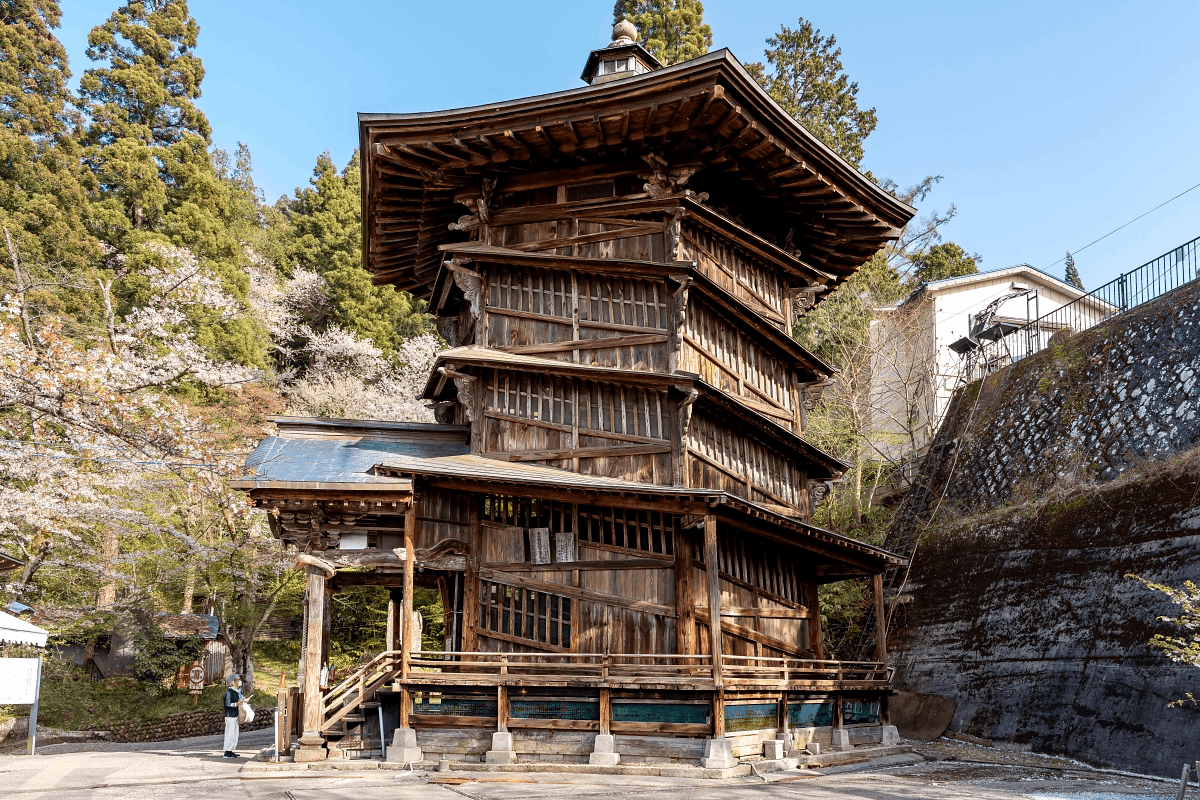
Historic Site · Aizuwakamatsu City
Iimoriyama is the historic stage where the Byakkotai (White Tiger Corps) fell by their own swords during the late Edo-period Aizu War. Beyond tracing this poignant history, the hill is home to a remarkable wooden structure — Sazaedo. Built in the late 18th century, it was designated as a National Important Cultural Property in 1995, recognised as a Japanese Heritage site in 2016, and awarded one star in the Michelin Green Guide.
Sazaedo's exterior resembles a turban shell, and its interior follows a double-helix design: the worship path spirals upward without any forks, and people going up and down never cross paths — a wonderfully ingenious structure. Visitors complete the pilgrimage route simply by following the passageway. This hall not only showcases the wisdom of craftsmen but also carries a weighty historical atmosphere, making it an unmissable stop on any Aizu itinerary.
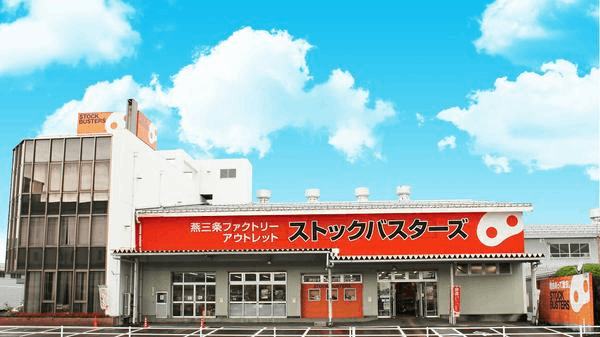
Factory Outlet · Tsubame-Sanjo
Tsubame-Sanjo is renowned for metalworking, and at "Tsubame-Sanjo Factory Outlet STOCKBUSTERS" you can purchase products crafted with world-class technology at discounts of 20–80% off retail price.
The range is vast — kitchen goods, homewares, outdoor gear and gardening tools among others. Alongside internationally famous products such as kitchen knives and nail clippers made here, the outlet also stocks agricultural and horticultural tools produced in the area, and has become an increasingly popular tourist destination in recent years.
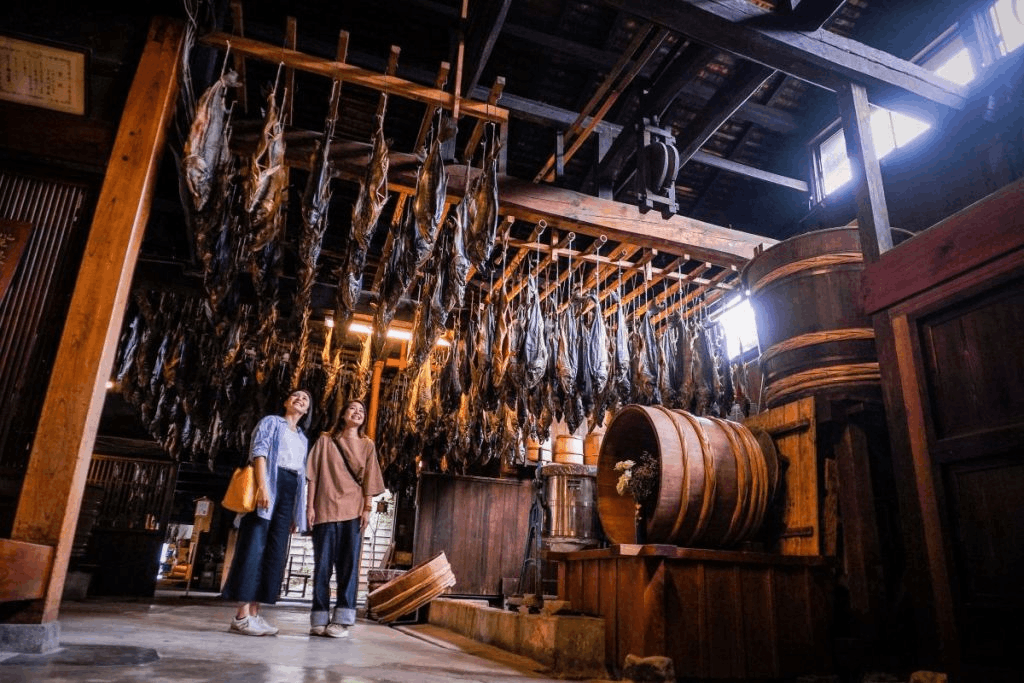
Traditional Culture · Murakami City
In Murakami, there is a tradition of hanging salted salmon — called "shiobiki salmon" — from the eaves of homes during winter. The fish is prepared using a distinctive cut called "tomebare," which leaves the belly partially connected; the salmon is then hung head-downward. This is said to show respect for the salmon, avoiding any suggestion of "seppuku" (ritual disembowelment).
The salmon are dried slowly in the moist, cold winds blowing in from the Sea of Japan, allowing them to naturally ferment and mature into a uniquely flavourful product. A visit here offers insight into the singular culture of shiobiki salmon and the chance to purchase all manner of salmon-related souvenirs.
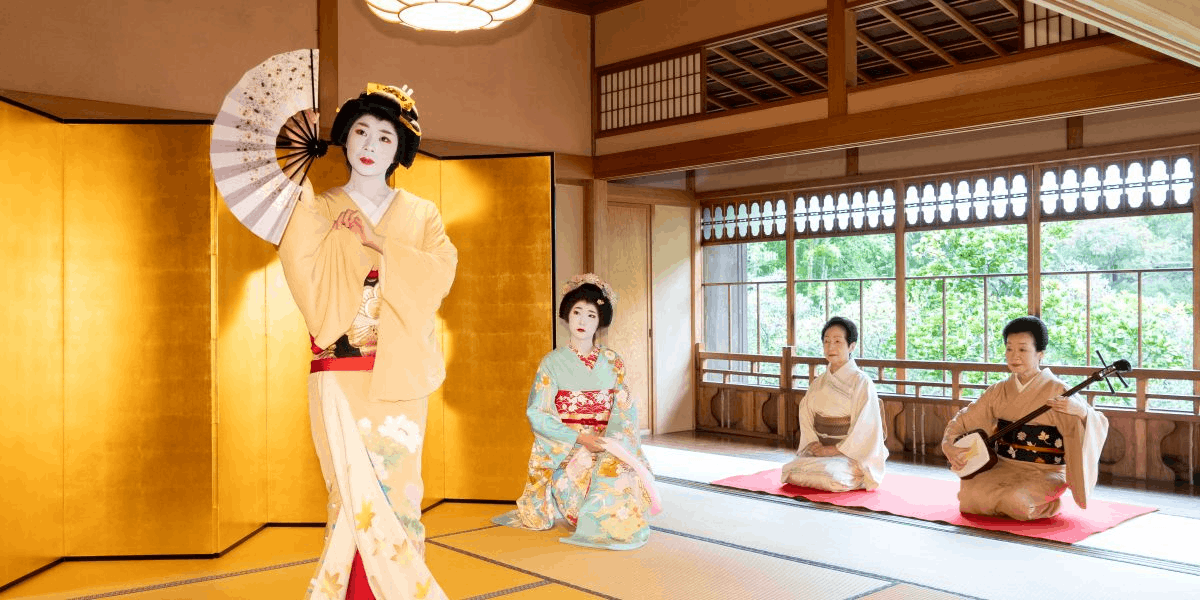
Traditional Culture · Niigata City
Niigata's Furumachi is one of Japan's most celebrated geisha districts, with a history of some 200 years. As an important cultural symbol of Niigata's prosperity as a historic port city, Furumachi geisha continue to this day to welcome guests with graceful song, dance and traditional hospitality.
The Furumachi area retains a rich kagai (flower-town) atmosphere, lined with exclusive ryotei restaurants. Visitors can enjoy geisha performances while savouring Niigata's seasonal cuisine, premium Koshihikari rice and locally brewed sake.
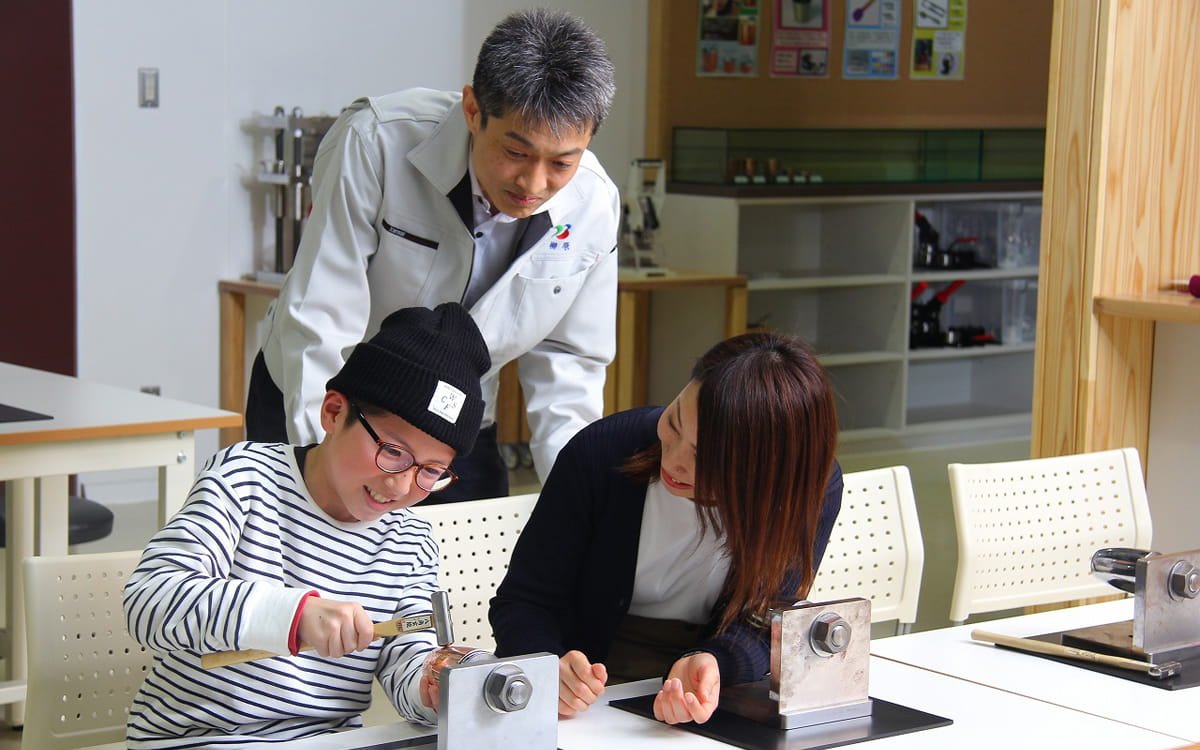
Craft Experience · Tsubame-Sanjo
Tsubame-Sanjo is world-renowned for its exquisite metalworking techniques. Through hands-on workshops, visitors can try traditional craft techniques such as tsuchime hammering (creating textured hammer marks), sake-cup making and spoon oxidation colouring — suitable for all ages. Once your piece is complete, you can take your handiwork home as a one-of-a-kind memento.
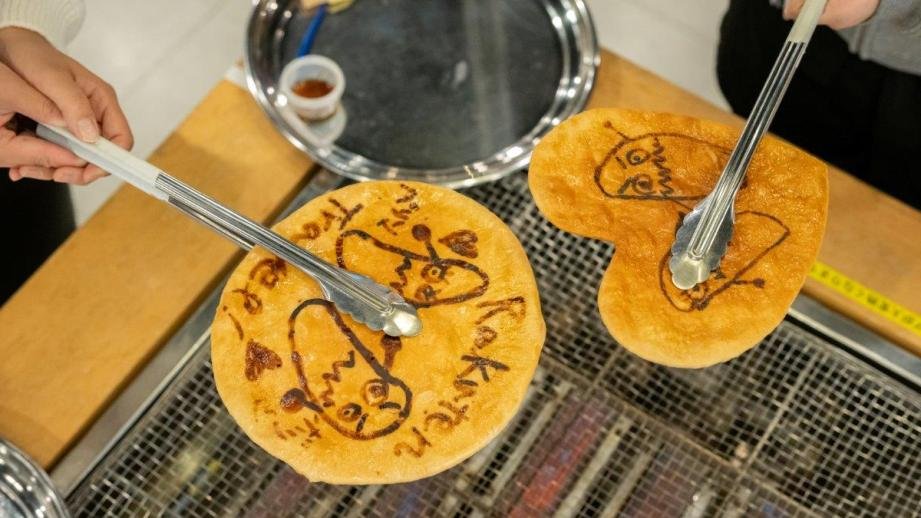
Rice Culture Experience · Niigata
Niigata is known as the "Kingdom of Rice," and its abundant, high-quality rice harvest has given rise to a variety of rice-based products such as sake and senbei (rice crackers). Niigata senbei in particular are celebrated nationwide. Visitors can make their own uniquely flavoured senbei by hand, or watch skilled artisans produce thousands of crispy crackers each day — an experience that brings traditional craftsmanship to life.
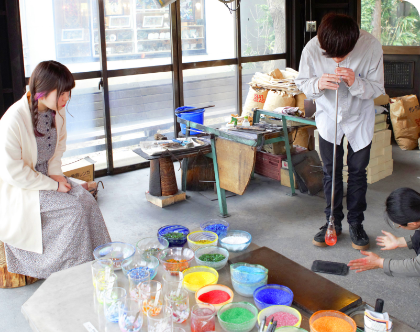
Craft Experience · Tsukioka Onsen
A handmade glass studio in Tsukioka Onsen offers visitors the chance to create their own original glasswork. The studio runs a variety of glass-craft experiences, including glass blowing, glass bead making and glass polishing — letting guests appreciate the delicate charm of hand-crafted glass up close.
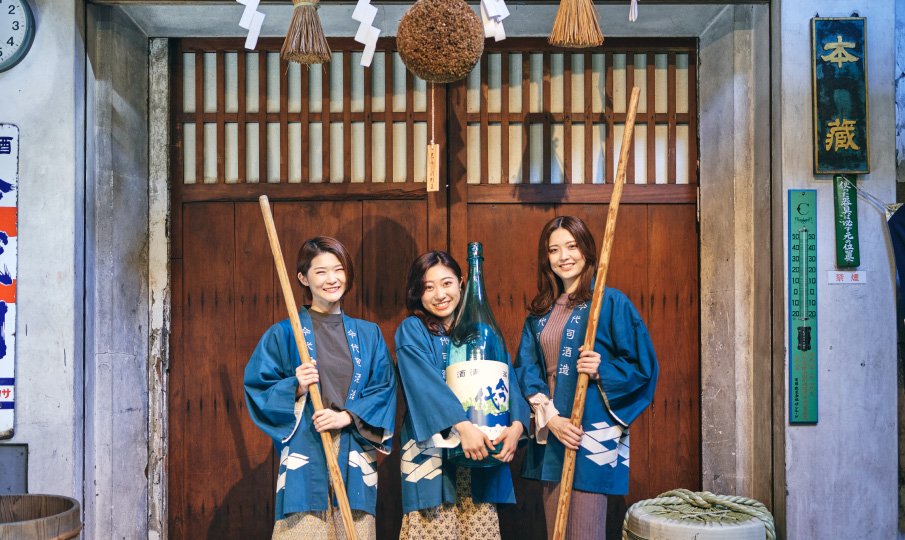
Sake Brewery Tour · Niigata City
When it comes to Niigata, sake is always at the forefront. As Japan's top rice-producing region with pristine local water, Niigata has been renowned for fermented products since antiquity. Just a 15-minute walk from JR Niigata Station, Imayo Tsukasa Shuzo offers guided brewery tours, allowing visitors to learn about the sake-brewing process up close in the city that has more breweries than anywhere else in Japan.
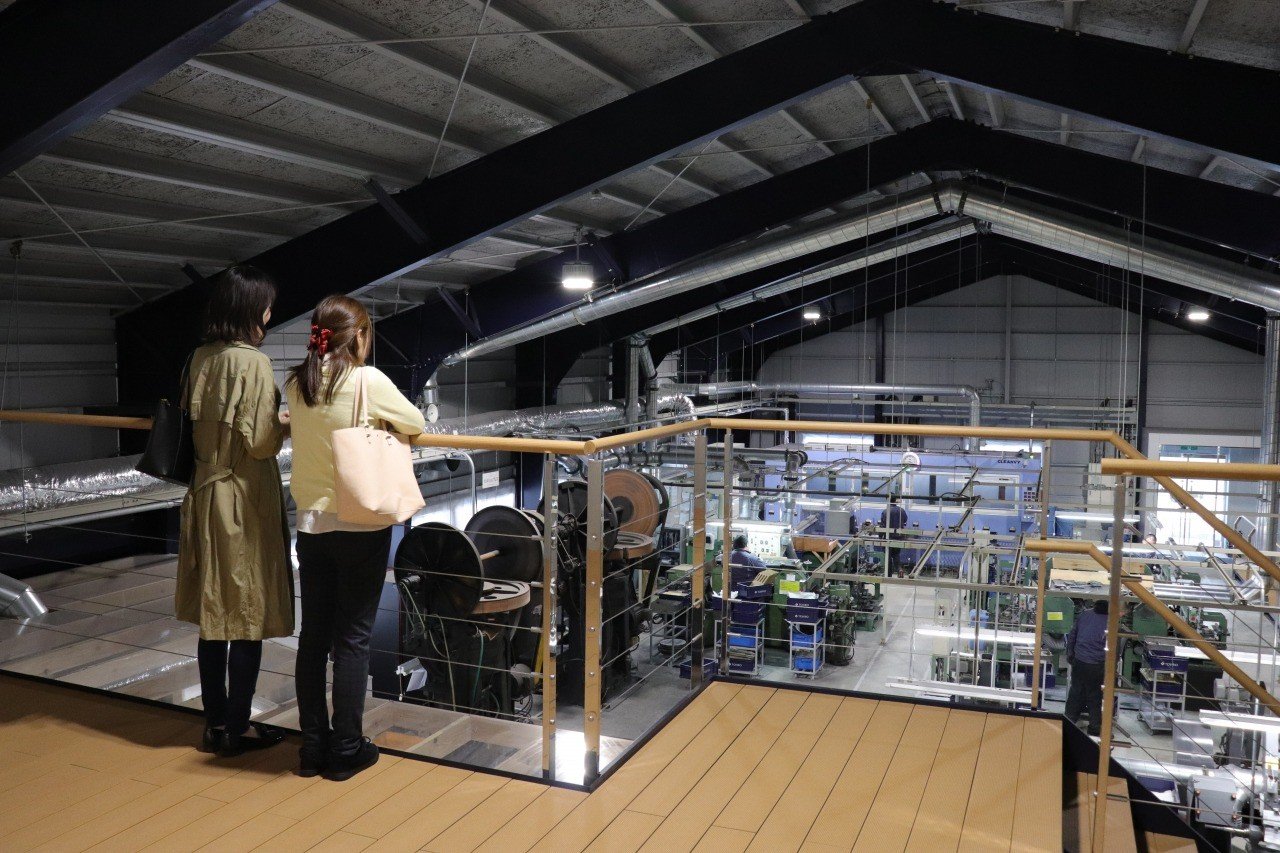
Factory Tour · Tsubame-Sanjo
Celebrating over 50 years in business, Tojiro has opened its "Tojiro OPEN FACTORY" — a recipient of Japan's Good Design Award in 2018 and one of the rare knife-factory visitor facilities in Japan capable of producing composite-material kitchen knives from start to finish.
The factory displays the complete production process, allowing visitors to experience traditional "monozukuri" (manufacturing craftsmanship) at close quarters, while showcasing knives for cooking, professional and home use. Visitors can feel the sounds and heat unique to the factory floor, experiencing the very essence of artisan skill. Since July 2024, the factory also offers a "Fruit Knife Making Experience," letting guests forge their own knife.
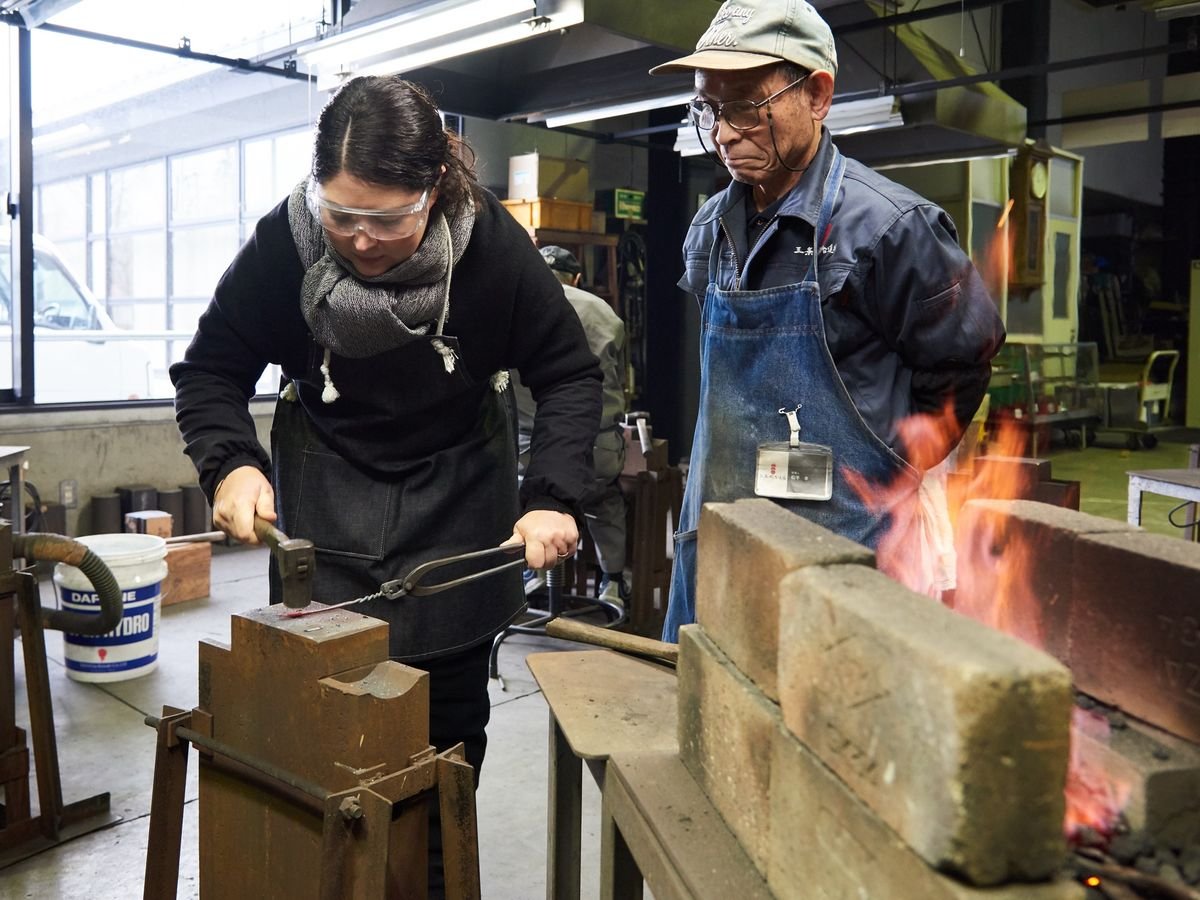
Blacksmithing Experience · Sanjo City
At the Sanjo Kajiba Dojo, visitors can experience the forging techniques that have been handed down in Sanjo City — the craft of heating iron or metal and shaping it into Japanese swords and other tools. Sanjo has been renowned for metalwork since ancient times, and forging is the essential foundation of its metal industry. The city is committed not only to developing these techniques but also to passing on the spirit of traditional craftsmanship.
Under the guidance of working blacksmiths, visitors can try "Japanese nail making," "letter-opener making" and "kitchen knife sharpening" — getting up close to traditional forging skills and experiencing the essence of hand-crafted work.
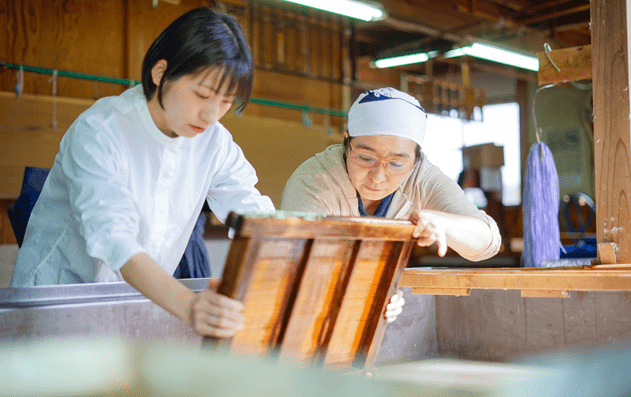
Craft Experience · Nagaoka City
Handmade washi paper has a history of over three hundred years in Oguni-machi, Nagaoka City, Niigata Prefecture. The raw materials are locally grown, and during winter production the accumulated snow unique to the Snow Country is used in traditional methods to create paper of pure white quality.
In addition to observing the washi production process, visitors can try making their own uniquely patterned washi or paper lanterns in the hands-on workshop.
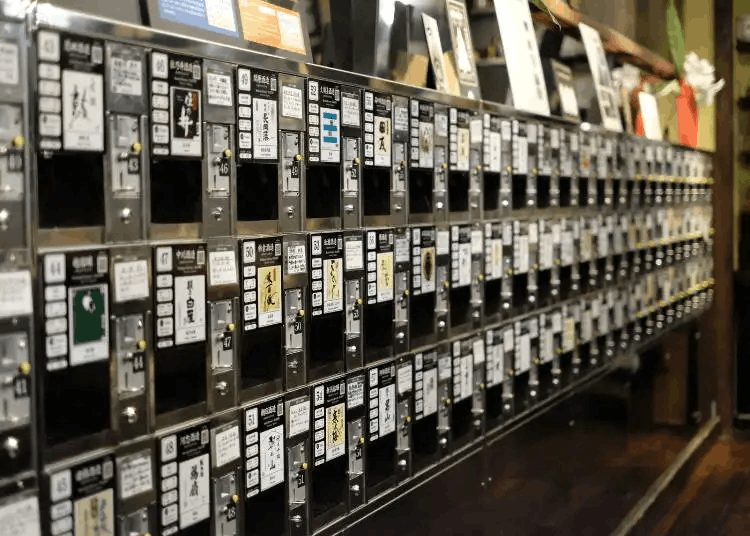
Sake Experience · Niigata City
For just ¥500 you can sample five cups of sake here, covering renowned breweries and hidden gem kura. Visitors choose from rows of tasting machines dispensing local varieties; the sake pairs beautifully with salt, miso and other local accompaniments, making it hard to leave.
Beyond sake, the venue also offers a "soy sauce tasting" experience for those who want to explore a range of flavours. For a hearty snack, try the legendary "Bomb Rice Ball" — a generously sized specialty made with Uonuma Koshihikari rice that is both luxurious and delicious.
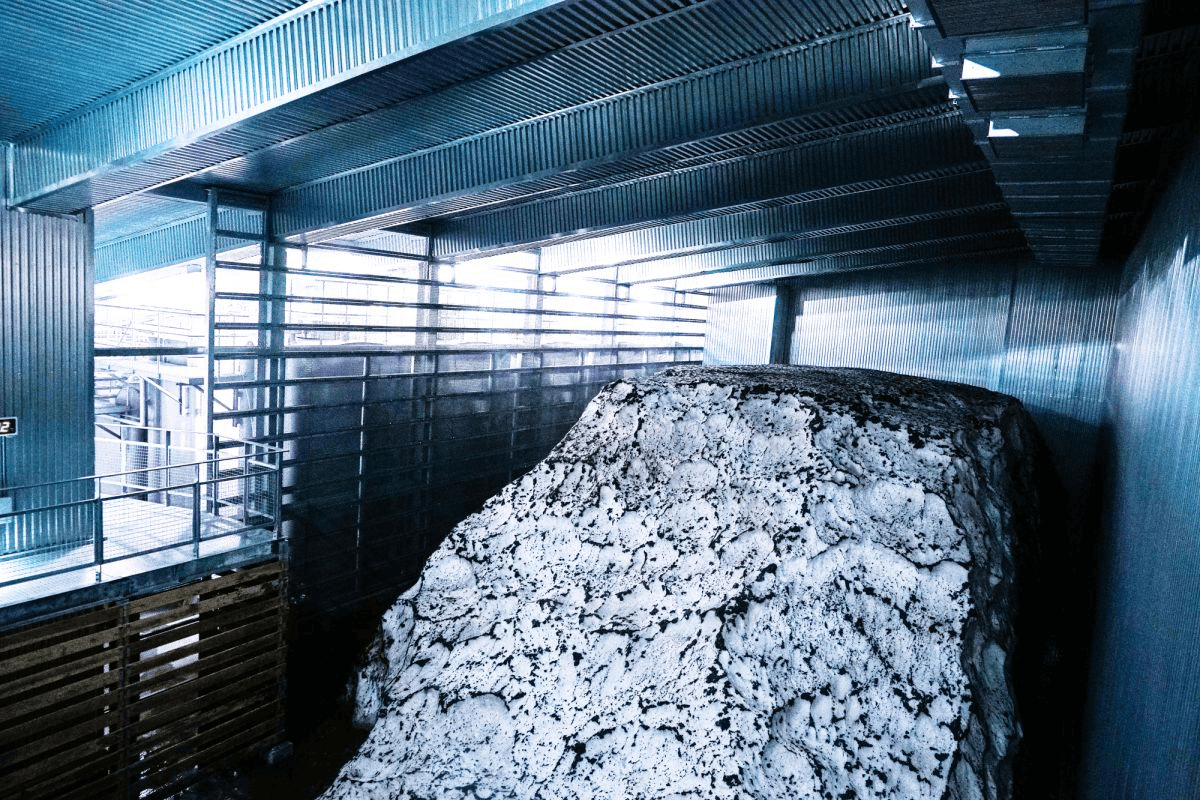
Cultural Experience · Minami-Uonuma City
Uonuma no Sato sits at the foot of Mt. Hakkaisan and is dedicated to showcasing the lifestyle of Uonuma and the tranquil atmosphere of Snow Country. The complex includes the "Hakkaisan" sake cellar, the "Hakkaisan Yukimuro" snow cellar with its café and shop, soba specialist "Nagamori," and the confectionery shop "Satoya" — each worth savouring.
The "Snow Cellar" stores around 1,000 tonnes of snow each year, maintaining a constant temperature of about 4°C year-round for storing sake and food — a testament to the Snow Country's unique wisdom of preservation.
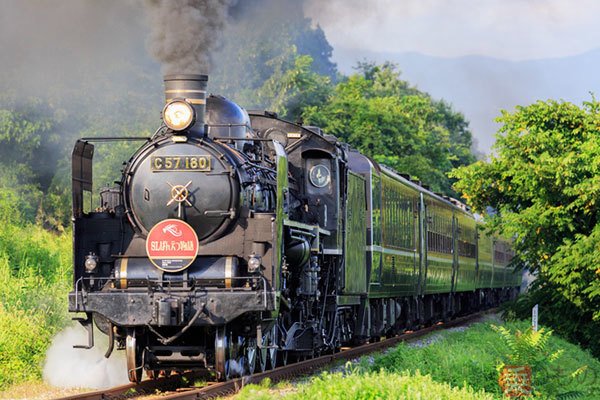
Steam Train · Banetsu West Line
The SL Banetsu Monogatari runs on selected dates along the JR Banetsu West Line to Aizuwakamatsu. After being withdrawn from service in 1969, the train was revived 30 years later in 1999.
Steam locomotive "C57-180" hauls dedicated passenger carriages, billowing white smoke along the Agano River through verdant mountains and valleys. Car 4 features an open observation lounge with panoramic views of the scenery; Car 1 is a "ferret observation car" decorated with various trees, perfect for families to enjoy a nostalgic and warm-hearted train journey.
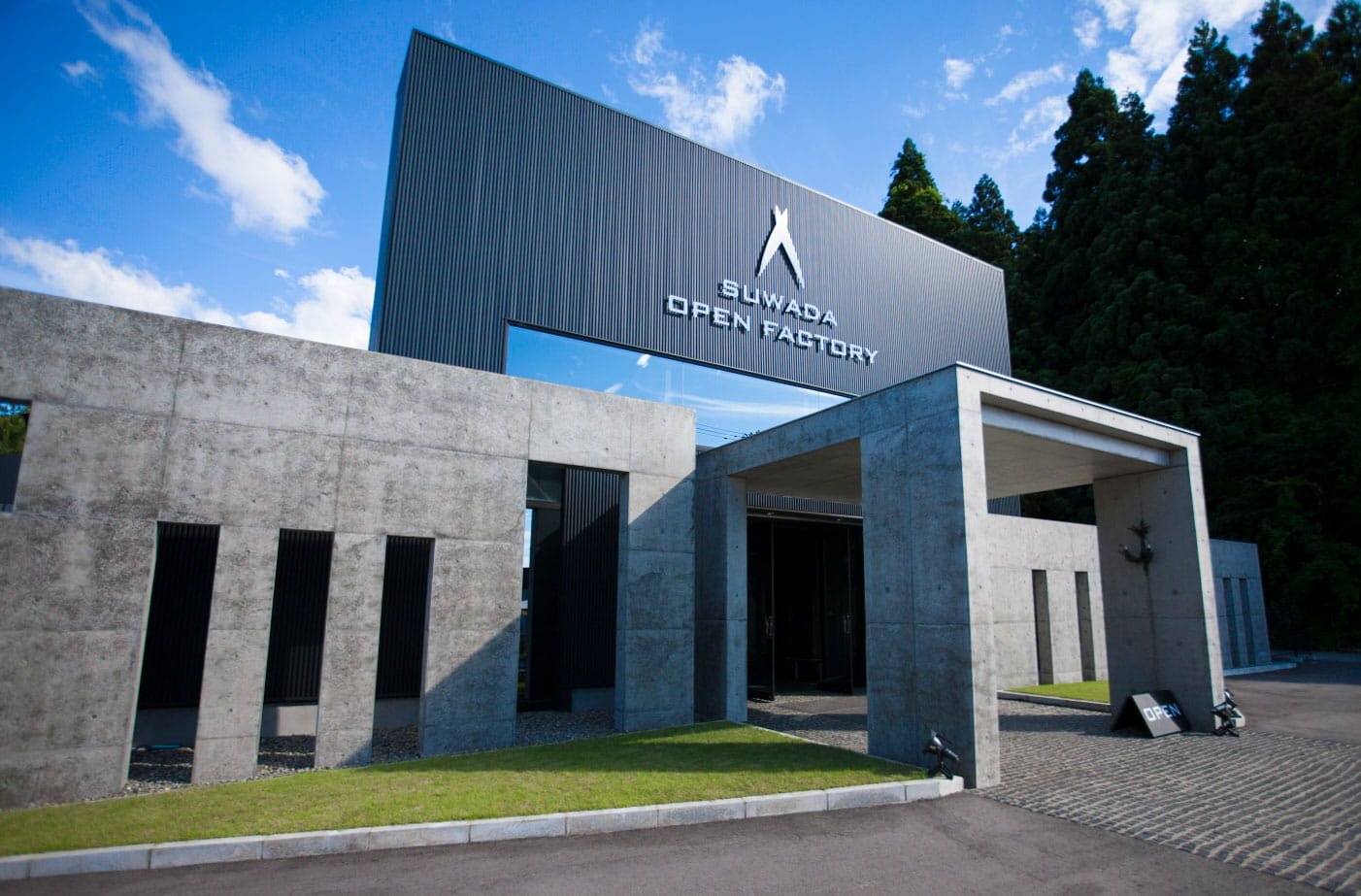
Factory Tour · Sanjo City
Tsubame-Sanjo has passed down forging and metalworking techniques since the Edo period and is celebrated as a "city of manufacturing." Suwada Seisakusho, founded in 1926, is renowned for bladed products such as nail nippers and diagonal pliers, winning numerous awards in Japan and abroad — a craft enterprise of distinguished reputation.
In 2011, the main factory was converted into an open factory open for visits on weekdays. To allow observers to see the state of the metal during processing, both the factory interior and workers' uniforms are uniformly black. The "forging" process — hammering heated metal to strengthen and shape it — and the subsequent "grinding and polishing" stages are all performed by skilled craftspeople, their mastery of the craft truly awe-inspiring.
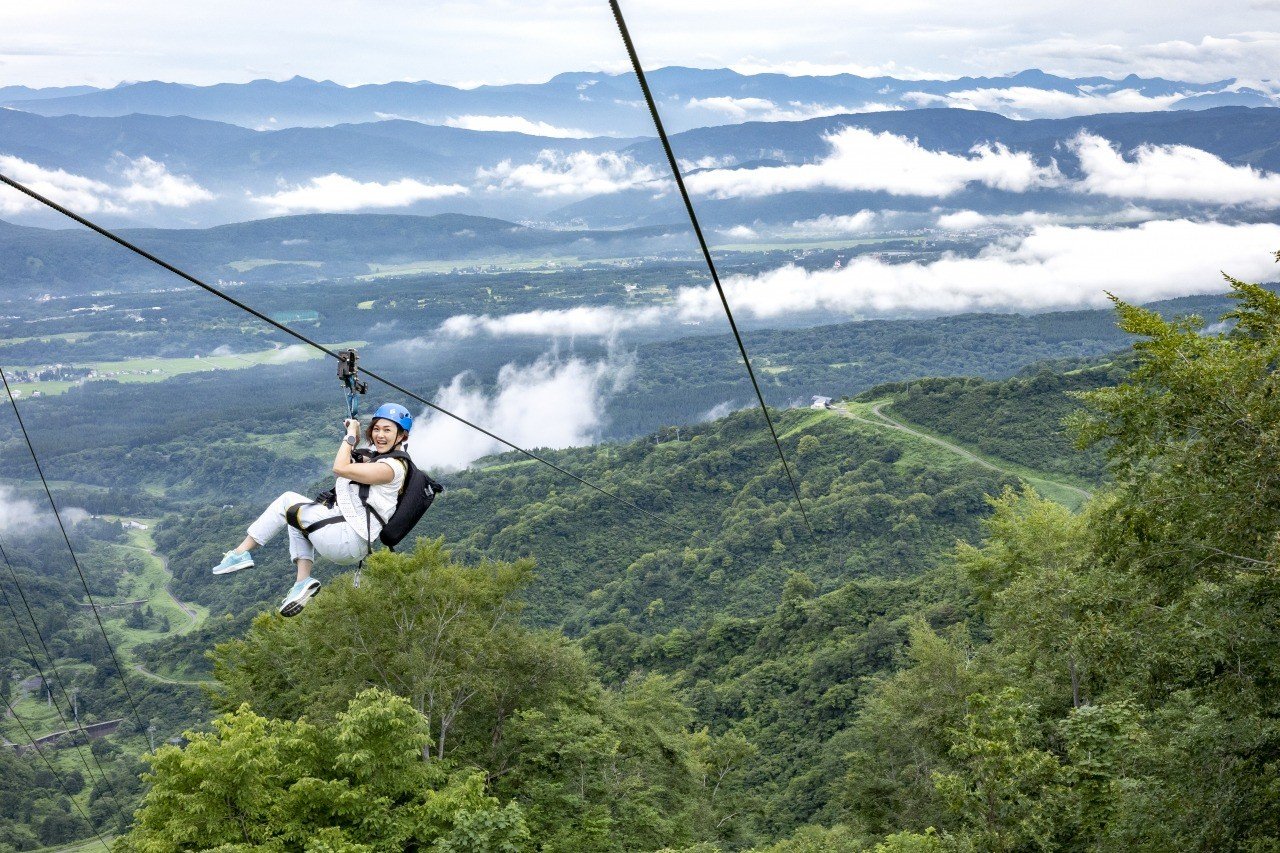
Zip Line · Myoko City
The Rakuten Arai Resort in Myoko City features Asia's longest aerial zip line, stretching 1,501 metres with a vertical drop of about 240 metres. Departing from a starting point at approximately 950 metres above sea level, riders reach the finish at 710 metres in about three minutes, taking in sweeping mountain scenery along the way.
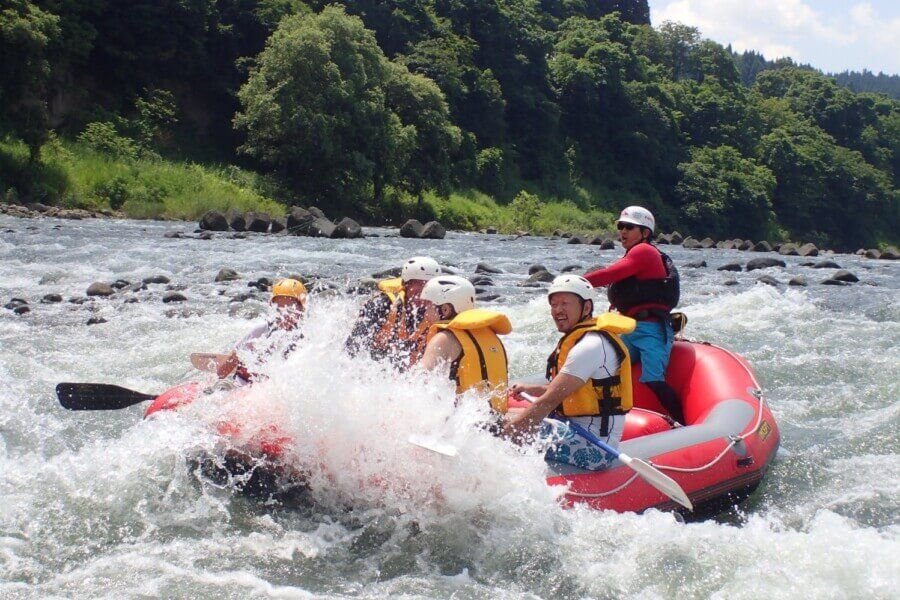
Rafting · Shinano River
The Shinano River is Japan's longest river, and visitors can enjoy exhilarating rafting while taking in its magnificent scenery. At designated points along the route, participants can jump from the raft into the river or swim — a full and varied water-sports experience.
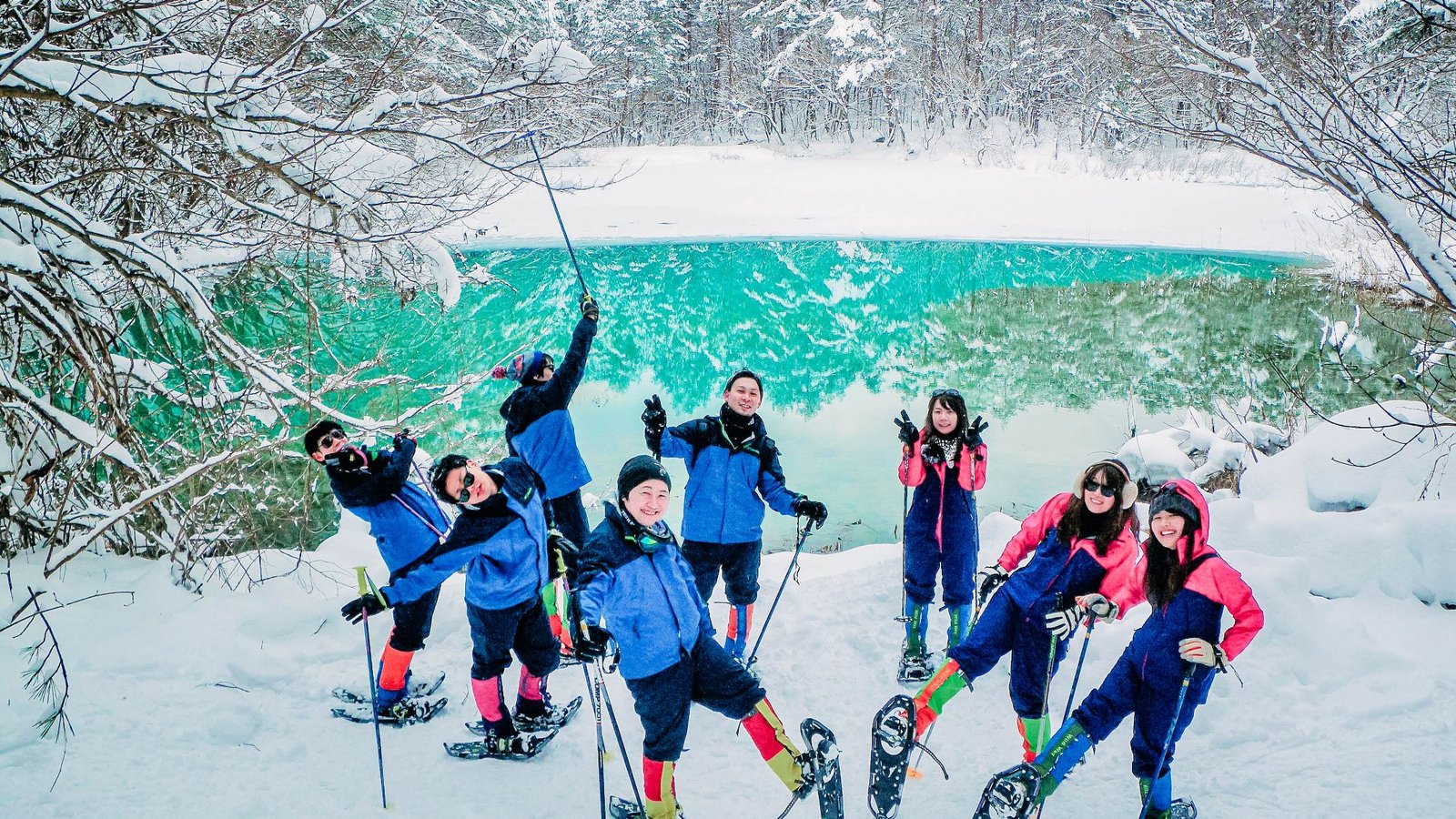
Winter Activity · Goshikinuma
Goshikinuma (Five-Colour Ponds) has been called "Japan's Jiuzhaigou," a natural wonder formed by a massive eruption of Mt. Bandai. Autumn and winter are the most captivating and varied seasons, offering a rich palette of natural colours.
In winter, Goshikinuma transforms into a snow-blanketed world. Visitors can strap on a full set of snowshoes and explore the snowy forest, experiencing a distinctly winter outdoor adventure. Snowshoe walking is moderately active and suitable for all ages — a must-do winter experience at Goshikinuma.
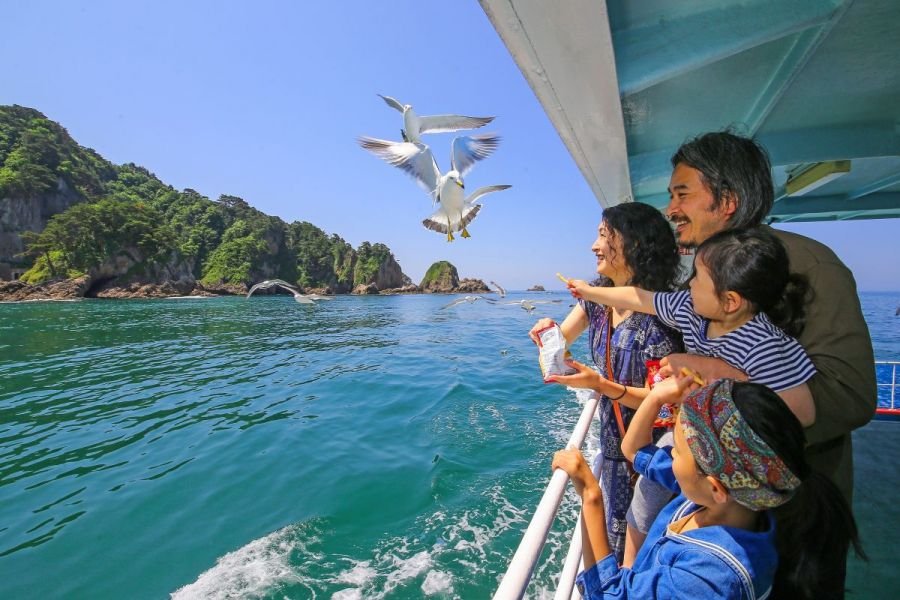
Sightseeing Cruise · Murakami City
Sasagawa-nagare is a designated National Place of Scenic Beauty and Natural Monument (designated 1927). Along its 11-km coastline, the relentless waves of the Sea of Japan have sculpted bizarre rocks, reefs and sea caves, creating a constantly changing natural landscape.
Visitors can board a sightseeing boat to enjoy the scenery of Sasagawa-nagare; during the approximately 40-minute cruise, guests can also feed seagulls and observe seabirds at close range — a delightful way to connect with nature.
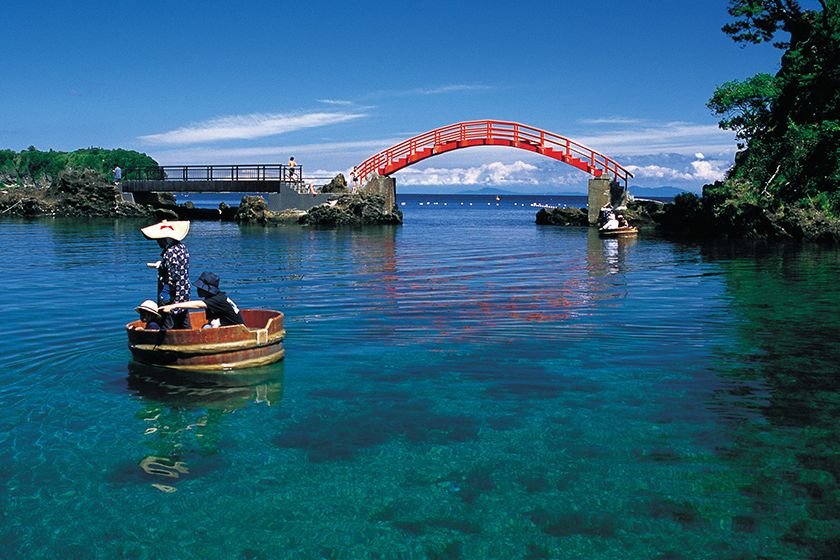
Experience · Sado Island
The tarai-bune was originally a small boat used for iso fishing (fishing along rocky shores). Fishers would place a glass box on a wooden tub to peer at the rocky seabed and then use tools to harvest seaweed and shellfish. Today's tarai-bune is said to have evolved from laundry tubs, purpose-built for harvesting wakame seaweed, abalone and turban shells along narrow, intricate rocky inlets.
The Yajima Experience Exchange Hall sits behind a sheltered cove. Visitors can admire the scenery of "Yajima Kyojima" and enjoy the fun of riding a tarai-bune for themselves.
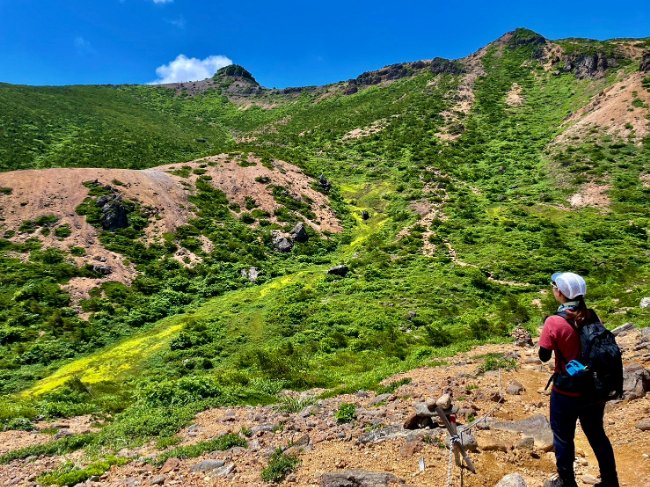
Hiking · Gosen City
Gosen City, nestled at the foot of Mt. Kanmuri and Mt. Okura, is rich in water sources and retains a pristine natural environment. The spring water of Mt. Kanmuri is acclaimed as one of "Niigata Prefecture's Famous Waters," and the celebrated Imayo Tsukasa Shuzo uses this natural water to brew most of its sake.
From late April through November, the mountains are open to hikers. The slopes are densely forested with beech and giant katsura trees, offering ancient and undisturbed natural scenery — a true wilderness experience.
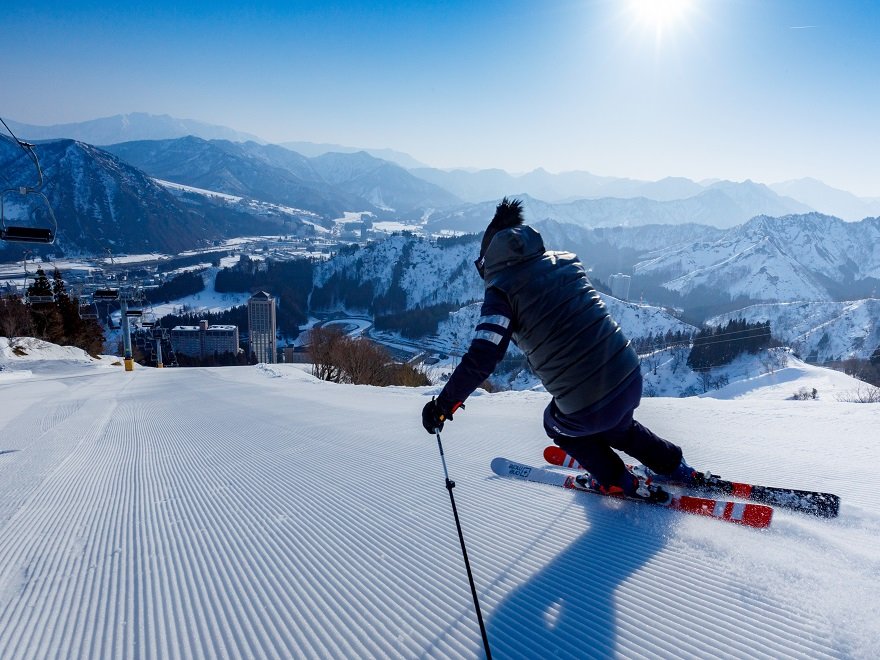
Winter Activity · Yuzawa Town
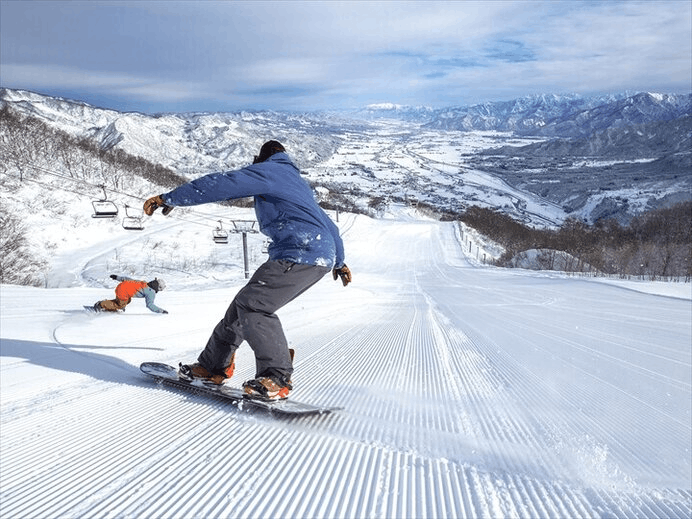
Just about 90 minutes from Tokyo by shinkansen, Yuzawa in Niigata Prefecture is a favourite among skiers for its high altitude and excellent snow quality. Some resorts feature multiple runs of varying difficulty for advanced skiers, while others offer gentler slopes well-suited to beginners.
Yuzawa is also a hot-spring area, so after a day on the slopes guests can soak away aches in an onsen for a thoroughly relaxing holiday.
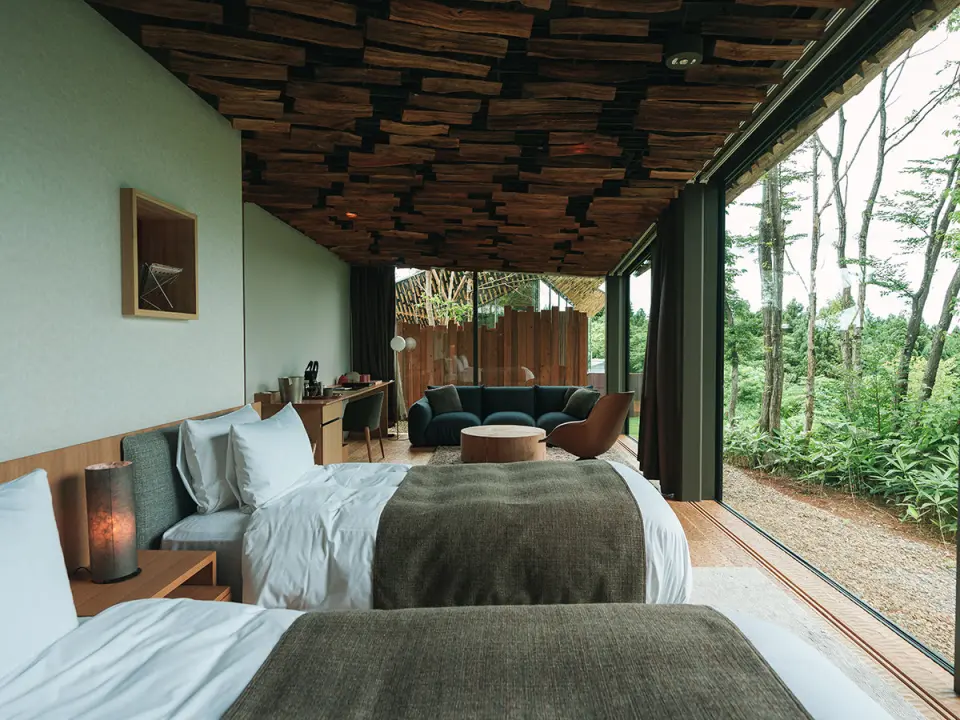
Outdoor Resort · Sanjo City
Snow Peak FIELD SUITE SPA HEADQUARTERS is built around a natural hot spring, allowing every guest to soak in the onsen while being immersed in the natural surroundings and taking in the captivating views. Guests can also admire the seasonal beauty of Mt. Awagatake — one of Japan's celebrated mountains — as they relax in the waters, a scenery both serene and enchanting.
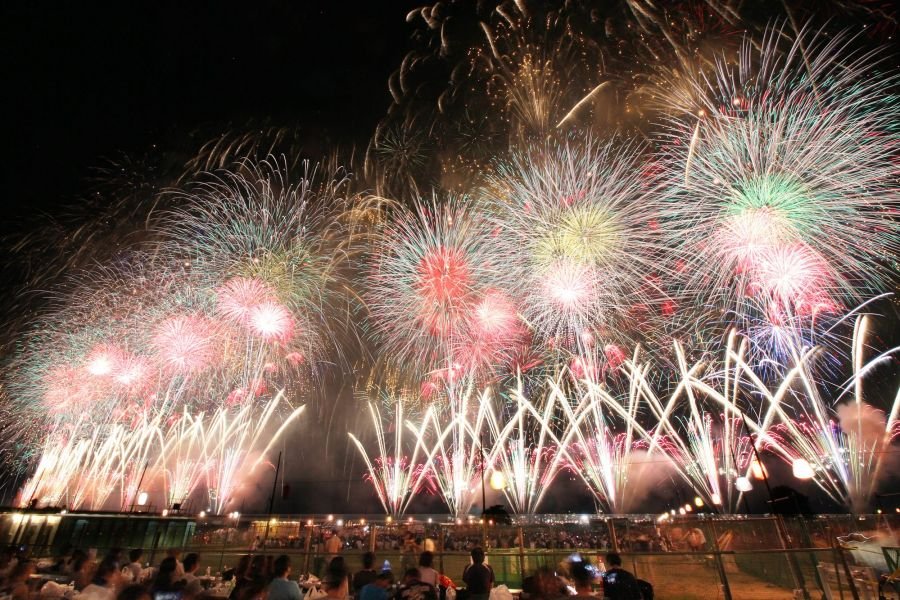
Summer Festival · Nagaoka City
The "Echigo Three Great Fireworks" is the collective name for the three fireworks festivals that define Niigata's summer — "Sea of Kashiwazaki," "River of Nagaoka" and "Mountain of Katakai."
Among them, the Nagaoka Fireworks Festival is one of Japan's three great fireworks events. Enormous shells burst brilliantly across the summer sky in massed volleys, creating an overwhelming visual spectacle. The "Revival Phoenix" set-piece — born from prayers for recovery after the Chuetsu Earthquake — unfolds across 1.7 km of night sky in a five-minute continuous launch, deeply moving all who witness it.
The event also features rapid-fire bursts choreographed to music; over the two-day event more than 20,000 shells are fired, delivering an unparalleled visual experience.
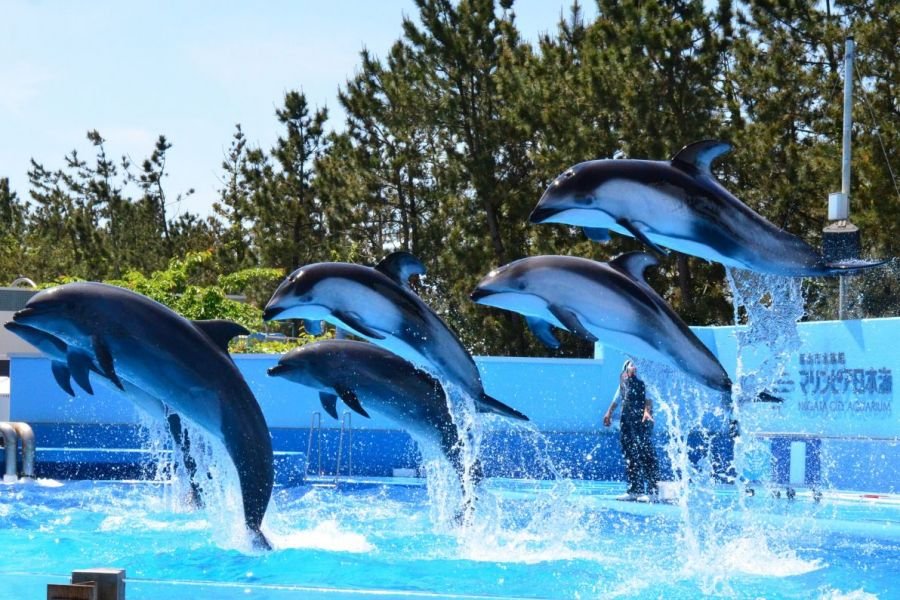
Aquarium · Niigata City
One of the largest aquariums along the Sea of Japan coast, the venue offers performances and guided activities that make learning fun. A popular daily "dolphin show" is performed every day.
The "Japan Sea Grand Tank" displays 35 species and approximately 6,000 marine creatures that inhabit the Sea of Japan. The tank's highlight is the "Ocean Tunnel" at its base — visitors can walk through the tunnel with fish swimming overhead, as if strolling through the sea itself, for a wonderfully immersive ocean experience.
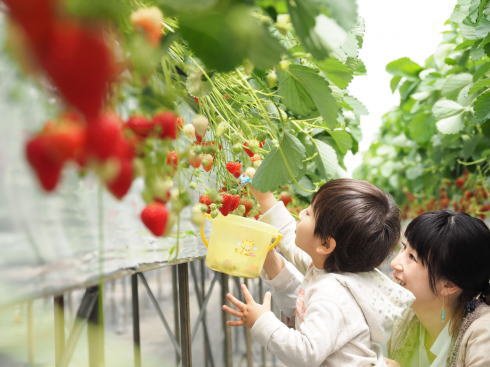
Fruit Picking · Niigata City South Ward
At "Shirone Vineyard" you can enjoy fruit picking in season year-round. Seasonal offerings include Niigata's celebrated Echigo-Hime strawberries, grapes, white peaches, figs and the legendary Le Lectier pear. The venue also serves handmade fruit sorbet and a variety of sweets, so visitors can savour the freshest flavours after the picking fun.
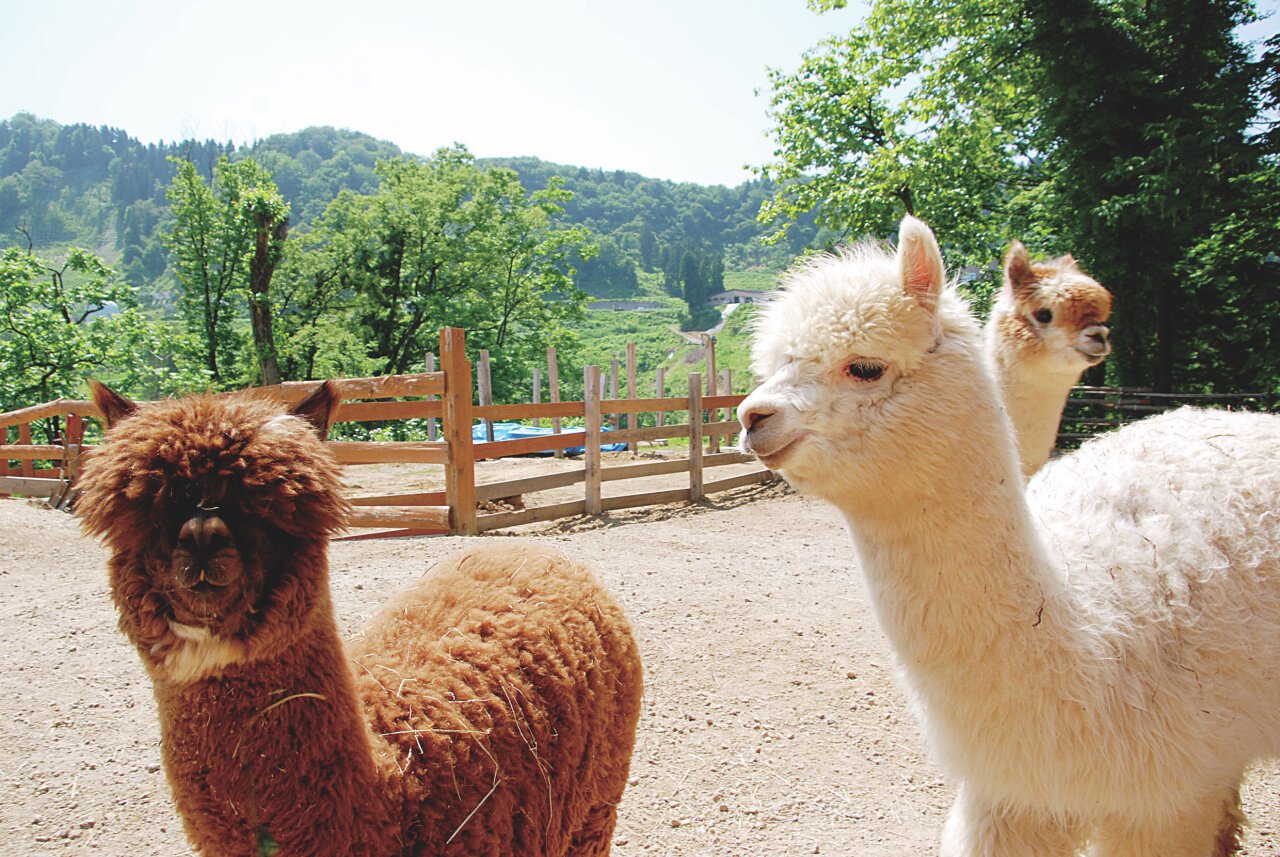
Farm · Nagaoka City
After the Chuetsu Earthquake, alpacas were gifted to Nagaoka by the state of Colorado, USA, and as their numbers grew the alpaca became a local mascot.
The farm is open for viewing year-round (except winter); visitors can buy feed to hand-feed the animals and enjoy close, cheerful interactions with these adorable creatures.
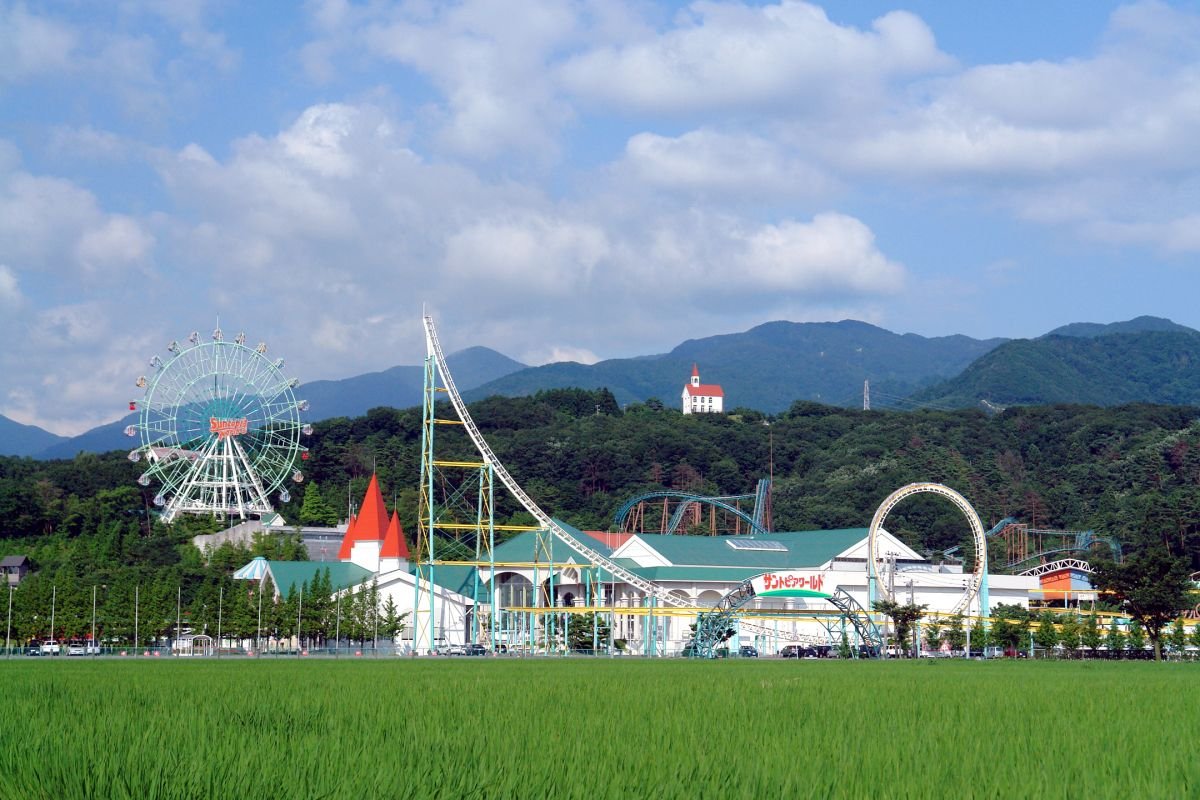
Amusement Park · Agano City
SUNTOPIA WORLD is located in Agano City, Niigata Prefecture, surrounded by gardens and greenery, giving visitors plenty of open space to enjoy themselves.
The park features 32 rides and attractions, including a classic carousel, a giant Ferris wheel, thrilling roller coasters and other exciting rides — fun for the whole family.
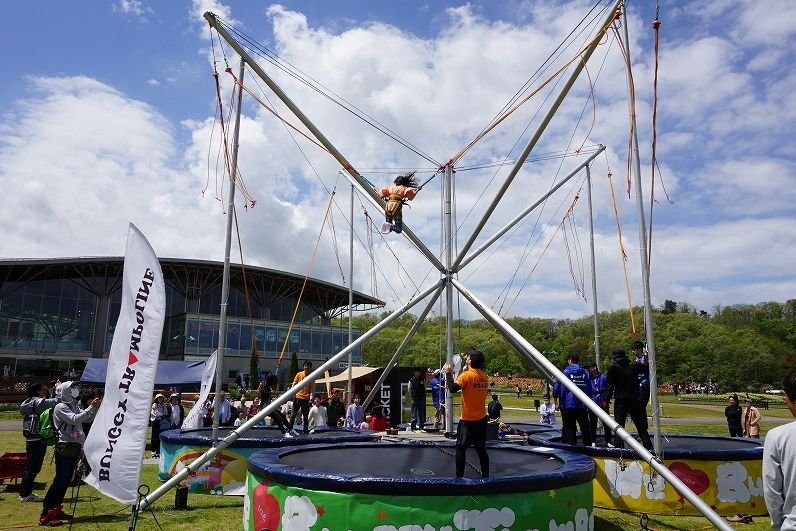
Park · Nagaoka City
The vast National Echigo Hillside Park offers visitors an array of sports and leisure activities beneath blue skies, on green lawns and across snowy winter fields.
Facilities include a mountain-shaped white trampoline, wooden play structures, a water playground and uniquely designed bicycles — entertainment for the whole family.
The park is also alive with seasonal flowers year-round: snow trillium, tulips, roses and cosmos bloom in turn, letting visitors stroll and savour the beauty of nature at a leisurely pace.

Family Park · Niigata City
A source of pride for Niigata City, "Ikutopia" is themed around food and flowers, offering a wide range of experiences for children and adults alike.
The park features a "Food & Flower Education Centre," a "Children's Creation Centre" and an "Animal Interaction Centre." Visitors can explore various exhibitions, use large play facilities and participate in diverse hands-on activities — a perfect blend of family fun and learning.
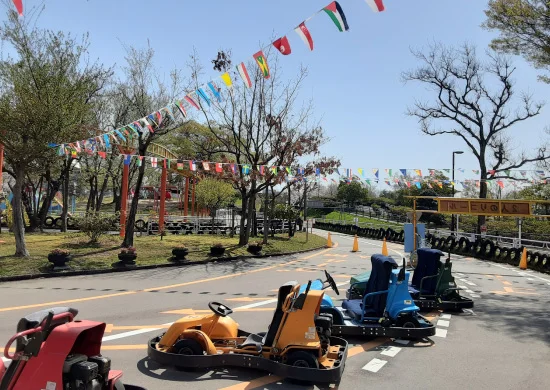
Children's Park · Tsubame City
Tsubame Traffic Park features simulated roads with traffic signals, letting children learn the rules of the road through play.
Facilities include monorail bikes, a large multi-play structure and a 650-metre figure-8 go-kart track — giving children the excitement of real racing in a safe environment.
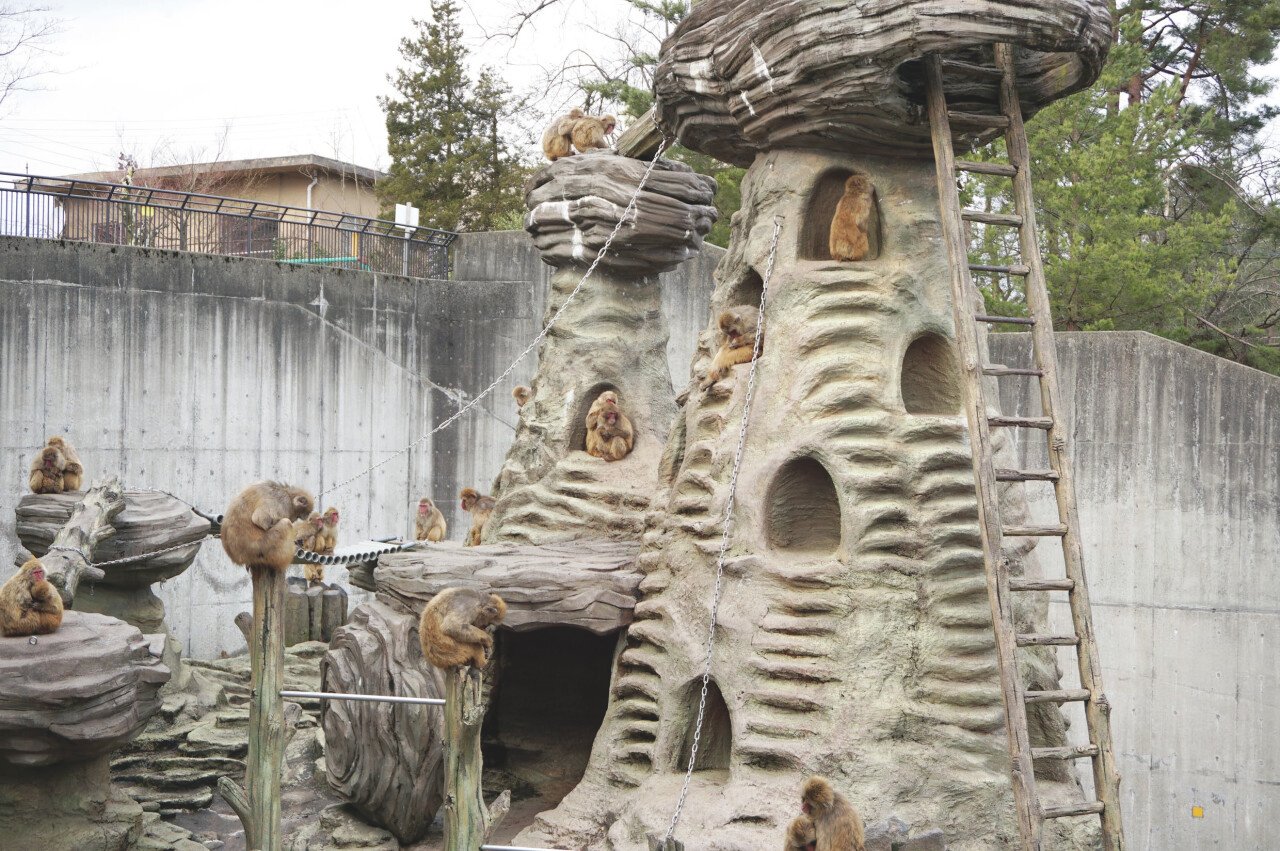
Small Zoo · Nagaoka City
In 1951, the Nagaoka City Science Museum opened inside Yukyuzan Park as the prefecture's first comprehensive museum, and it included a small animal zoo.
Today the zoo houses around 30 species of small animals, with Japanese macaques as the main attraction, allowing visitors to enjoy close encounters with wildlife alongside the science exhibitions — adding fun and educational value to their visit.
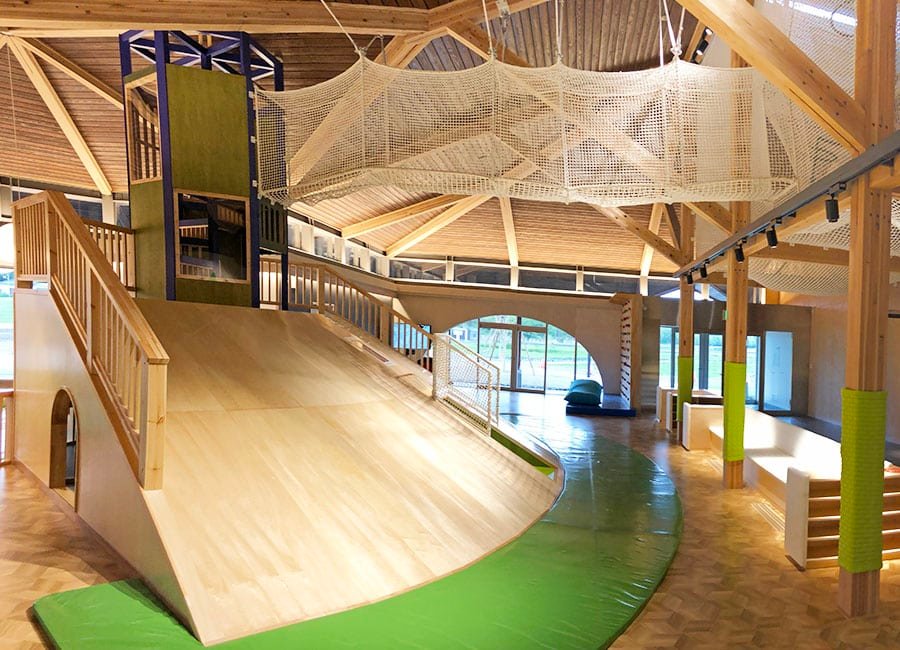
Family Facility · Gosen City
"Laporte Gosen" opened in October 2021 as a familiar cultural and community hub for the people of Gosen City. The facility includes a multi-purpose hall for concerts and theatrical performances, as well as a direct-sales shop offering local specialities and crafts — dedicated to promoting local culture and industry while providing space for arts, learning and relaxation.
There is also a free indoor children's play area, open to children aged 0–12, divided into a 0–3 year toddler zone and a 3–12 year play zone. Highlights include a large wooden slide and a ceiling net structure — irresistible to young children.
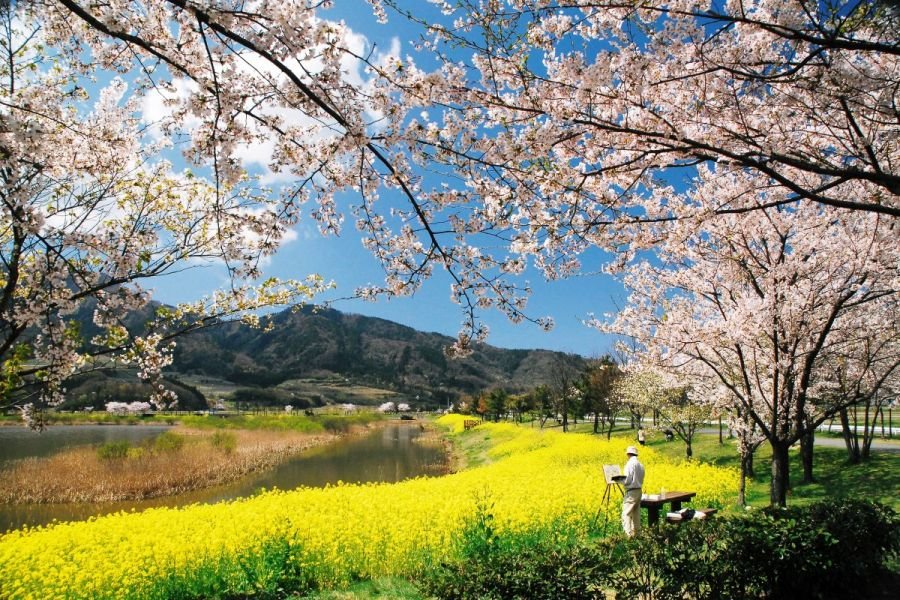
Niigata's beauty is not limited to any single season.
Cherry blossoms in spring, festivals in summer, autumn foliage, winter skiing — every season offers unforgettable experiences.
March — May
Spring in Niigata is a season of flowers in full bloom. From the soft pink of Somei Yoshino cherry blossoms to the golden yellow of rapeseed, from snow trillium in the mountains to tulips across the plains, floral carpets cover the entire prefecture. The mild climate makes this the most comfortable time to travel.
"Kamizeki-gata Park" in Nishikan Ward, Niigata City sits at the foot of Mt. Kakuda — an open, nature-filled park with wide-open views.
Each spring, around 450 cherry trees and approximately 1.6 million rapeseed flowers bloom simultaneously, weaving together soft pink blossoms and a golden sea of yellow — a dreamlike scene best enjoyed from early to mid-April.
This colourful spectacle belongs entirely to spring and is well worth experiencing in person. The park also offers rest huts, barbecue facilities, a roller slide and play equipment, along with a 2-km lakeside walking path and an 11-hectare lake surface — an ideal spot for flower-viewing and leisurely strolls.
"Yahiko Park" in Yahiko Village sits close to Yahiko Station and covers about 40,000 tsubo, featuring waterfalls, streams and a Meiji-era tunnel — all richly atmospheric in the Japanese tradition. In spring it is a celebrated cherry-blossom destination: blossoms begin with Somei Yoshino in April, continuing through to yaezakura double-petal cherry in May for a relatively long viewing season, with rare sato-zakura cultivars also on display. Around 1,000 trees blanket the entire park in soft pink.
The promenade from Yahiko Station to the park entrance is itself lined with cherry trees. During blossom season, evening illuminations create an entirely different, romantic mood from the daytime scene — making an evening stroll especially evocative.
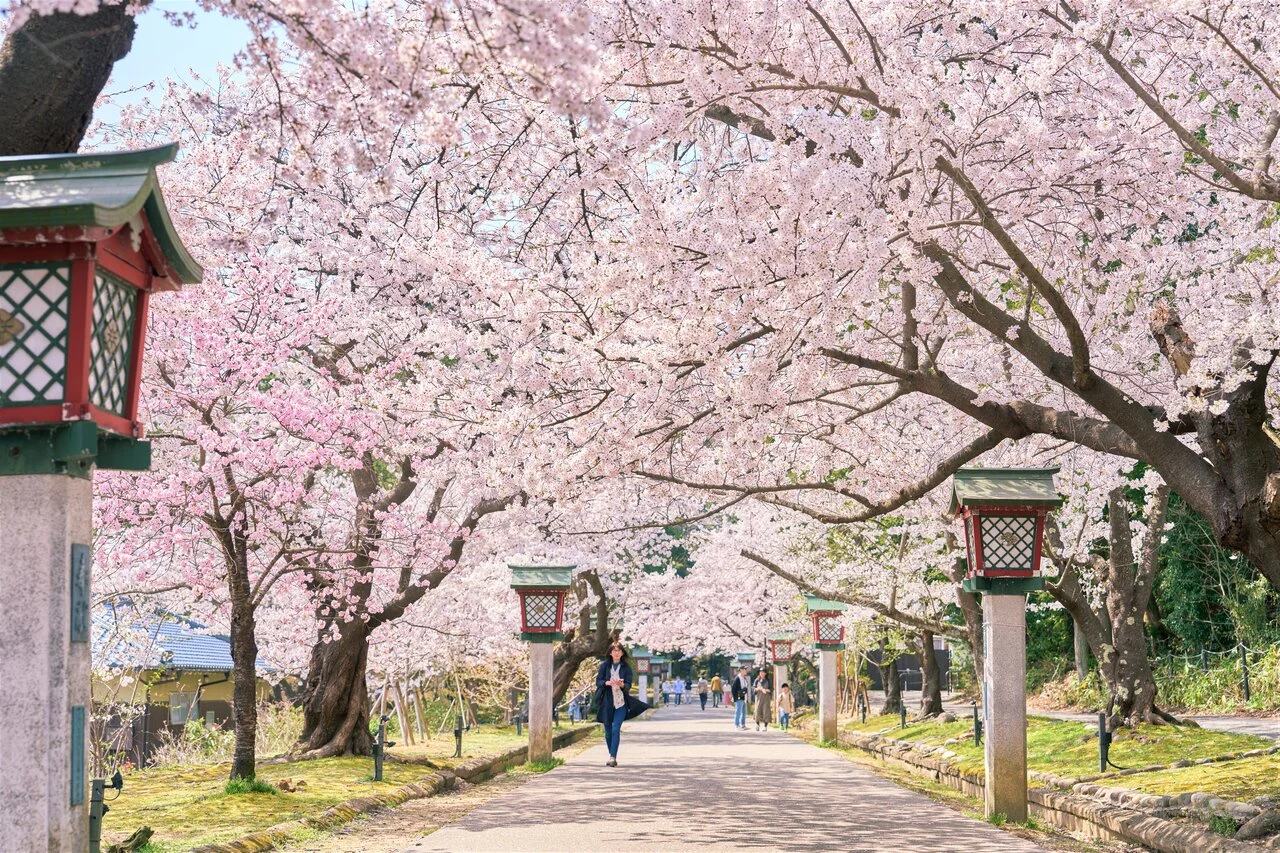
Muramatsu Park was established in 1906 to commemorate the Russo-Japanese War and is one of Niigata's most celebrated cherry-blossom destinations — selected for the "Top 100 Cherry Blossom Spots in Japan" list and ranked 3rd in the "Top 100 Scenic Spots in Niigata."
Somei Yoshino is the dominant variety; when they bloom in spring, the park becomes a vast sea of pink, dotted with vivid Yoko cherry blossoms and other cultivars. The park has play equipment and an open plaza, making it family-friendly. Evening illuminations and food stalls create a lively yet romantic atmosphere. Cherry blossoms in spring, snow trillium in early spring, autumn foliage — each season offers its own distinctive charm.
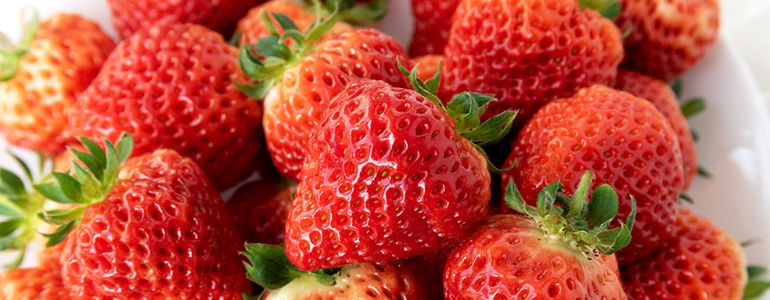
"Echigo-Hime" is the brand strawberry that Niigata Prefecture is most proud of — developed over years of research, born in a cold, low-sunlight climate, it is a fruit that truly represents Niigata's terroir. The berries are plump and adorable in shape, richly fragrant and wonderfully sweet and juicy. The name "Echigo-Hime" (Princess of Echigo) evokes the tenderness and freshness of a Niigata princess — a burst of mellow fragrance and full sweetness on the palate that is impossible to forget.
When visiting Niigata, beyond simply tasting freshly picked Echigo-Hime, we especially recommend trying the strawberry picking experience — picking and eating straight from the plant in the orchard, the sweetness and joy are unmatched. A not-to-be-missed spring treat.
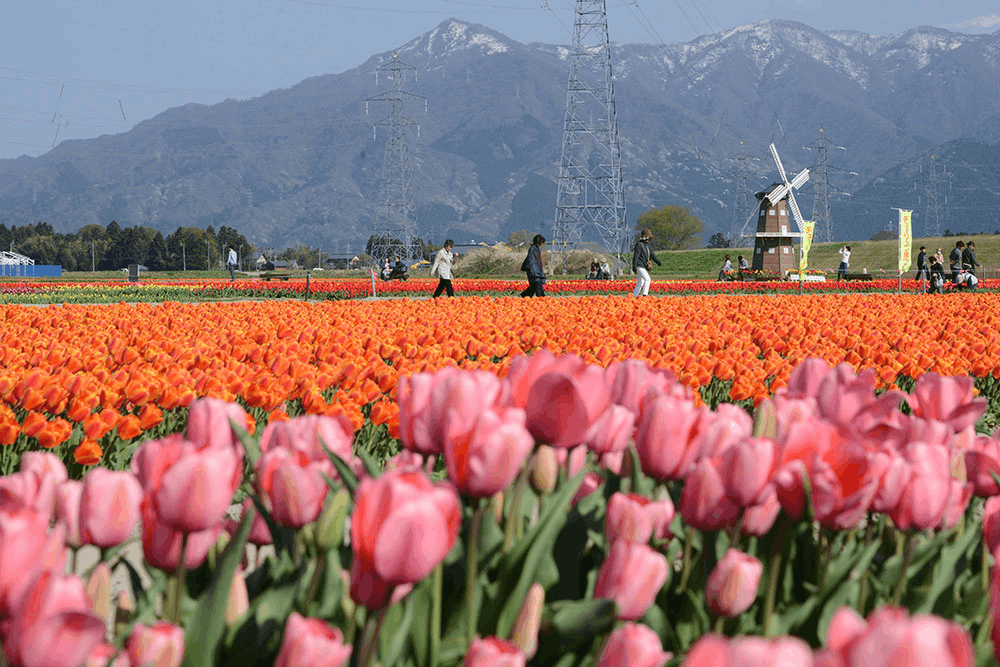
Niigata Prefecture's prefectural flower is the tulip, and the prefecture is famous for having Japan's highest volume of cut tulip exports. Tulips are in bloom from early April to mid-May each year (timing varies by location), and colourful displays can be enjoyed in farm fields, parks and roadside flower beds throughout the region.
Gosen City is one of the prefecture's most celebrated tulip-growing areas. To let visitors experience the beauty of the flower fields firsthand, the Sumamoto area presents a concentrated display of tulip fields and hosts a "Tulip Festival." The sandy soil formed by river flooding is especially suited to tulip cultivation, and in recent years new overseas varieties have been introduced, broadening the range of colours. The floral carpet spread across the spring landscape is nothing short of stunning.
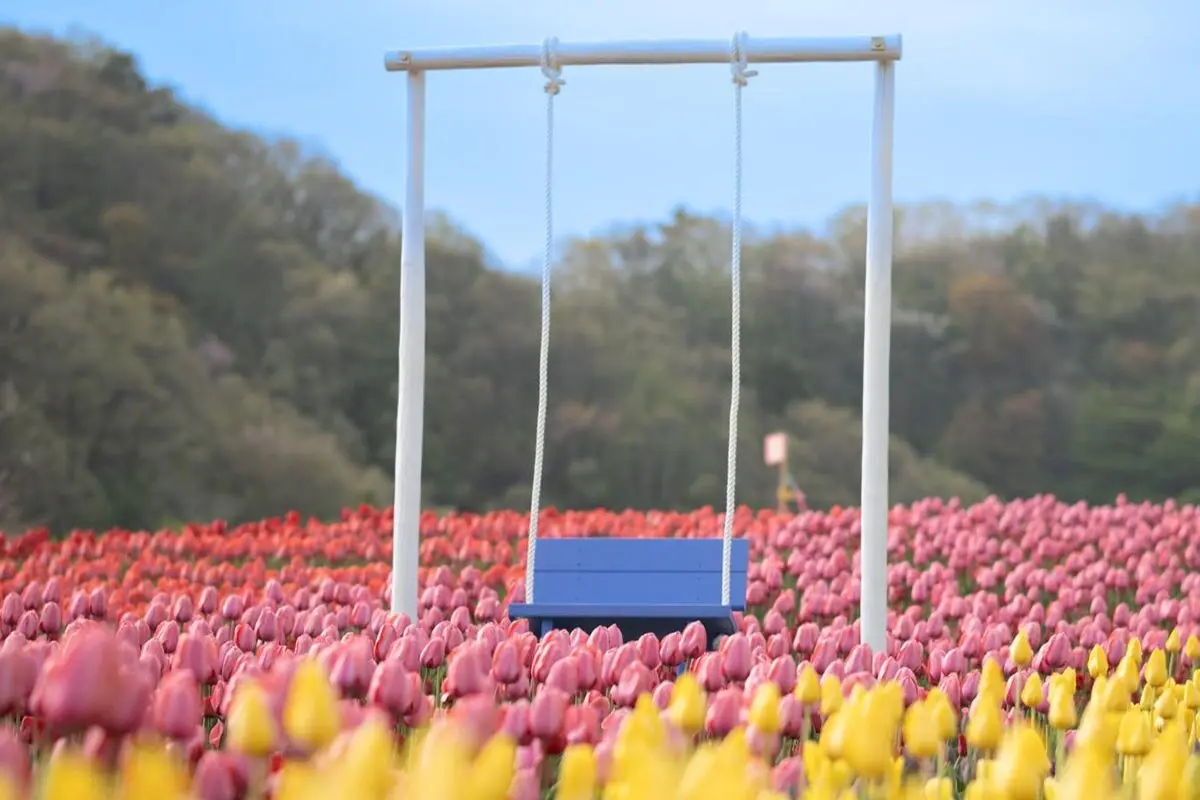
Brightly coloured tulips bloom throughout the park, transforming it into a spring sea of flowers. Charming photo spots including a "Swing," a "Little Gate" and a "Windmill" appear on Hana-no-oka (Flower Hill), adding a fairy-tale atmosphere.
The park uses a "mixed planting" technique, planting early-to-late-blooming varieties together in a colour-balanced, high-density arrangement. This not only enriches the range of colours but also extends the overall blooming period, presenting a long-lasting and multi-layered floral spectacle — a flower-viewing experience unique to this park.
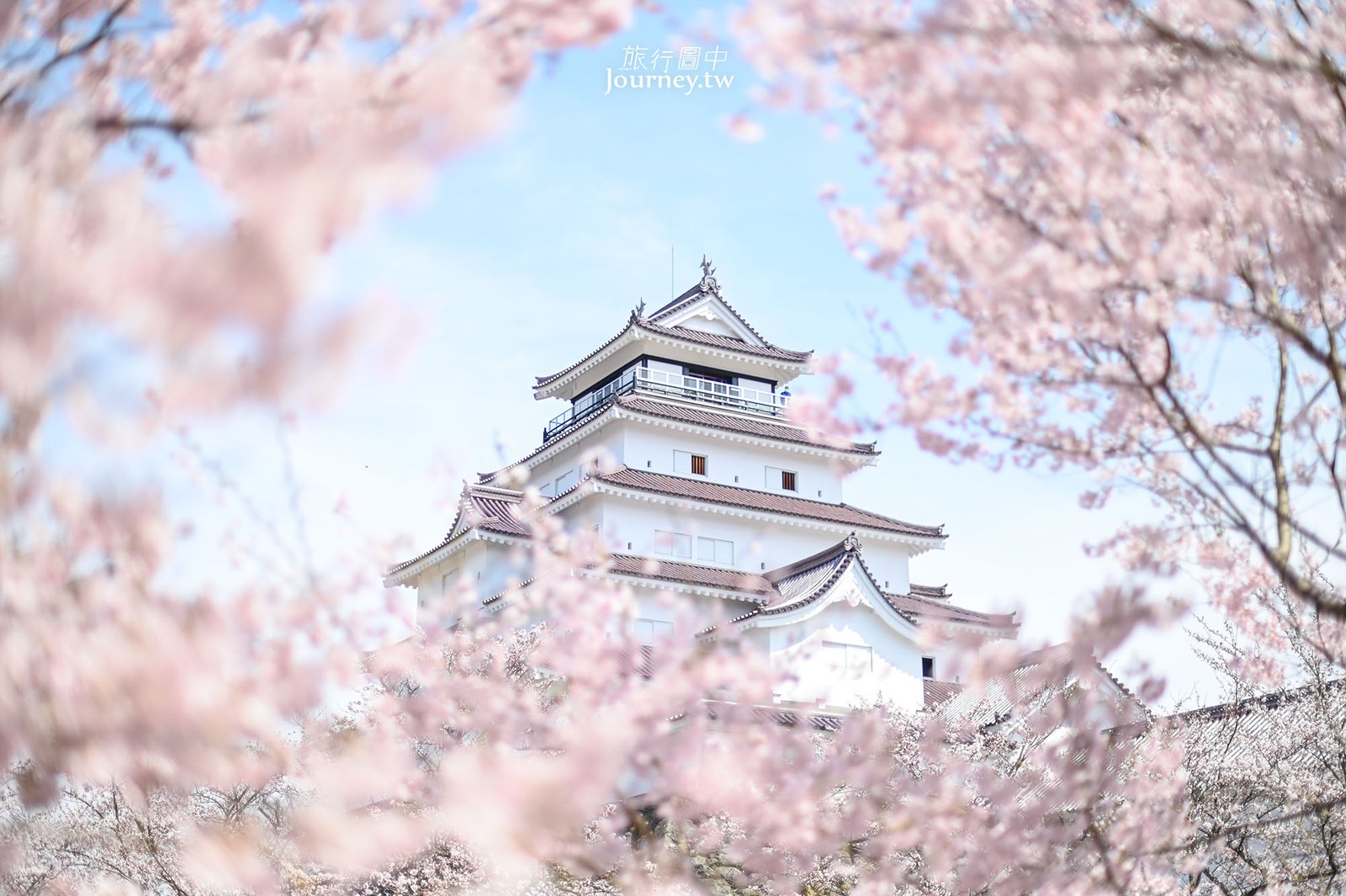
Tsuruga-jo Park, the symbol of Aizu, is the area's most celebrated cherry-blossom destination. With Somei Yoshino as the dominant variety, around 1,000 trees bloom in spring, drawing large crowds. The "Tsuruga-jo Cherry Blossom Festival" is held each year from early April to early May, featuring numerous events and a lively atmosphere.
The evening illuminations are said to be among the largest-scale in eastern Japan, making the entire historic park gleam brilliantly under the lights. The illuminated Rotoka Bridge, the night cherry blossoms reflected in the moat, and the blossoms set against Tsuruga-jo Castle under the night sky combine to create a magical and moving spring evening.
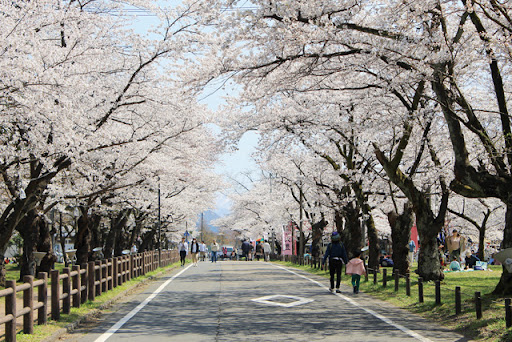
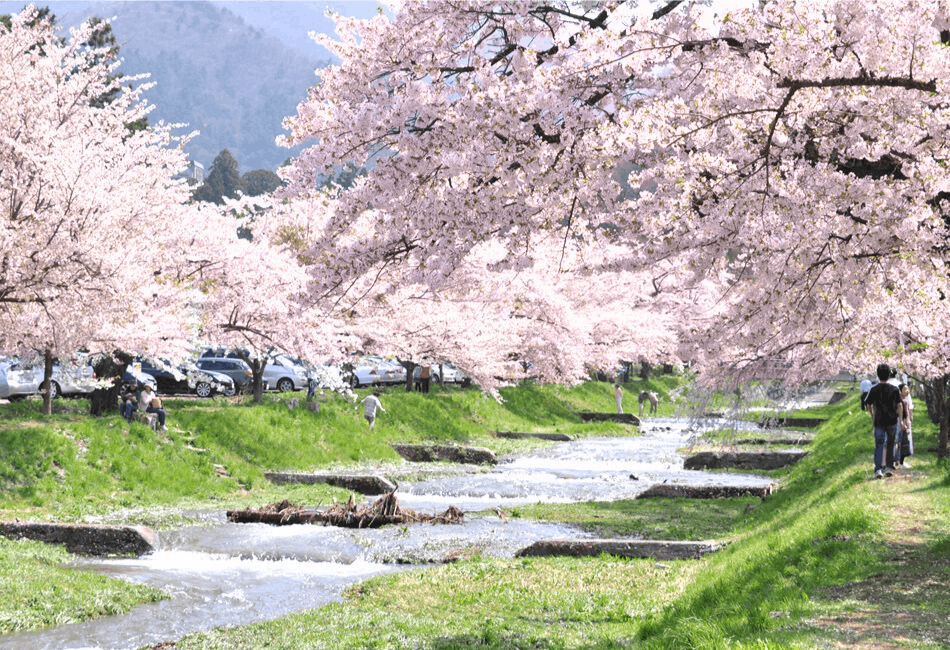
The "Kannonji-gawa" river in Kawabukuro, Inawashiro Town flows down from the Kannonji temple upstream; along its banks stretches about 1 km of cherry-tree-lined path, dominated by Somei Yoshino and weeping cherries. At full bloom a spectacular cherry tunnel forms — a highly representative blossom spot in the area, selected as "Sacred Site No. 11" on the Tohoku Dream Cherry Road.
Each year in mid-April, a Cherry Blossom Festival is held around the Oyamatsumi Shrine with events and food stalls, creating a festive atmosphere. After dark, seven-colour LED lighting illuminates the blossoms, weaving a dreamlike scene together with the river — like stepping into a film set. The event draws over 100,000 visitors each year and is one of Fukushima Prefecture's most popular blossom destinations; this kind of seven-colour night-blossom spectacle exists nowhere else in the prefecture.
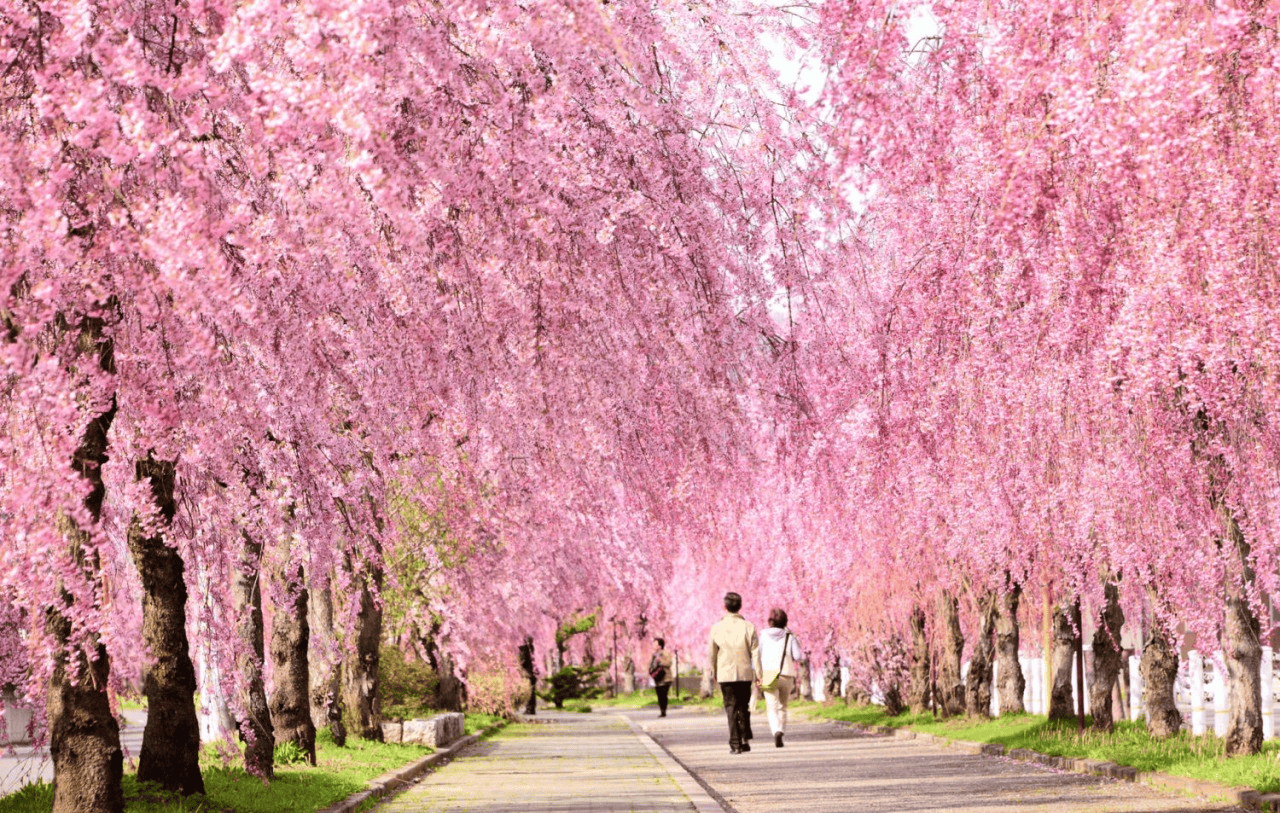
The city converted the former Nicchu Line railway right-of-way — linking Kitakata Station and Atsushio Station — into a dedicated cycling and walking path, along which roughly 1,000 weeping cherry trees (yaebenishidare and benishidare varieties) have been planted over about 3 km. When the blossoms are at their peak they form a spectacular cherry tunnel, a large-scale blossom landscape rare in Fukushima Prefecture.
Midway along the path, a steam locomotive that once ran on the Nicchu Line is on display, creating a distinctive scene when set against the full bloom of weeping cherries — a beloved photo spot.
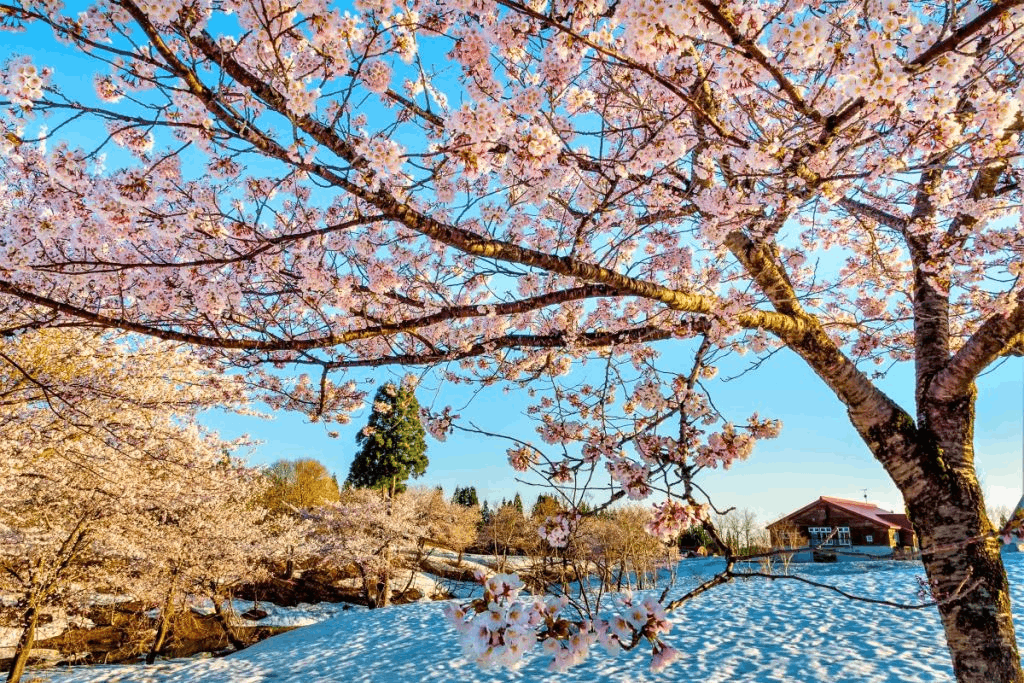
"Snow Sakura" (Yukiue-zakura) is, as the name suggests, cherry blossoms blooming atop snow. In Snow Country areas, most of the accumulated snow has usually melted by the time cherry season arrives, but in the Fukuyama area of Uonuma City — famous for its heavy snowfall — residual snow can still be seen even when the cherries are in full bloom.
When spring arrives and the snowmelt begins, if the blossoms open before the snow has completely disappeared, this rare spectacle occurs. The silvery remnant snow, pink cherry blossoms and the first green shoots of early spring interweave to create a landscape uniquely beautiful to Uonuma. Around 100 Somei Yoshino and Oyama cherry trees bloom atop the snow, complementing the wintry scenery in a spring tableau that is simply unforgettable.
June — August
Summer in Niigata is the season of festivals. One of Japan's three great fireworks events — the Nagaoka Fireworks Festival — the largest outdoor music festival in Japan, FUJI ROCK, and the enchanting firefly festival all fill the air with summer energy.
The "Echigo Three Great Fireworks" is the collective name for the three fireworks festivals that define Niigata's summer — "Sea of Kashiwazaki," "River of Nagaoka" and "Mountain of Katakai."
Among them, the Nagaoka Fireworks Festival is one of Japan's three great fireworks events. Enormous shells burst brilliantly across the summer sky in massed volleys, creating an overwhelming visual spectacle. The "Revival Phoenix" set-piece — born from prayers for recovery after the Chuetsu Earthquake — unfolds across 1.7 km of night sky in a five-minute continuous launch, deeply moving all who witness it.
The event also features rapid-fire bursts choreographed to music; over the two-day event more than 20,000 shells are fired, delivering an unparalleled visual experience.
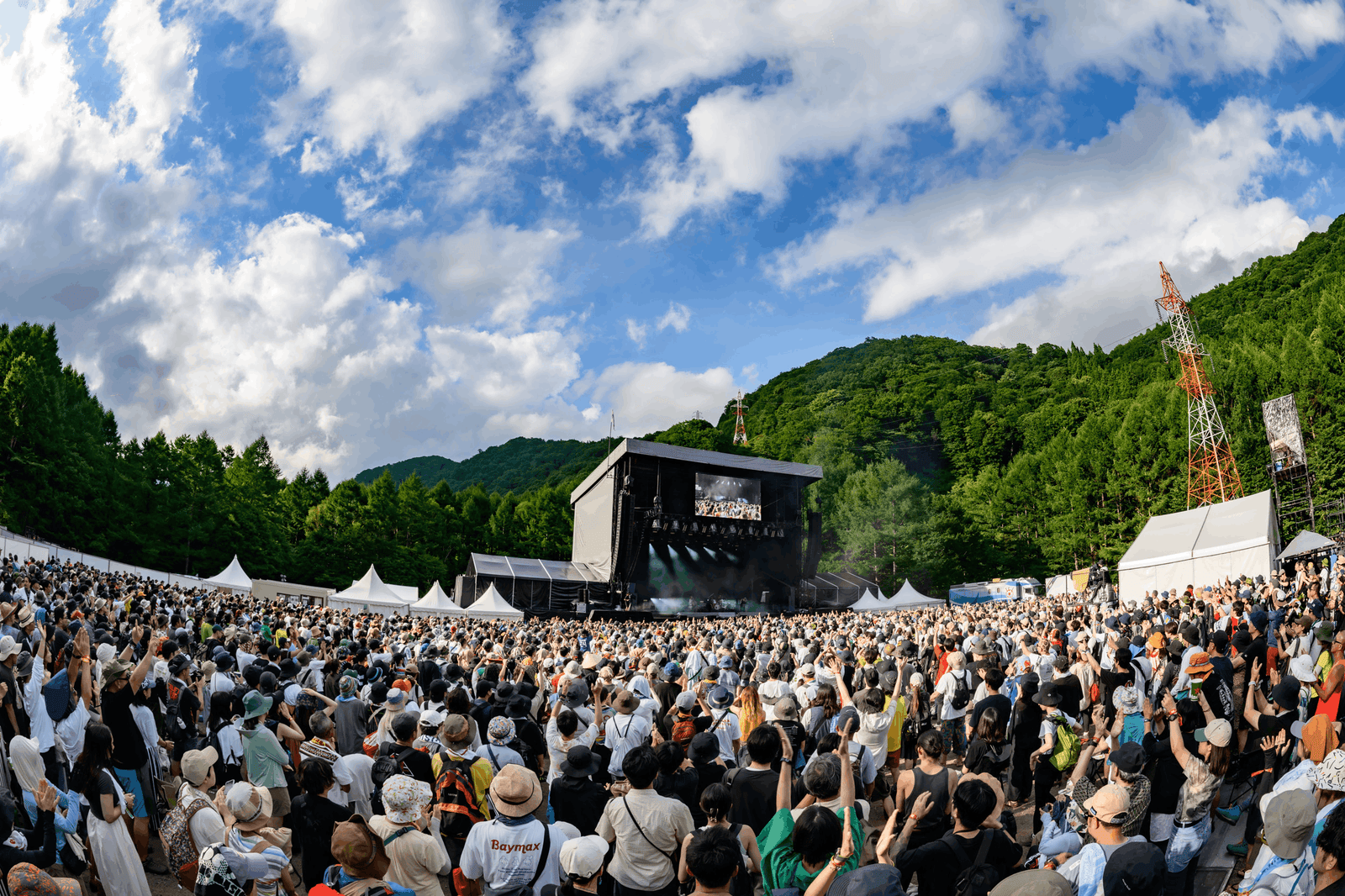
FUJI ROCK FESTIVAL is one of Japan's largest outdoor music events, held at Naeba Ski Resort in Niigata Prefecture since 1999. Each year it brings together over 200 acts from Japan and around the world, performing across multiple forest and outdoor stages. In 2026 it will be held from 24 to 26 July.
The music spans rock, electronic, folk and world music — not only a pilgrimage for music fans, but also a fusion of natural scenery, camping culture and distinctive food. Listen to music amid green mountains by day, and by night immerse yourself in rhythm and lights under the stars.
The site features camping areas and diverse activity spaces, including festival food stalls, family activities and evening installation art zones — showcasing the magic where music and nature intertwine.
Held each year from approximately late June to early July.
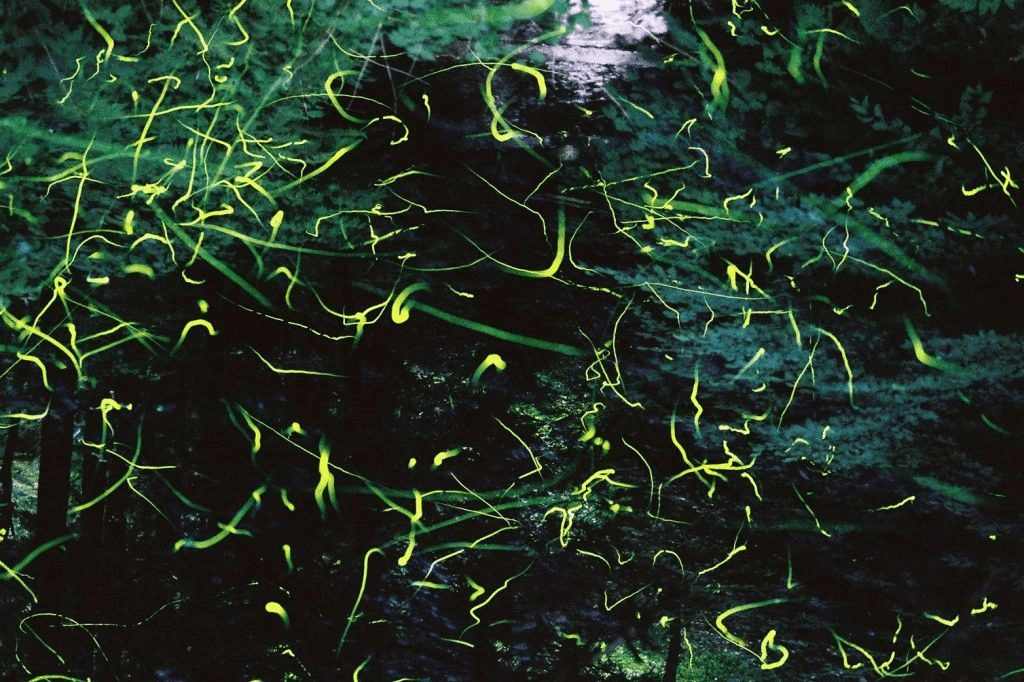
The name "Fuyatsuma Hotaru" (Fuyatsuma Fireflies) comes from the famous spring water of Iwamuro Onsen, "Fuyatsuma-shimizu," whose crystal-clear waters nurture large numbers of fireflies — the most enchanting sight of early summer in the area.
After nightfall, fireflies drift from the low-lying stream right up into the tall cedar forest, their flickering lights appearing and fading in the darkness, sometimes drawing close to visitors. Tiny lights resting on cedar needles resemble flowers of light blooming in the night; looking up, the fireflies weave together with the stars into a dreamlike scene. To enjoy this tranquil, romantic spectacle at a leisurely pace, an overnight stay at Iwamuro Onsen is recommended — let the early-summer light show unfold around you in the evening ambience of an onsen town.
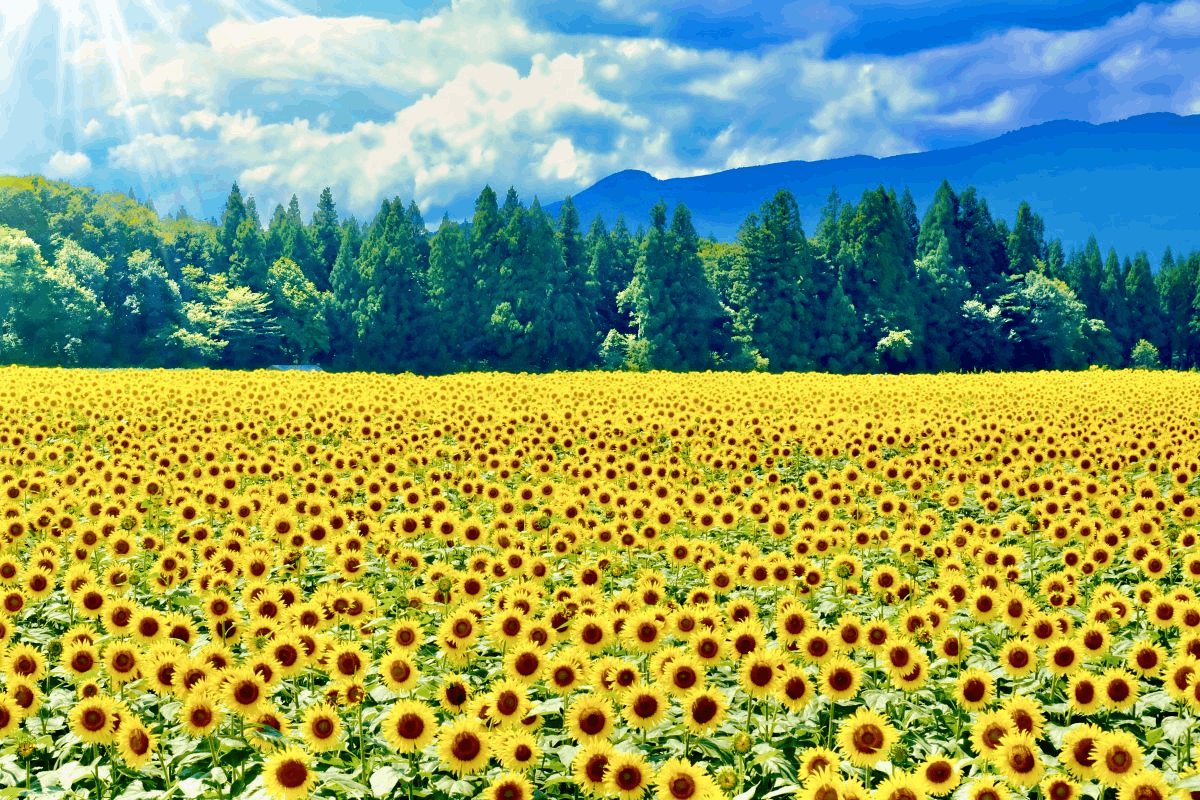
The "Tsunan Sunflower Plaza" in Nakauo-gun, Niigata Prefecture is a celebrated local sunflower-viewing destination. Each August, approximately 500,000 sunflowers bloom across roughly 4 hectares of field, creating a magnificent golden sea of flowers.
To extend the viewing season, the field is divided into three sections sown at staggered intervals, so that bloom times are offset, allowing visitors to enjoy the flowers in full display for a longer period.
The site includes a viewing tower from which you can look out over the entire sunflower field, and there is also a free "Sunflower Maze" inside the field, beloved by families. Food stalls set up during the event add to the lively summer atmosphere.
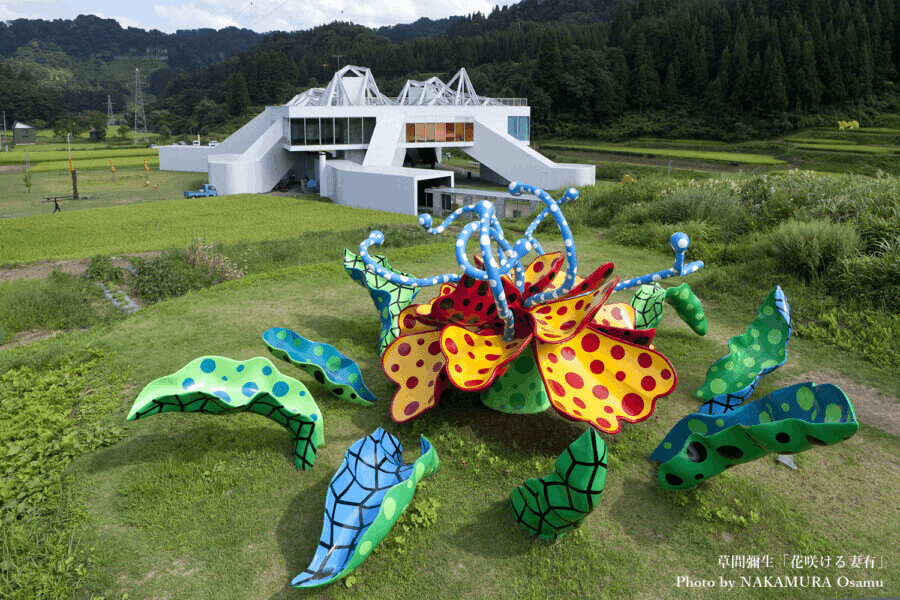
The "Echigo-Tsumari Art Triennale" is a world-renowned international art festival spanning Tokamachi and Tsunan-machi in Niigata, known collectively as the "Land of Echigo-Tsumari Art Field." The summer-autumn exhibition runs from July to November, spread across six zones of Tokamachi City and Tsunan-machi in Niigata Prefecture.
Artists collaborate with local residents to integrate their works into abandoned farmhouses, old school buildings and satoyama landscapes, uncovering the charm of the region through art.
In addition to approximately 200 permanent works on display, each edition adds over a hundred new creations. Smaller events and guided tours are also held outside the main exhibition period in summer and winter — even off-season, visitors can quietly appreciate the beauty of art and nature intertwined.
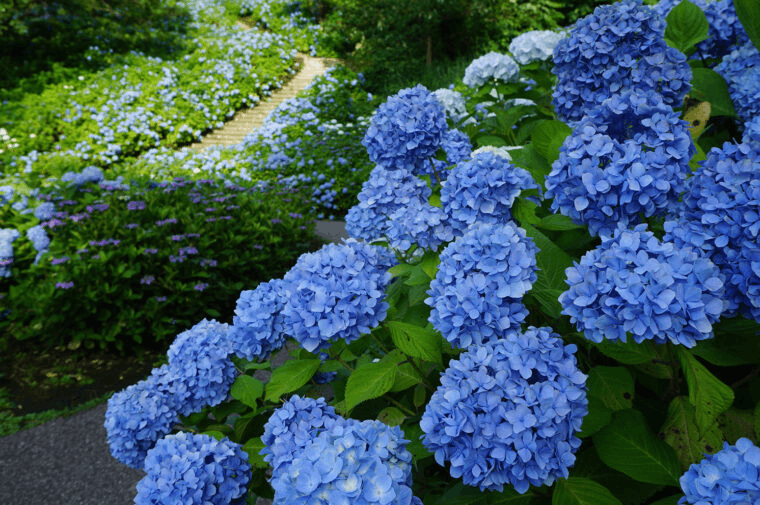
During the rainy season from late June to mid-July, around 18 varieties and 18,000 hydrangea plants bloom brilliantly throughout the park.
Acidic soil produces blue flowers, while neutral to mildly alkaline soil produces pink — so this park's display is predominantly blue. Colours appear even more vivid and beautiful in the rain, and visitors can enjoy diverse varieties including lacecap and mountain hydrangeas. Walk to the hydrangea garden via the steps from Fukuzato-no-oka Hill, or stroll along the "Iro no Komichi" (Colour Path) from Nukumori-kan, meandering leisurely through the flower sea.
During the rainy season, why not open an umbrella and listen to the rain while viewing the flowers? On rainy days you can also borrow a "colour-changing umbrella" at the main entrance — patterns appear when the umbrella gets wet, adding a fun twist to your flower-viewing experience.
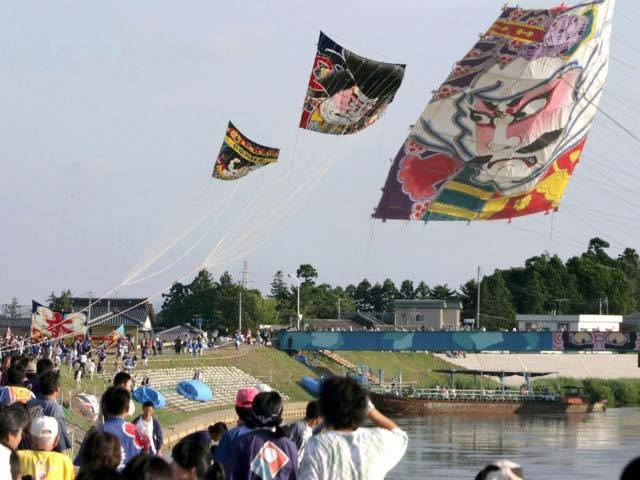
The Shirone Giant Kite Battle, a tradition inherited from the Edo period with about 300 years of history, takes place each June in Shirone, Niigata City. Enormous kites are launched from opposite banks of the Nakanokuchi River; when they entangle mid-air they fall into the river and the teams haul on the lines — whoever cuts the other's rope first wins. The spectacle is electrifying.
The "Shirone Giant Kite History Museum" carries on this culture, displaying actual competition kites alongside a historical archive and a 3D video theatre that recreates the battle.
The collection includes around 500 kites from across Japan and treasures from more than 30 countries; visitors can also experience making a mini kite and test-flying it in a wind tunnel to learn about Shirone kite culture.
The Shinano River is Japan's longest river, and visitors can enjoy exhilarating rafting while taking in its magnificent scenery. At designated points along the route, participants can jump from the raft into the river or swim — a full and varied water-sports experience.
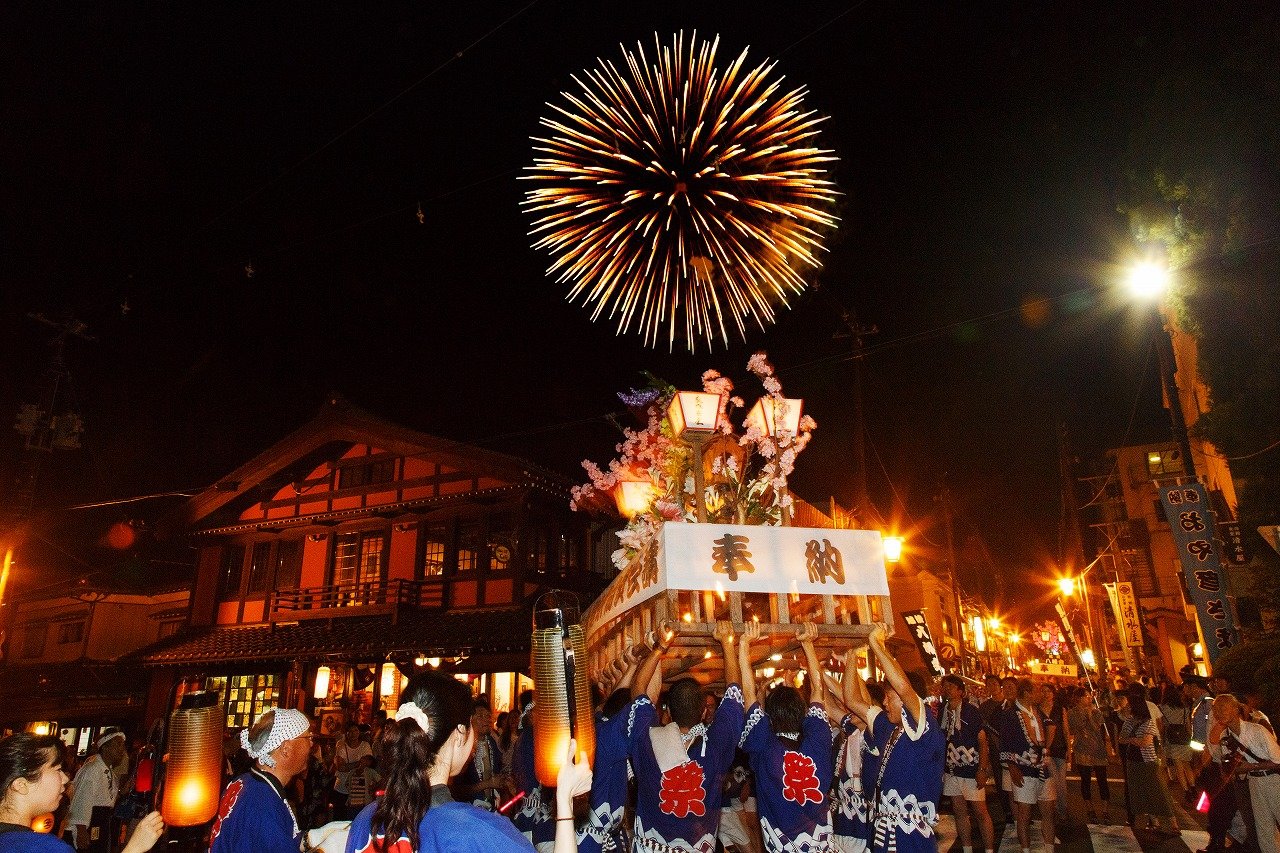
The "Yahiko Lantern Festival," held each year from 24 to 26 July, is a lantern ritual known as the "Yahiko Fire Festival" — a thousand-year tradition designated by the national government as an Important Intangible Folk Cultural Property. The festival takes place at Yahiko Shrine to pray for a bountiful harvest and the retreat of disease.
The 24th opens with the eve-festival; on the 25th there is a daytime lantern procession by geisha and children, followed after dark by a grand lantern parade and fireworks display. Beneath the fireworks, participants raise enormous lanterns and push and jostle them against each other — a breathtakingly powerful sight.
Late at night the portable shrine (mikoshi) returns to the main hall, and children perform a secret sacred dance before the worship hall; on the 26th the Kanoematsuri (return ceremony) brings the three-day rites to a close.
September — November
Niigata's autumn is celebrated for its foliage. The "reflected autumn leaves" of Yahiko Park, the orange beech forest of Bijinbayashi, the aerial autumn foliage ride on the Naeba Dragon Gondola, and the chrysanthemum grand exhibition at Yahiko Shrine all dye the entire prefecture in intense autumnal colour.
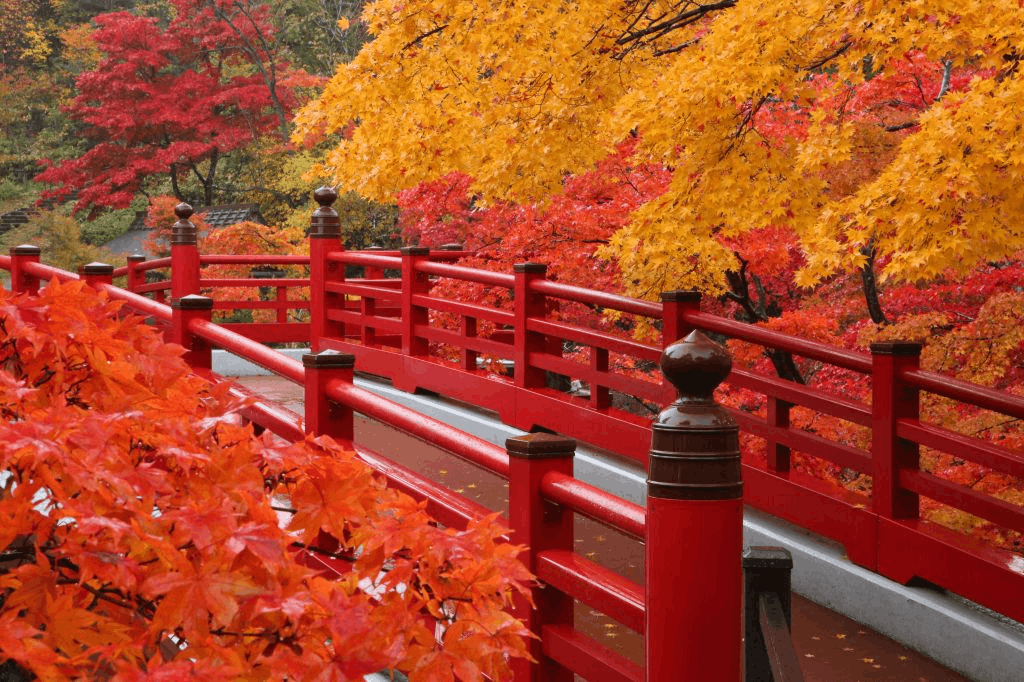
Yahiko Park lies in the outer gardens of Yahiko Shrine, covering about 40,000 tsubo close to Yahiko Station. The park features waterfalls, streams and a Taisho-era tunnel, exuding a rich Japanese atmosphere.
The most celebrated feature is the "Koyo-dani" (Autumn Leaves Valley) — a renowned foliage spot where the vermilion Kangutsuki Bridge weaves together with mountains ablaze in red and orange, creating a scene of breathtaking beauty. At night the leaves take on a dreamlike quality under illumination. In 2023 the site was added to Japan's Night Scenery Heritage list, and the "reflected autumn leaves" (sakasa-momiji) mirrored in the pond surface are an especially awe-inspiring sight.
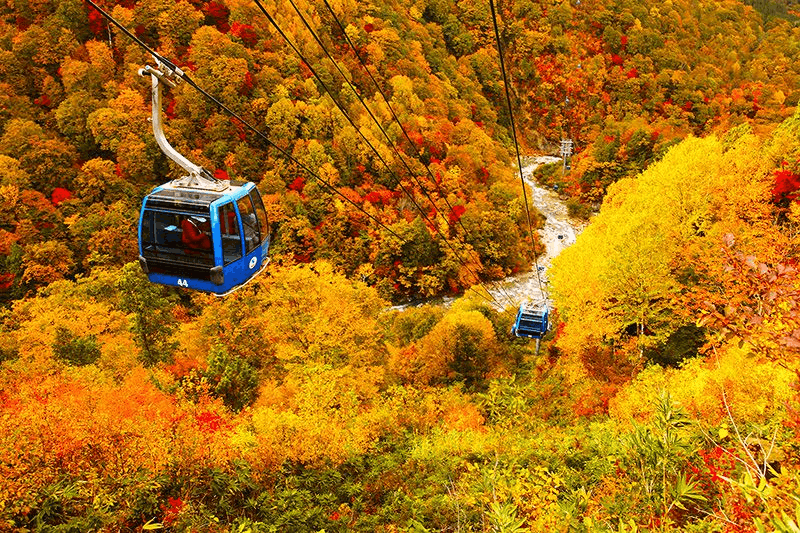
Each autumn, Naeba Ski Resort opens the "Naeba Dragon Gondola" connecting Naeba Plateau with Tashiro Plateau, letting visitors enjoy the magnificent autumn foliage.
The Naeba Dragon Gondola spans a full 5,481 metres — Japan's longest gondola route. Riding it offers views of the majestic Mt. Taira and the emerald-green Futago Lake, for a 5.5-km aerial stroll in the sky!
The foliage in this area is richly colourful; dotted with red, orange and yellow leaves, the scenery takes on an artistic beauty. A single gondola ride of about 25 minutes is all it takes to enjoy a sweeping display of magnificent autumn colour.
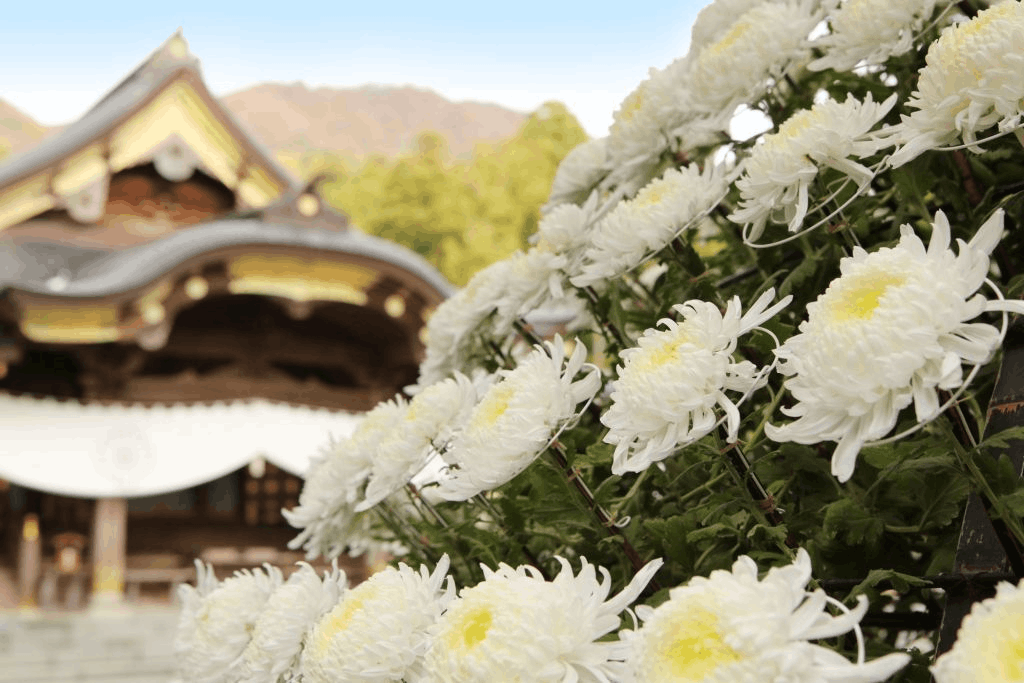
The "Yahiko Chrysanthemum Festival" is held each November at Yahiko Shrine — Niigata Prefecture's largest chrysanthemum exhibition, and arguably the finest in Japan in terms of both the number and quality of exhibits.
Unlike typical "kiku ningyo" (chrysanthemum doll) displays, every chrysanthemum shown here has been patiently cultivated with expert skill over an entire year, and the exhibits are subjected to rigorous judging.
The highlight is the "Grand Landscape Flower Bed," designed each year around a new theme using 30,000 tiny potted chrysanthemums arranged in a spectacular tableau — drawing large crowds of admirers every year.
The towering rock walls rising on both sides of the Kiyotsu River form a rare V-shaped canyon designated as a National Place of Scenic Beauty and Natural Monument.
From mid-October to early November each year, maples, lacquer trees and others turn red one after another, ushering in the best period for autumn foliage viewing.
At the end of the tunnel lies the famous "Light Cave." An artist installed a water-basin reflection device at the cave entrance; walking along the shallow water at the tunnel's edge to the very end creates a "mirror of the sky" visual effect where the viewer and gorge become one.
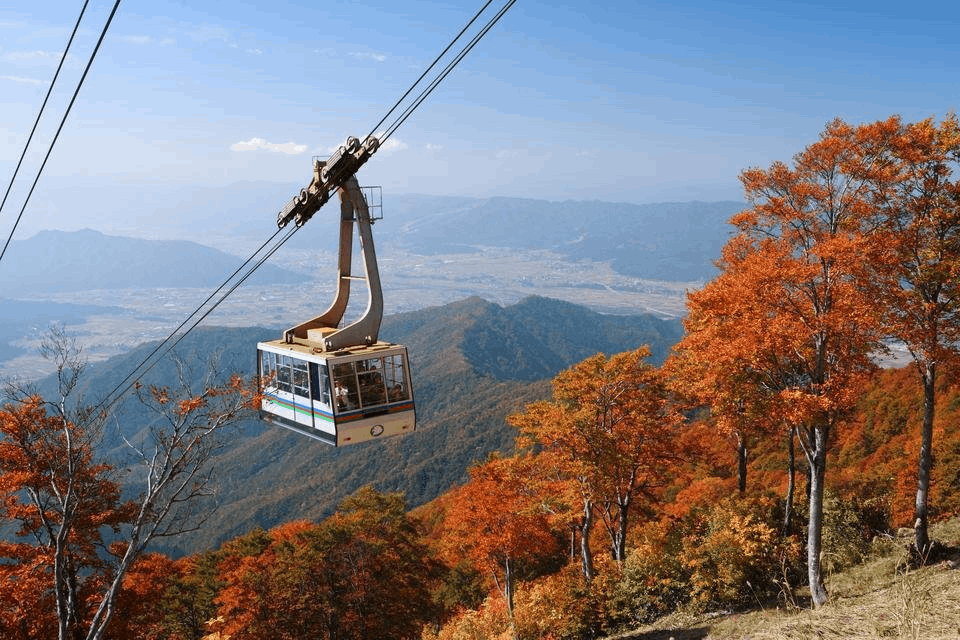
Riding the ropeway offers the pleasure of an aerial stroll, and from the summit station you can look out over the sweeping panorama of the entire Minami-Uonuma City below.
Autumn colour begins at the summit of Mt. Hakkaisan and works its way down through nandina, maple and beech trees in turn, with colours starting to change from around mid-September.
The peak foliage season around the ropeway typically falls after mid-October, and in November you can enjoy the dreamlike contrast of Hakkaisan's white snow set against brilliant autumn leaves.
In the roughly 30,000-square-metre woodland of Bijinbayashi grow beech trees of about one hundred years of age, their straight and slender trunks elegant as dancers — hence the name "Beauty Forest."
In autumn the entire woodland is washed in orange, and the fallen leaves on the ground echo the same colour, as if placing visitors in the middle of a dreamlike painting.
The best period for autumn colour is from early to mid-November each year. Golden beech leaves shimmer in the sunlight, the path underfoot carpeted in fallen leaves; the entire forest becomes a scene of extraordinary beauty — a hidden gem for autumn leaf-viewing.
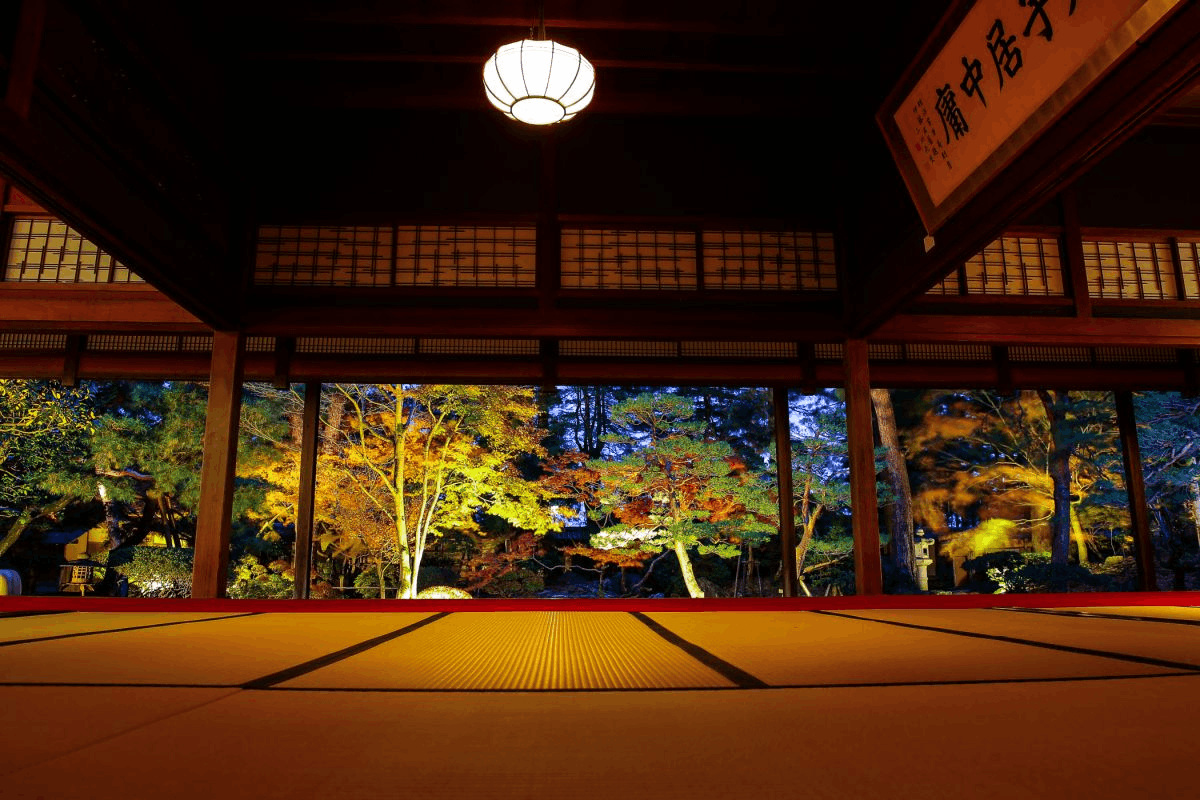
The "Hoppo Bunka Museum" (Northern Culture Museum) is the former residence of the Ito family, great landowners of Echigo, covering 8,800 tsubo. The estate preserves the main house, grand hall, tea rooms and storehouses, and features a stroll-style pond garden designed by garden artisan Tanaka Taiami, alongside an art collection accumulated by successive generations of the family.
In the garden stands a wisteria vine over 150 years old; when it blooms in spring, combined with evening illuminations, the atmosphere becomes wonderfully romantic and dreamlike.
When autumn arrives the garden is cloaked in brocade-like autumn foliage; viewed from the 100-tatami grand hall, the interplay of red leaves and pine trees, illuminated at dusk, creates layered light and shadow of exceptional beauty.
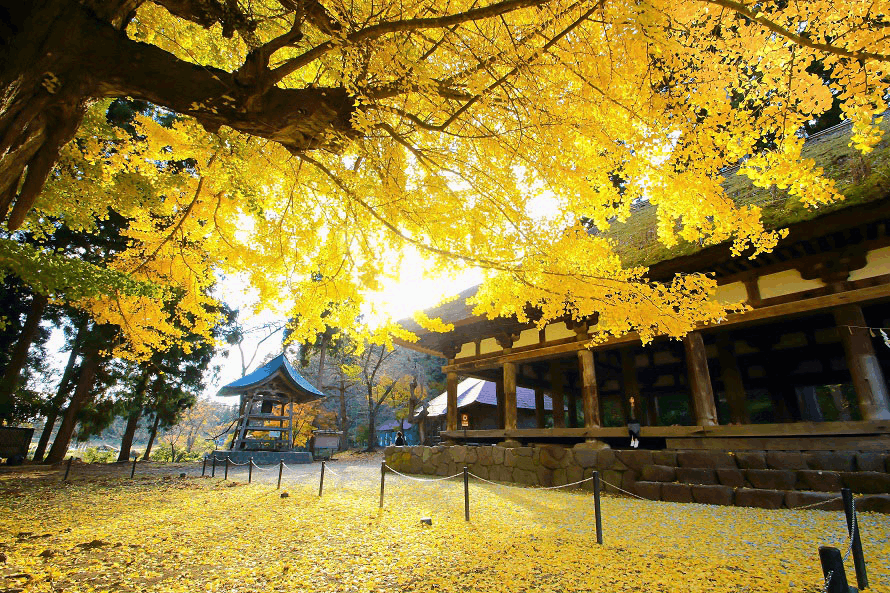
Shingu Kumano Shrine has a long history, said to have been founded in 1055 and moved to its present site by Minamoto no Yoshiie in 1089.
The worship hall "Nagadoko" is a Heian-period shinden-zukuri style structure, with 44 round pillars approximately 45 cm in diameter arranged at equal intervals in an imposing tall-ceilinged space. The treasure hall holds several nationally and prefecturally designated cultural properties and is open to visitors.
Before the Nagadoko stands the sacred tree — a giant ginkgo 30 metres tall with a root circumference of 8.1 metres, said to be about 800 years old, designated a Natural Monument of Kitakata City. In autumn the surrounding ground is carpeted in golden fallen leaves, drawing many visitors.
Perched at a summit of about 1,000 metres above sea level, Yuzawa Kogen (Yuzawa Highland) presents a different face in every season. In autumn, the park is bathed in a multitude of colours, perfect for leisurely walks combined with seasonal scenery and a variety of activities.
From late September, broom grass (kochia) is the first to turn red; by mid-October the highland areas and the gondola line are treated to the full glory of autumn foliage.
Enjoy outdoor activities amidst mountains ablaze with colour, and savour the park's specially prepared autumn-limited dishes — a feast for both eyes and palate.
December — February
Niigata is one of Japan's most famous heavy-snowfall regions, producing excellent skiing conditions. The snow-blanketed Ouchi-juku Snow Festival, snowshoe adventures at Goshikinuma and the ice art of Lake Inawashiro fill a winter journey with wonderful surprises.
Niigata's skiing appeal lies in the fine powder snow unique to its heavy-snowfall areas. Most resorts offer a variety of runs to suit everyone from beginners to experts, including gentle slopes, snow parks and intermediate-to-advanced challenge courses, as well as ungroomed runs for powder enthusiasts.
Most resorts also offer night skiing, family-friendly facilities, hot spring bathing and diverse dining options. With convenient transport links, they suit both day trips and overnight stays.
Recommended: GALA Yuzawa Snow Resort, Yuzawa Nakazato Snow Resort, Akakura Onsen Ski Resort.
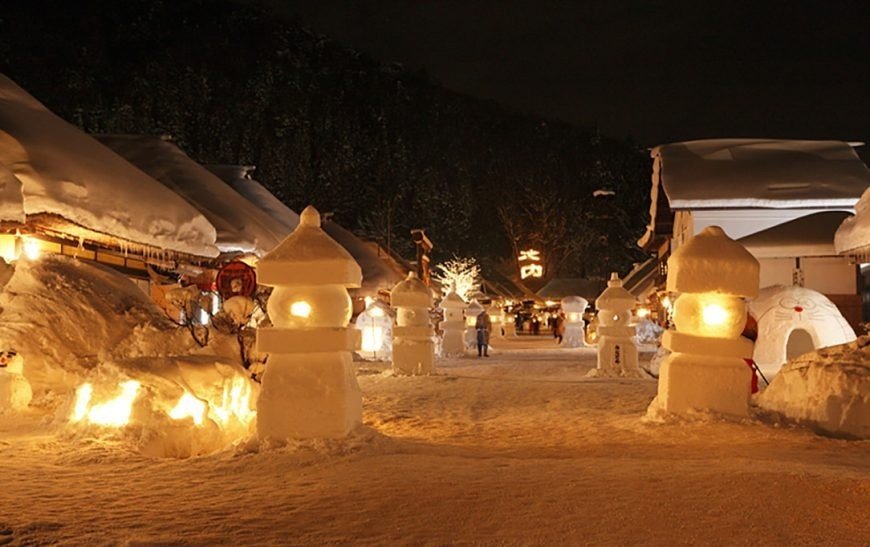
Ouchi-juku is a post town in Minami-Aizu, Fukushima Prefecture, that has served travellers since the Edo period. Although the arrival of the railway ended its use as a post town, it has survived to the present day as a scenic tourist destination. Designated as a "Preservation District for Groups of Important Traditional Buildings," its residents uphold the three-principle charter of "no selling, no renting, no destroying," preserving the traditional architectural streetscape through their collective efforts.
In winter the thatched farmhouses are surrounded by a silver-white world of snow, giving travellers the magical experience of beauty tinged with nostalgia. Every February, Ouchi-juku holds a Snow Festival where the flickering candlelight of snow lanterns creates a dreamlike scene.
Goshikinuma (Five-Colour Ponds) has been called "Japan's Jiuzhaigou," a natural wonder formed by a massive eruption of Mt. Bandai. Autumn and winter are the most captivating and varied seasons, offering a rich palette of natural colours.
In winter, Goshikinuma transforms into a snow-blanketed world. Visitors can strap on a full set of snowshoes and explore the snowy forest — a distinctly winter outdoor adventure. Snowshoe walking is moderately active and suitable for all ages: a not-to-be-missed winter experience at Goshikinuma.
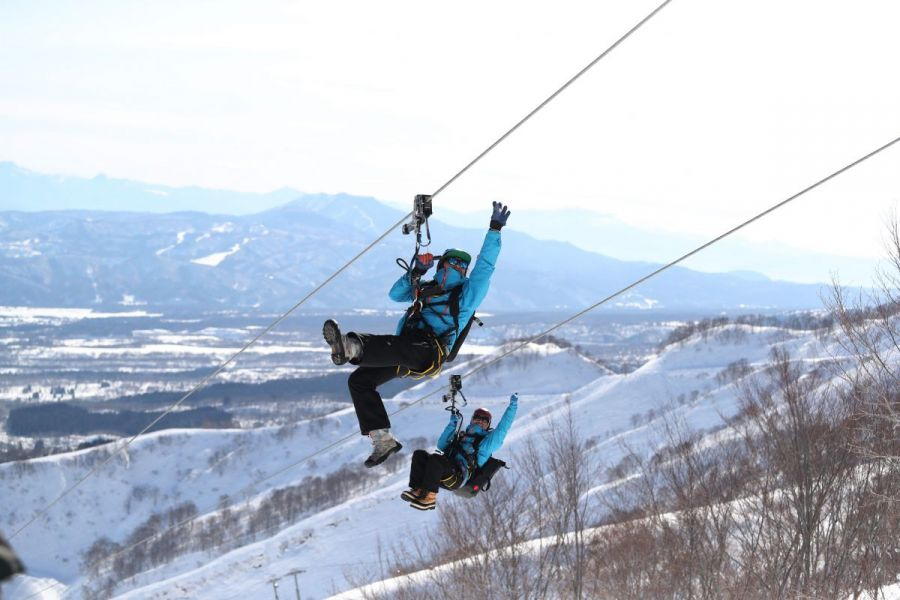
The Rakuten Arai Resort in Myoko City features Asia's longest aerial zip line, stretching 1,501 metres with a vertical drop of about 240 metres. Departing from a starting point at approximately 950 metres above sea level, riders reach the finish at 710 metres in about three minutes, taking in sweeping mountain scenery along the way.
In winter you can gaze out over an endless silver-white world; in summer, a carpet of lush green fills the view as far as the eye can see.
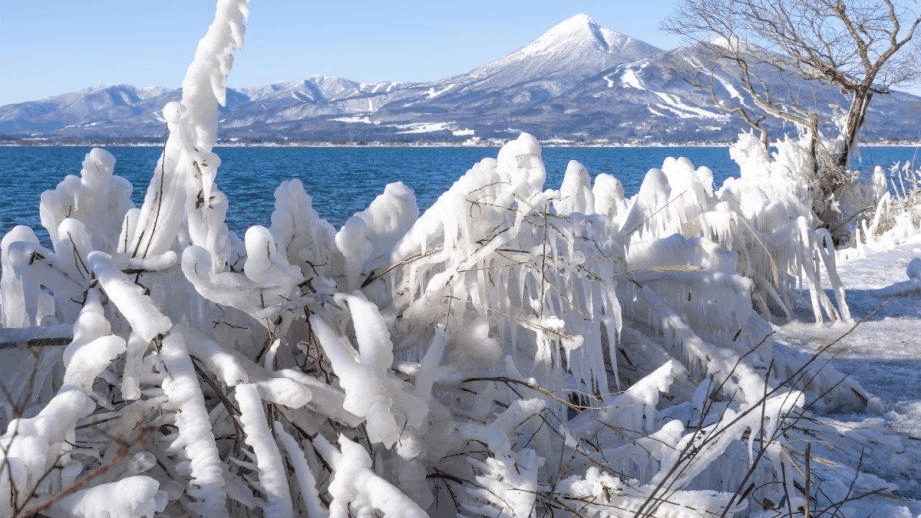
In the depths of winter, walking from Tenjinhama on Lake Inawashiro through the forest on the southern side toward the mouth of the Nagase River reveals "Mizuhana-gori" — ice art created by nature itself.
The lake water, buffeted by strong westerly winds, sends spray splashing onto the trees along the shore; the spray gradually freezes onto the branches, forming a rare and extraordinary spectacle said to rival the beauty of juhyo (snow monsters).
Visitors can also enjoy drift ice on the lake surface and along the shore, as well as various other ice phenomena such as ridges of ice that rise like an "omiwatari" (divine crossing) — a constantly changing gallery of natural ice art.
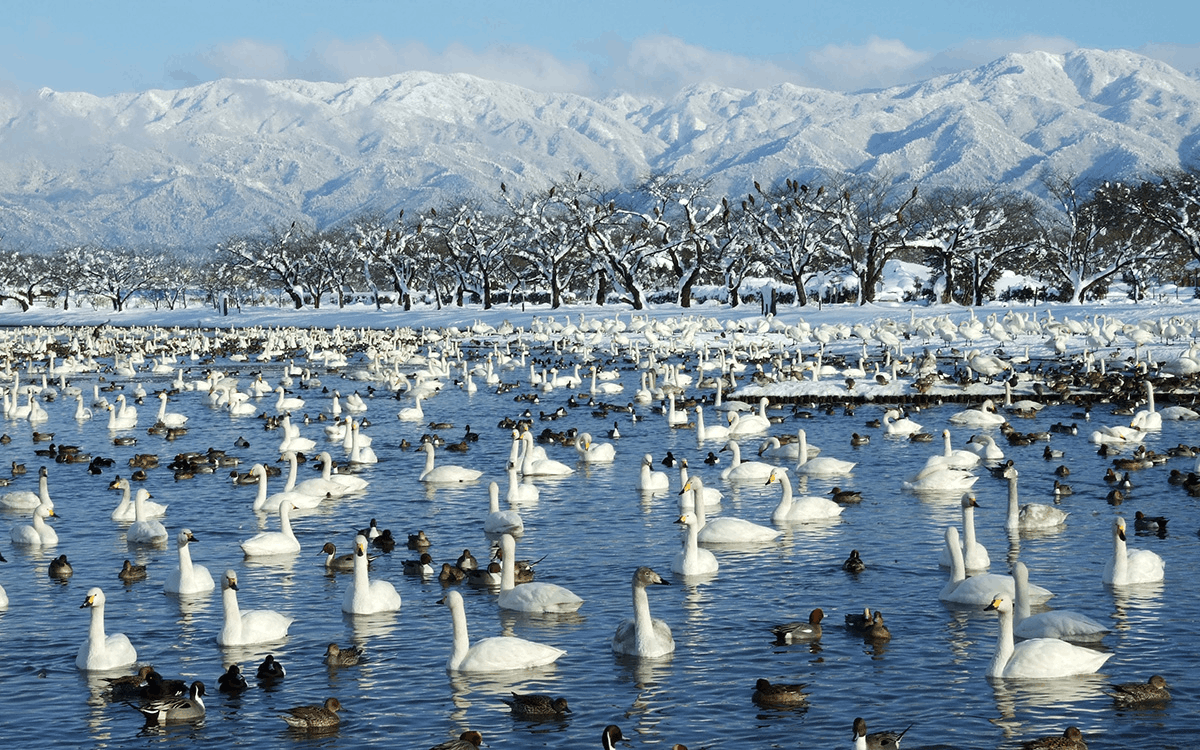
Hyoko Lake is a celebrated swan migration site, a Ramsar Convention-registered wetland and a designated National Natural Monument.
The first swans arrive from Siberia to overwinter each year from early October, remaining at Hyoko until late March. At the peak in late November numbers can exceed 5,000. Each day at 9 am, 11 am and 3 pm, "Swan Uncle" conducts feeding sessions, drawing swans and ducks together in an impressive gathering.
Swans head to the fields to feed during the day; the most beautiful moment on the lake is at sunrise, when the morning glow reflects off the Gozu mountain range and swans glide across the water in a dreamlike scene. A dedicated observation shelter allows comfortable birdwatching.
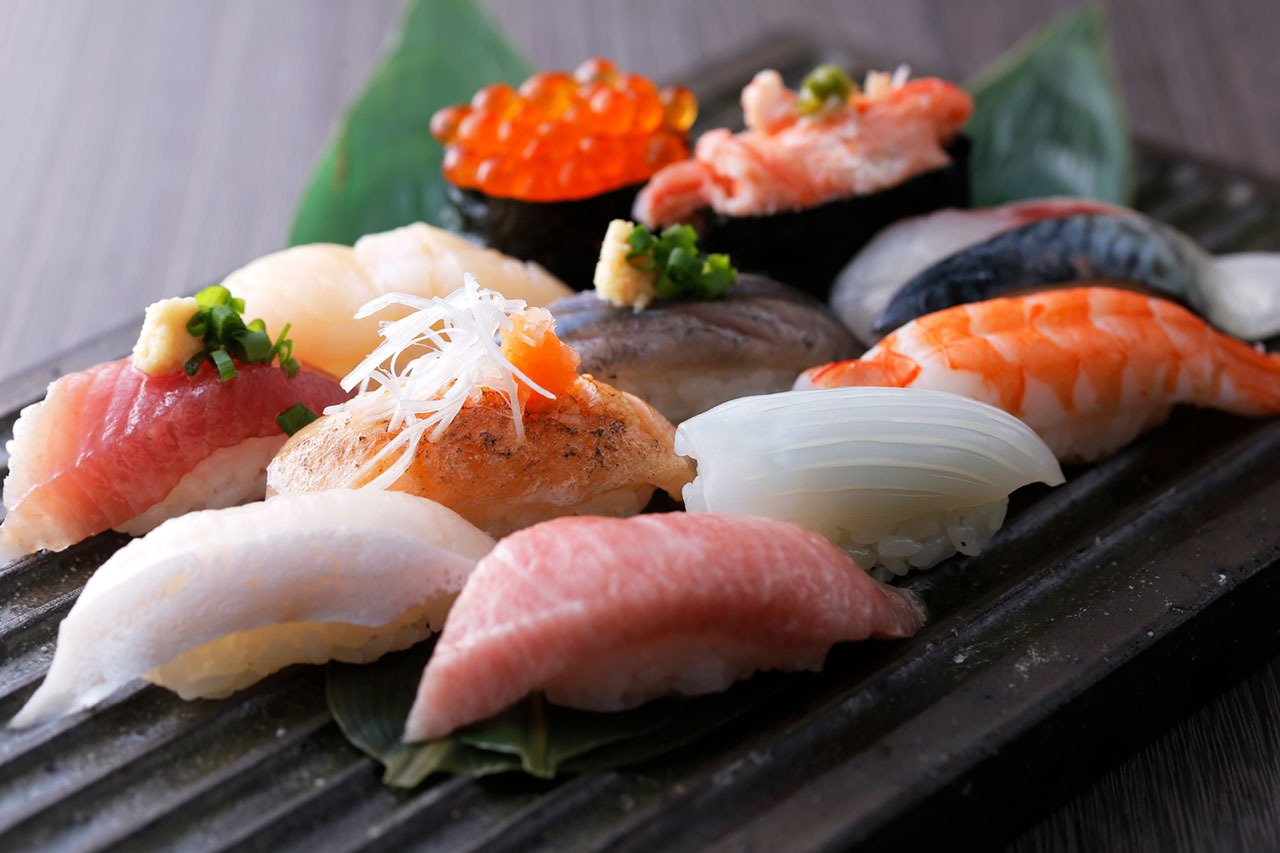
Niigata is home to Japan's finest rice, the bountiful seafood of the Sea of Japan, and fresh seasonal produce year-round — together creating a rich and vibrant food culture.
Niigata Prefecture is not only "Japan's top rice-producing region" but also blessed with the abundant seafood of the Sea of Japan, making its sushi of exceptionally high quality. Even conveyor-belt sushi restaurants here use premium ingredients.
Spring brings sea bream and bluefin tuna, while autumn and winter are defined by cod and winter yellowtail. The seasonal catch is incomparably fresh — even the much-talked-about premium species "Nodoguro" (blackthroat seaperch) can be enjoyed at some kaitenzushi restaurants for around ¥500. Whether you seek high-end dining or an affordable feast, Niigata has you covered.
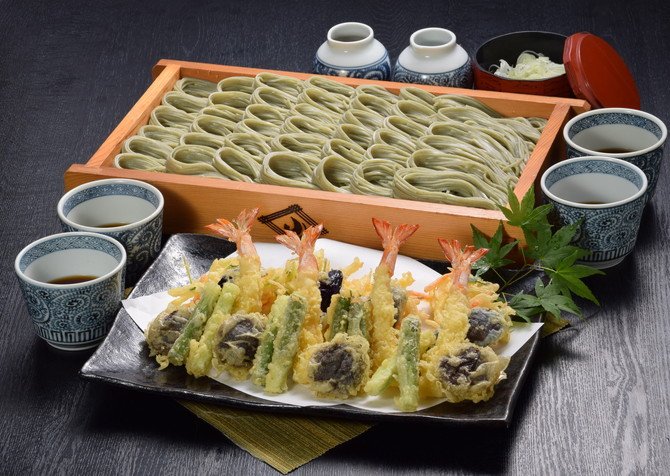
Among Niigata Prefecture's regional dishes, Hegi Soba stands as the most representative. Its hallmark is soba noodles made with "funori" seaweed, arranged in the "hegi" wooden box container in bite-sized coiled portions. The noodles are smooth and satisfyingly chewy — a single taste is enough to leave a lasting impression — and their jade-like pale green colour adds an elegant touch to the dish.
Hegi Soba is also celebrated for its health value. Funori is hailed as the "king of seaweed," rich in vitamins and minerals, and contains "sea moss" with antioxidant and cholesterol-lowering properties. For those mindful of health and beauty, this dish is absolutely not to be missed.
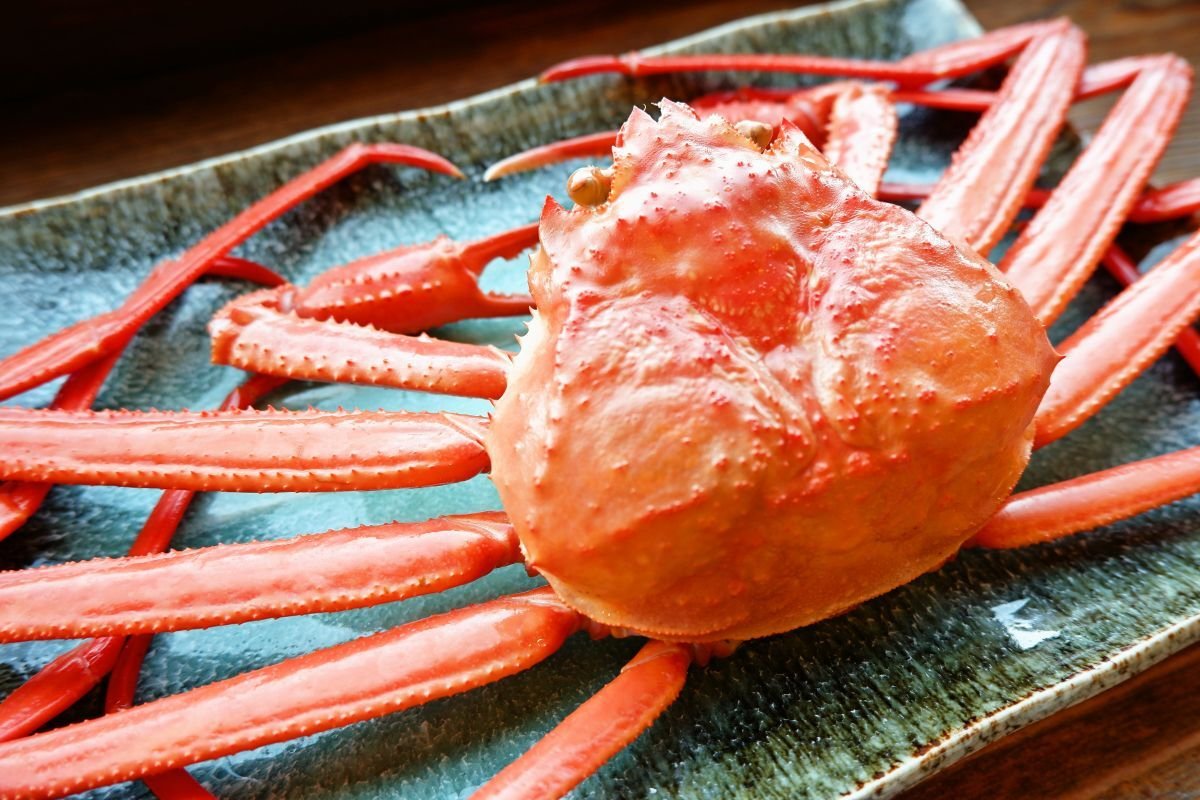
Niigata Prefecture is rich in matsuba (snow) crab and beni-zuwaigani (red snow crab), enjoyed in various preparations at sushi restaurants, izakaya, ryokan and kappo dining establishments throughout the prefecture.
Matsuba crab is caught in the seas near Sado from November through March each year. As a premium ingredient with limited catch, even in seafood-rich Niigata only a handful of restaurants or local Sado ryokan serve it.
By contrast, beni-zuwaigani is more accessible in price and has become virtually synonymous with "crab" in Niigata. The meat is sweet and juicy, the miso rich and aromatic — a perfect pairing with Japanese sake, and a local delicacy that no food lover should miss.
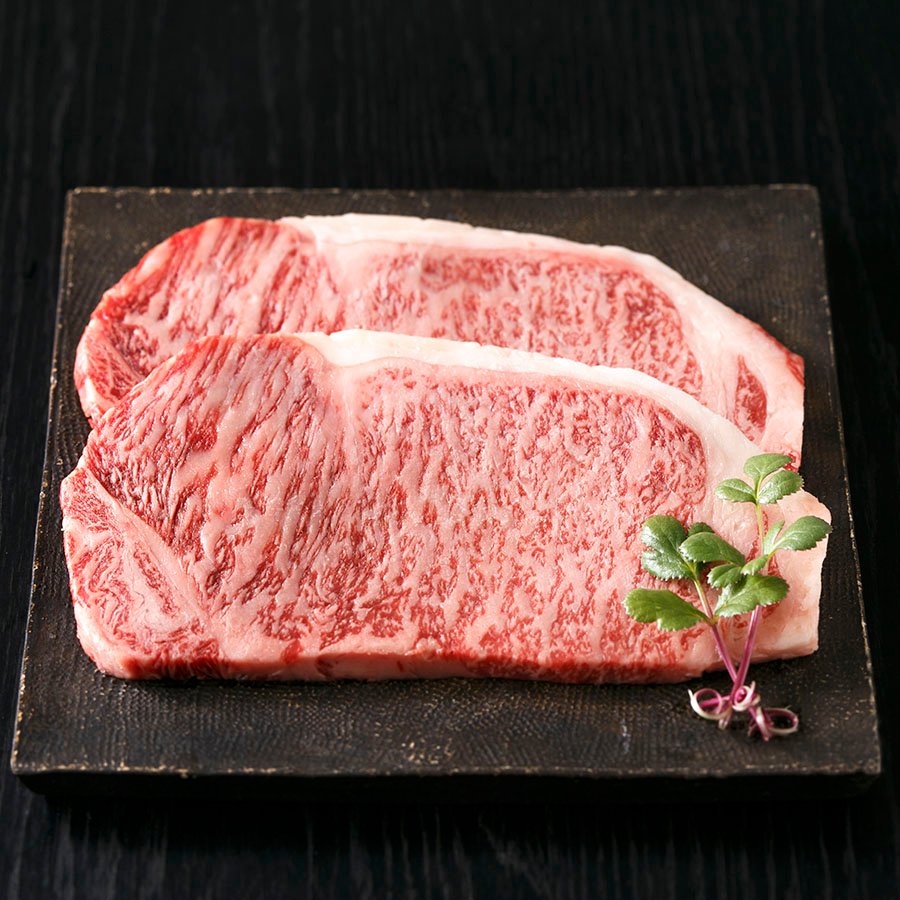
Murakami Beef is one of Niigata's finest wagyu breeds, raised in the Murakami area, and must achieve a grading of A4 or B4 or above to qualify as black-haired wagyu.
The meat has evenly distributed marbling, a tender texture, and melts in the mouth with a naturally sweet flavour. Producers raise the cattle in an outstanding natural environment with carefully selected feed — including Koshihikari rice straw — and attentive husbandry practices, resulting in the exceptional quality that defines Murakami Beef.
"Echigo-Hime" is Niigata's brand strawberry, developed through years of breeding refinement. Its greatest appeal is a tender, juicy texture with high sweetness and a gentle acidity.
Because Echigo-Hime is easily damaged, packaging and transportation are challenging, so the variety rarely reaches outside the prefecture or overseas. The ideal way to enjoy a truly fresh Echigo-Hime is to go strawberry picking in person. Strawberry farms across the prefecture welcome pickers from January to June each year, offering large, juicy berries straight from the plant.
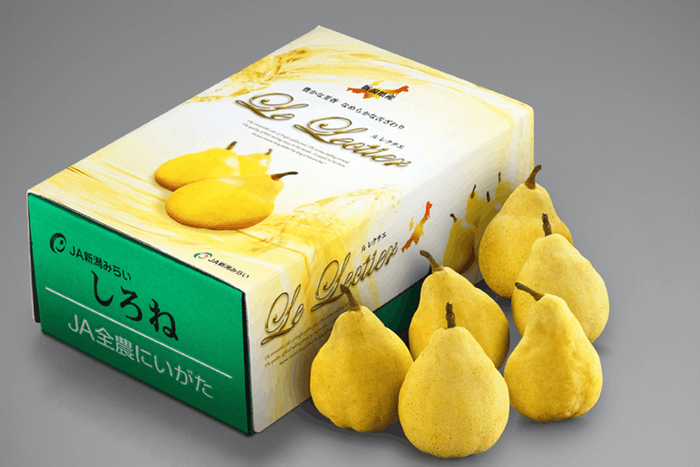
When people in Japan talk about pears, they typically mean Japanese nashi pears, but Western-style pears have grown steadily in production in recent years, attracting attention as a luxury fruit.
Among them, the "Le Lectier" — acclaimed as the "Fantasy Pear" — is one of Niigata's proudest specialities. Its aroma is richly fragrant, its flesh delicately smooth, making it the rarest and most difficult-to-cultivate variety among Western pears, with correspondingly limited production.
Beyond eating it as is, using "Le Lectier" in desserts is yet another luxurious indulgence.
Spring & Summer Seasonal Delicacies
Autumn & Winter Seasonal Delicacies
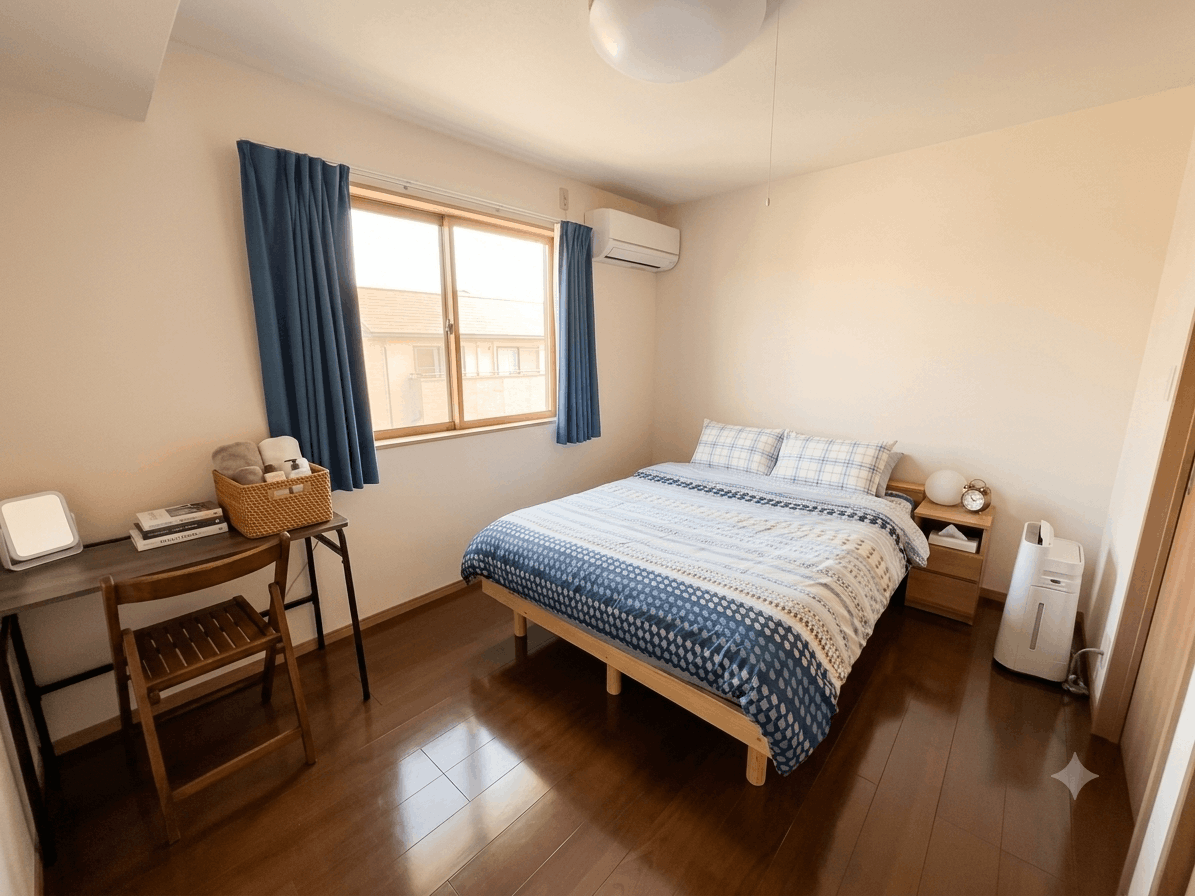
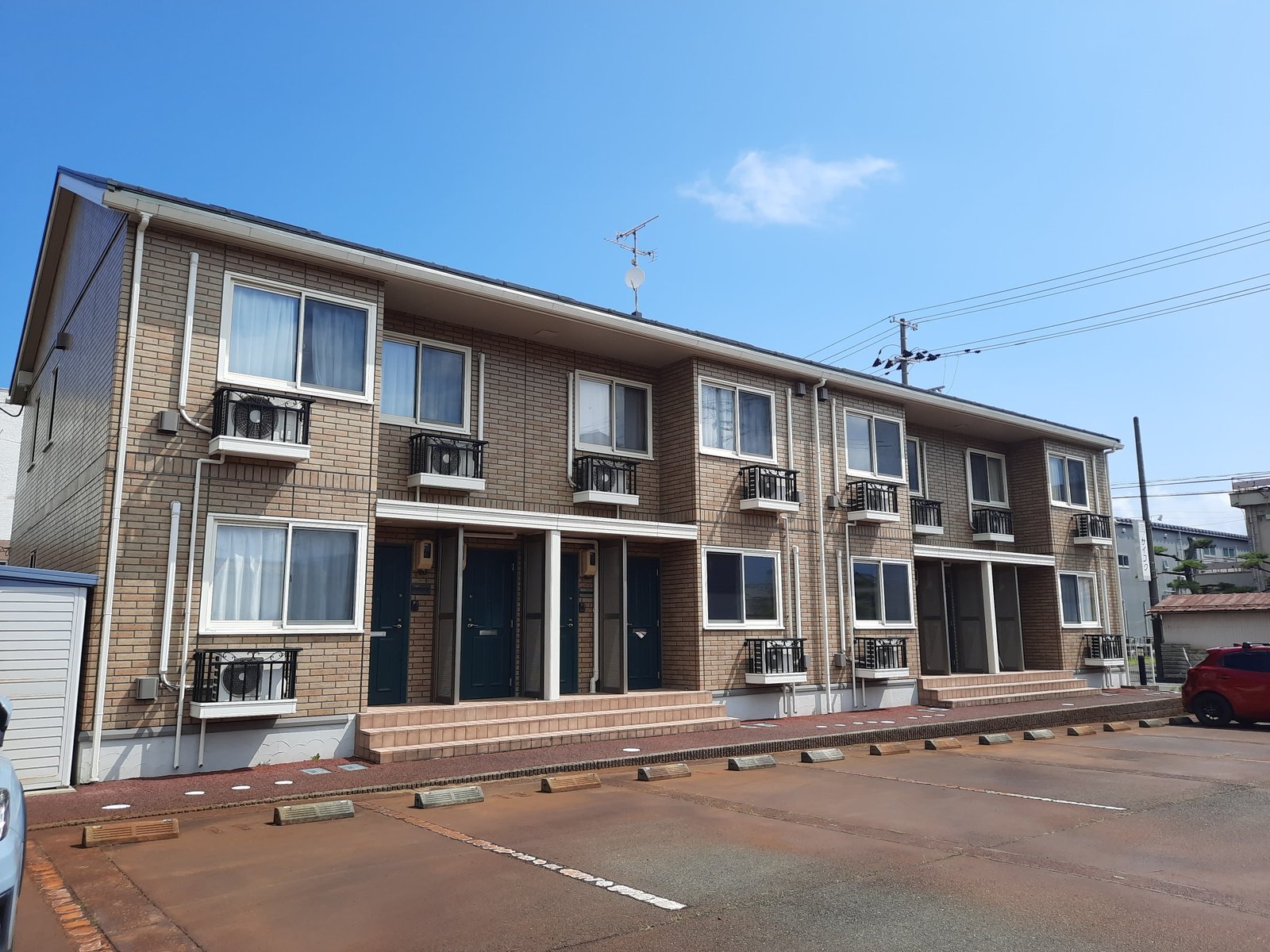
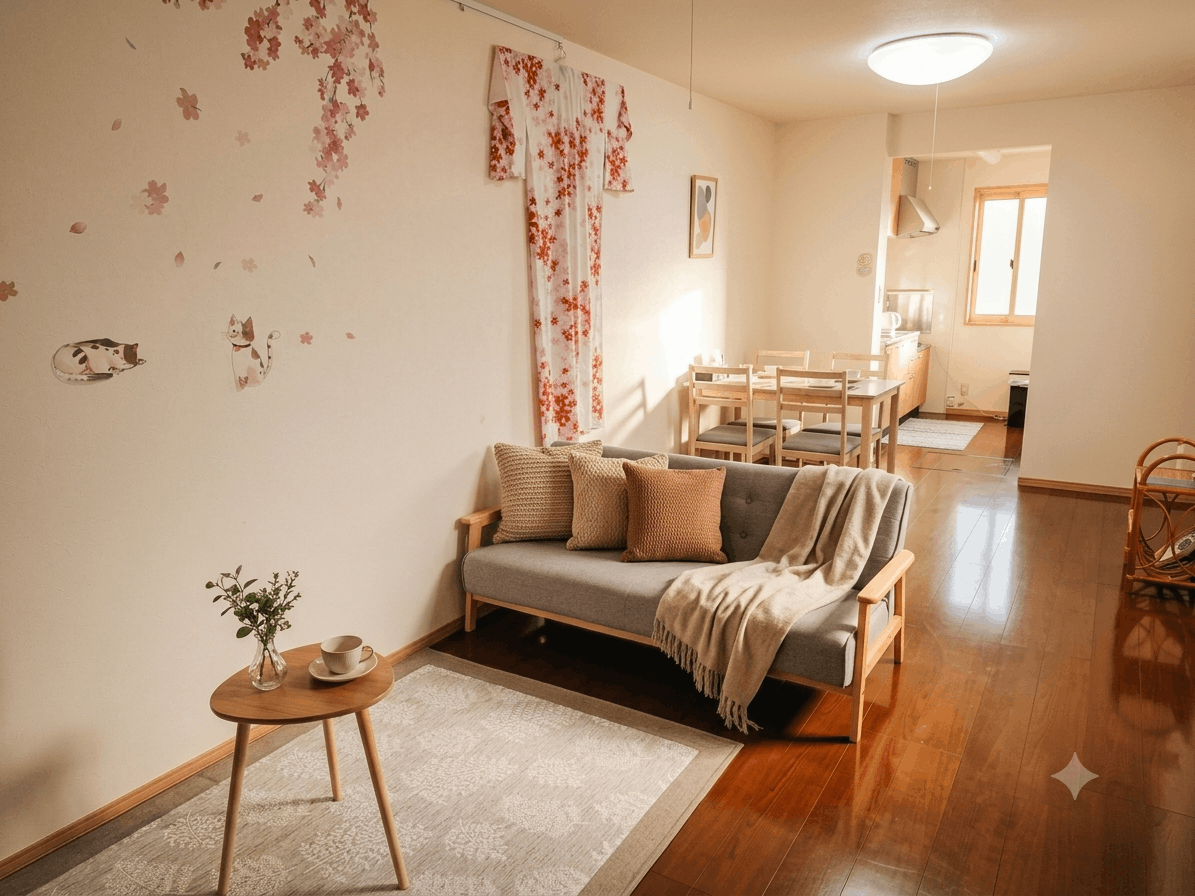
The guesthouse is located in Gosen City, Niigata Prefecture — at the heart of the prefecture, with excellent transport links and well-equipped local amenities. It is the ideal base for exploring attractions across Niigata.
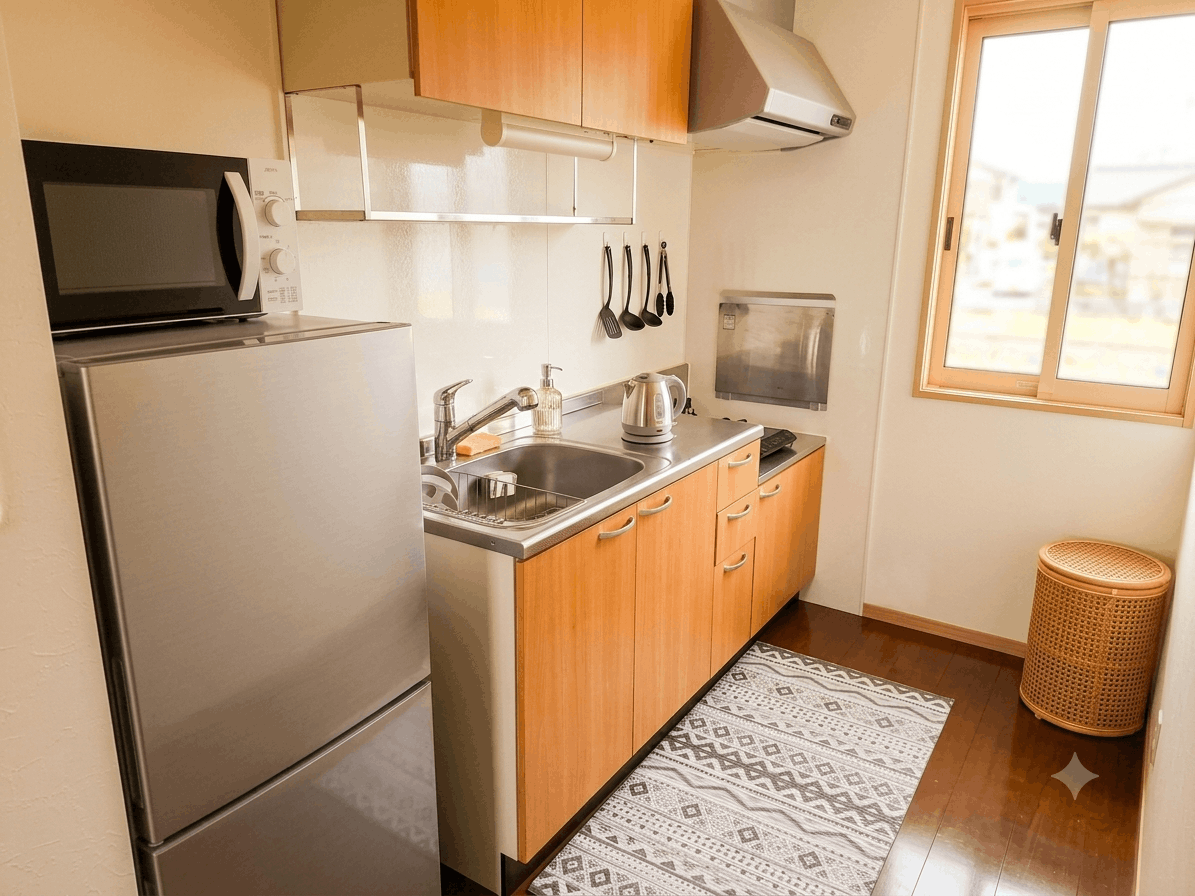
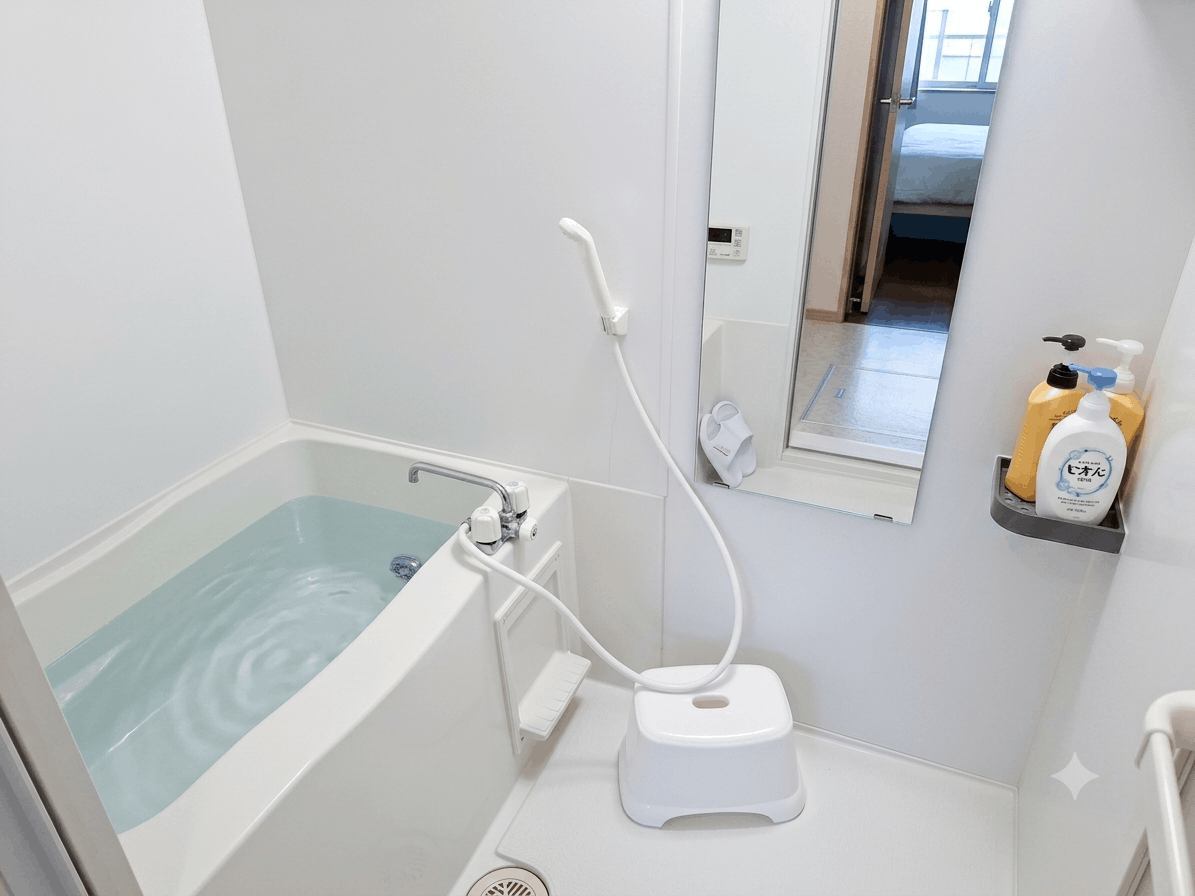
The guesthouse provides a variety of convenient facilities, dedicated to ensuring every guest enjoys a pleasant and comfortable stay.
Bathroom
Kitchen
Bedroom & Laundry
Entertainment & Other


Max Occupancy: 2
Max Occupancy: 2
Max Occupancy: 4
The following itineraries are for reference only, to give you a sense of pace and style. Your actual itinerary will be crafted by our team according to season and personal preferences.
8 Days 7 Nights
Day 1
Day 2
Day 3
Day 4
Day 5
Day 6
Day 7
Day 8
* The above itinerary is for reference only. Actual arrangements will be adjusted based on season, availability and personal preferences.
* Blossom timing and abundance vary with weather conditions.
7 Days 6 Nights
Day 1
Day 2
Day 3
Day 4
Day 5
Day 6
Day 7
* The above itinerary is for reference only. Actual arrangements will be adjusted based on season, availability and personal preferences.
* Foliage timing varies with weather conditions.
9 Days 8 Nights
Day 1
Day 2
Day 3
Day 4
Day 5
Day 6
Day 7
Day 8
Day 9
* The above itinerary is for reference only. Actual arrangements will be adjusted based on season, availability and personal preferences.
6 Days 5 Nights
Day 1
Day 2
Day 3
Day 4
Day 5
Day 6
* The above itinerary is for reference only. Actual arrangements will be adjusted based on season, availability and personal preferences.
* Japan is 1 hour ahead of Hong Kong.